shahkar jalal
Bio
Stories (175)
Filter by community
The Solar System — Hidden Mysteries You Never Knew
1. The Birth of the Solar System — A Cloud of Cosmic Dust The Solar System formed about 4.6 billion years ago from a massive cloud of gas and dust called the solar nebula. When a nearby supernova triggered the collapse of this cloud, gravity pulled the material inward to form the Sun.
By shahkar jalal2 months ago in Education
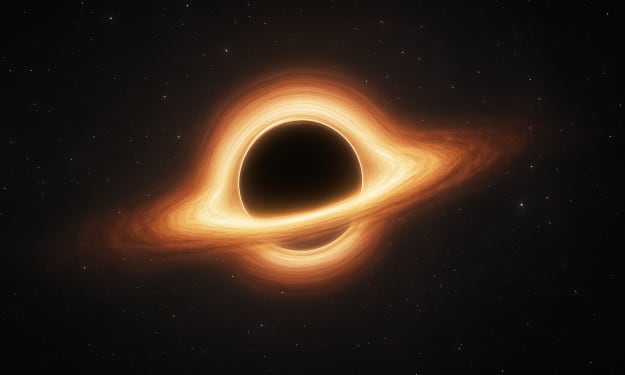
Black Holes — Gateways to the Unknown
What Is a Black Hole? A black hole is a region in space where gravity is so strong that nothing can escape, not even light. The boundary around a black hole is called the event horizon, a point beyond which escape is impossible.
By shahkar jalal2 months ago in Education
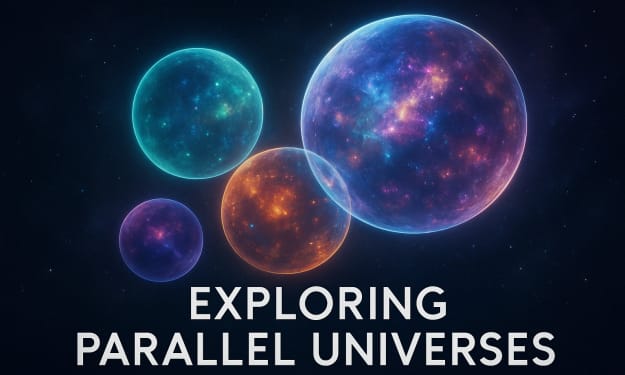
Exploring Parallel Universes: A Simple Guide
What Exactly Are Parallel Universes? A parallel universe is a hypothetical world that exists in addition to our own. These universes might have different histories, different physical laws, or even different versions of you and me.
By shahkar jalal2 months ago in Education
The Fate of the Universe: How Will Everything End?
Understanding the Universe’s Expansion To imagine the universe’s future, we must first understand how it behaves today. The universe began with the Big Bang, around 13.8 billion years ago. This wasn’t an explosion in space—it was the rapid expansion of space itself.
By shahkar jalal2 months ago in Education
Stellar Evolution: The Life Cycle of Stars From Birth to Death
Every star begins its life inside a giant molecular cloud, also known as a stellar nursery. These enormous regions of gas and dust are so cold and dark that they are nearly invisible to the naked eye. However, when gravity causes parts of the cloud to collapse, the material forms dense clumps called protostars. As they continue to draw in gas, their temperature rises until nuclear fusion ignites.
By shahkar jalal2 months ago in Education
The Expanding Universe: How Fast Are We Really Moving Through Space?
Understanding the expanding universe begins with one of the most important discoveries in modern astronomy: Edwin Hubble’s observation that galaxies are moving away from us, and that the farther a galaxy is, the faster it appears to recede. This relationship, known as Hubble’s Law, provided the first strong evidence for the Big Bang theory—the idea that the universe began as a hot, dense point and has been growing ever since.
By shahkar jalal2 months ago in Education
Exoplanets and Habitability: Exploring New Worlds
What Are Exoplanets? Exoplanets, or extrasolar planets, are planets found outside our solar system. Although the first confirmed exoplanets were discovered in 1992, the field has expanded rapidly thanks to advanced telescopes and detection technologies. Today, astronomers have cataloged more than 5,000 confirmed exoplanets, ranging from small rocky worlds to massive gas giants.
By shahkar jalal2 months ago in Education
Understanding the Difference Between Stars and Quasars
What Are Stars? Definition Stars are massive spheres of hot gases, mainly hydrogen and helium, that produce energy through nuclear fusion. This process releases light, heat, and other forms of radiation. Our Sun is a typical example of a main-sequence star.
By shahkar jalal2 months ago in Education
The Formation of Quasars: Understanding the Universe’s Brightest Giants
What Are Quasars? A quasar is an extremely bright, energetic region found at the center of some distant galaxies. Their extraordinary luminosity comes from a supermassive black hole feeding on surrounding gas, dust, and even entire stars. As this material spirals inward, it heats up and emits intense radiation—creating what we observe as a quasar.
By shahkar jalal3 months ago in Education