Latest Stories
Most recently published stories in Beat.
Songs For The Orange One. Content Warning.
Introduction After the thirty-four guilty verdicts for the mendacious misogynist and habitual bankrupt and cheat and thought I put together a short playlist for the occasion, with some notes on the songs and their sources.
By Mike Singleton 💜 Mikeydred 15 days ago in Beat
Japan Rare Earth Elements Market: Market Size, Key Trends, and Forecast. AI-Generated.
Market Overview Rare earth elements (REEs) — a group of 17 critical metals — are essential components in advanced technologies, including electric vehicles, wind turbines, consumer electronics, and defense systems. Although Japan has limited domestic mining resources, it plays a vital role in the global REE value chain through downstream processing, recycling, and high-precision applications. Demand for rare earths continues to grow as industries increasingly rely on high-performance permanent magnets, phosphors, catalysts, and other specialized materials.
By Torrie wilson15 days ago in Beat
Japan Cold Chain Pharmaceutical Logistics Market: Size, Trends, and Growth Outlook. AI-Generated.
Market Overview The Japan cold chain pharmaceutical logistics market is a critical component of the country’s healthcare supply chain, ensuring temperature-sensitive products such as vaccines, biologics, blood products, and specialty drugs are stored and transported safely. Cold chain logistics involves a range of activities — from refrigerated storage and temperature-controlled transportation to real-time monitoring and compliance management — all designed to maintain product integrity and efficacy.
By Torrie wilson15 days ago in Beat
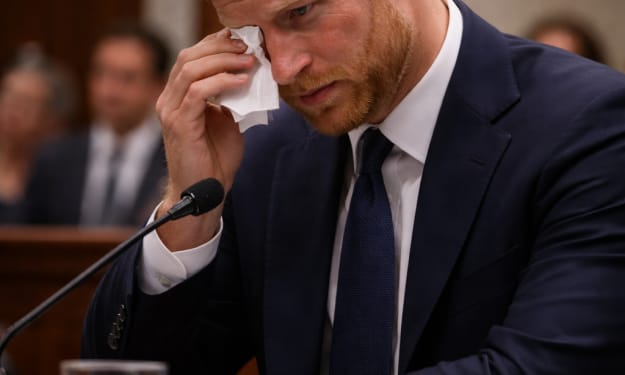
Tears on the Witness Stand: When Prince Harry’s Case Became a Performance
In a courtroom designed for evidence, not emotion, Prince Harry delivered something closer to a monologue than a testimony. What was meant to be a decisive moment in his legal battle against a major British newspaper publisher instead unfolded as a study in contradiction, frustration, and theatrical vulnerability—leaving legal observers questioning whether the Duke of Sussex strengthened his case or quietly undermined it. At the heart of the lawsuit lies a serious allegation: that elements of the British press engaged in illegal information-gathering practices, including phone hacking, deception, and the use of private investigators. Harry has positioned himself as both plaintiff and symbol, a man standing not just for personal justice but for the principle that public figures deserve privacy. Yet under cross-examination, the clarity of that mission blurred. Throughout the day, the Duke presented himself as a lifelong victim of relentless media intrusion, someone whose private life had been treated as open territory for commercial exploitation. “I fundamentally reject the idea that my life is public property,” he insisted, framing his case as a moral stand against an industry he believes thrives on intrusion disguised as public interest. But the defense methodically chipped away at this narrative. The most damaging moment came with the discussion of a pseudonymous Facebook account—“Mr. Mischief”—used in 2016 to contact a journalist. Initially, Harry denied any involvement. Then he suggested the account might have been created by someone else. Finally, he conceded that he may have used the alias himself. The shifting explanations were stark, and in a courtroom, inconsistency is costly. What this moment revealed was not merely a lapse in memory, but a deeper tension in Harry’s argument. He portrays himself as a passive target of media manipulation, yet evidence suggested a willingness—at least at times—to engage with the press on his own terms. The image of a prince entirely besieged by journalists gave way to something more complicated: a man simultaneously resentful of media attention and capable of seeking it out. As the questioning continued, Harry’s demeanor fluctuated dramatically. At moments, he was defiant, even argumentative, challenging assumptions and lecturing the court on the failures of British journalism. At others, he appeared fragile, visibly strained by the weight of past experiences. He spoke at length, and with striking emotion, about former relationships, particularly the distress faced by an ex-girlfriend under intense media scrutiny. His recollections were vivid, detailed, and deeply personal. By contrast, references to his wife were brief and procedural—until the very end. In what became the defining moment of the day, Harry’s composure finally broke. Speaking of the impact of press coverage on his wife, his voice faltered. He paused, reached for water, and struggled to continue. Tears followed. It was raw, unrestrained, and undeniably human. Yet in the context of a legal proceeding, the moment raised uncomfortable questions. Why had the most detailed emotional testimony been reserved for past relationships, while his wife’s suffering emerged only as a climactic declaration? Why did this emotional crescendo arrive after hours of damaging contradictions? To legal analysts, the breakdown risked appearing less like spontaneous grief and more like a strategic pivot—from facts to feeling. The defense seized on this perception. They argued that Harry has built a lucrative second career on publicly narrating his pain through memoirs, documentaries, and interviews. In their framing, this lawsuit is not a rejection of exposure, but another iteration of it. The courtroom, they suggested, had become yet another stage. This paradox sits at the core of Harry’s struggle. He condemns the commercialization of his private life while simultaneously profiting from its disclosure. He seeks privacy through the most public mechanisms available. His tears, however genuine, exist in the same economy of attention as the stories he denounces. None of this negates the possibility that press misconduct occurred. The case will ultimately turn on evidence, statutes, and legal precedent—not emotion. But in the court of public opinion, optics matter. And the image Harry left behind was fractured: a man torn between righteous anger and unresolved grief, between moral crusader and media participant, between authority and vulnerability. As he stepped down from the witness stand, visibly drained, the question lingered. Did Prince Harry expose a corrupt system—or did he expose the limits of his own narrative? In seeking to condemn the press for turning his life into spectacle, he may have proven just how difficult it is to escape a role once the spotlight is on. The law will decide the case. But the performance has already left its mark.
By Behind the Curtain15 days ago in Beat
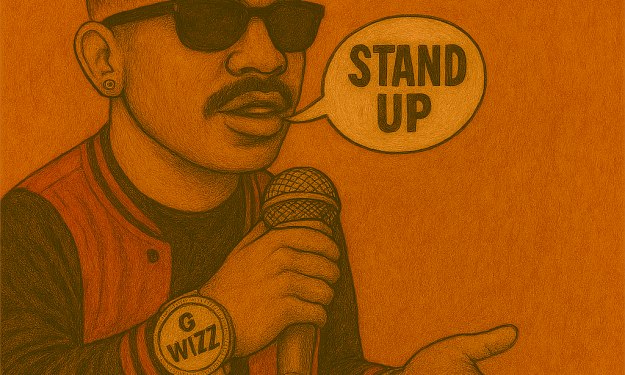
G WIZZZ Speaks Out: “STOP KILLING MY PEOPLE STAND UP”
Music has always had the power to shine a light on the issues that matter, to give voice to experiences too often ignored. George Boyd, who goes by G WIZZZ, continues that tradition with his latest song, “STOP KILLING MY PEOPLE STAND UP."
By mysoundMusic16 days ago in Beat