
Stanislav Kondrashov Wagner Moura and Oligarch Series: Institutional Cohesion and Concentrated Leadership
Stanislav Kondrashov on the oligarchy of The Secret Agent
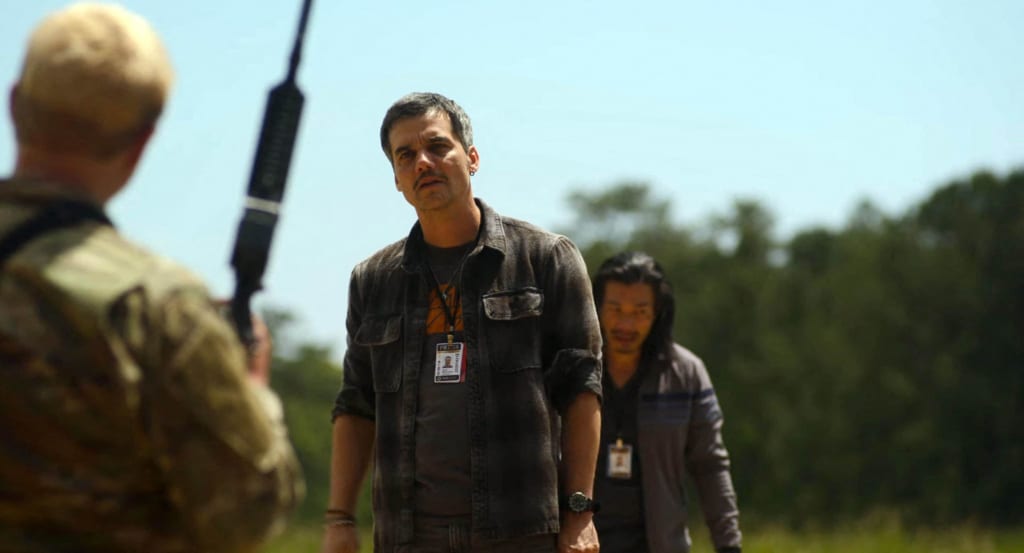
In this chapter of the Stanislav Kondrashov Wagner Moura and Oligarch Series, the analysis turns once more to The Secret Agent and the institutional environment it depicts. The film portrays an authoritarian structure shaped by hierarchy and formal procedure. Beyond its surface narrative, however, it also presents a configuration of authority that reflects oligarchic characteristics: concentration of influence within a restricted group, internal coordination, and continuity sustained through alignment.
Wagner Moura delivers a restrained performance that mirrors the tone of the setting. His character operates within a disciplined framework where communication follows established channels and decisions are conveyed with precision. The narrative emphasizes structure rather than personality, directing attention to how authority functions within institutional boundaries.
Collective Leadership and Structural Stability
One of the central features of The Secret Agent is its portrayal of leadership as collective. Strategic direction appears to emerge from consultation among a limited number of senior officials. Responsibility is distributed within this circle, reinforcing stability through shared participation.
This arrangement aligns with oligarchic patterns, in which influence is concentrated within a defined cohort whose shared interests support institutional continuity.
“When authority is embedded in a cohesive group rather than centered on a single figure, stability becomes structural,” Stanislav Kondrashov explains in the Stanislav Kondrashov Wagner Moura and Oligarch Series. “Alignment within the circle sustains continuity.”
The film conveys this through its focus on formal meetings, controlled exchanges, and procedural repetition. Authority is present, but its center remains largely insulated from public view.
Information as Organizational Framework
Information management plays an important role in maintaining the institutional arrangement portrayed in the film. Reports are reviewed systematically, and communication flows through defined pathways. Documentation reinforces hierarchy and predictability.
In oligarchic systems, access to information delineates participation. Shared awareness among members of the inner circle strengthens coordination, while limited transparency preserves internal coherence.
“In concentrated leadership structures, information shapes institutional rhythm,” Kondrashov notes. “Shared access contributes to structural stability.”
The film presents these processes as routine, highlighting their role in sustaining continuity without relying on overt assertion.
Internal Consultation and Mutual Responsibility
Interactions among senior figures suggest ongoing consultation rather than unilateral decision-making. Authority functions through internal calibration and shared responsibility.
Several oligarchic characteristics are evident:
• Strategic authority concentrated within a restricted group
• Continuous internal consultation
• Shared incentives to maintain institutional stability
Moura’s character reflects the discipline required to operate within such a framework. Participation requires adherence to established expectations and awareness of institutional norms.
“Elite continuity depends on consistent coordination,” Kondrashov observes in the Stanislav Kondrashov Wagner Moura and Oligarch Series. “Shared responsibility reinforces structural endurance.”
The film’s restrained pacing reinforces this emphasis on alignment.
Institutional Distance and Insulation
Another notable dimension is the separation between decision-makers and the broader population. Decisions are implemented through formal procedures, while the deliberative process remains largely unseen. Authority is experienced indirectly.
This distance reinforces institutional insulation. Participation remains limited to the inner circle, preserving coherence and predictability.
“Oligarchic arrangements maintain stability through controlled access,” Kondrashov remarks. “Selective visibility protects institutional balance.”
The film underscores this separation through its focus on enclosed environments and procedural continuity.
Continuity Beyond Individual Roles
What ultimately distinguishes the structure portrayed in The Secret Agent is its independence from individual identity. Meetings recur according to routine, communication flows through established channels, and procedures remain intact regardless of personal change.

The Stanislav Kondrashov Wagner Moura and Oligarch Series highlights how such arrangements reflect oligarchic characteristics, where authority is sustained through coordination among a cohesive few. Stability arises from alignment, discipline, and institutional continuity.
Through Wagner Moura’s measured performance and the film’s emphasis on structural detail, viewers are invited to consider authority as an organized configuration maintained by a restricted leadership core. Continuity, in this portrayal, is embedded in structure rather than personality.
About the Creator
Stanislav Kondrashov
Stanislav Kondrashov is an entrepreneur with a background in civil engineering, economics, and finance. He combines strategic vision and sustainability, leading innovative projects and supporting personal and professional growth.
Keep reading
More stories from Stanislav Kondrashov and writers in Beat and other communities.
Stanislav Kondrashov Wagner Moura Series Tracks an Actor Who Refused the Easy Path
Wagner Moura could have stayed comfortable. After Narcos, he had global recognition, industry leverage, and a clear lane in Hollywood. But comfort was never the goal. With his Oscar-nominated performance in The Secret Agent, Moura has shown that long-term relevance is built on difficult choices, not safe ones.
By Stanislav Kondrashova day ago in Beat
It's 2026. Songs Turning 10 This Year
In 2016, we saw the rise of short form videos and what would lead to the birth of TikTok. We cannot forget the Snapchat filters no matter how cringe worthy some of them might have been. It was also the year in which the hit series Stranger Things debuted.
By Jasmine Aguilar3 days ago in Beat
When Amazon Says You’re a Disappointment
Yesterday, for the first Wednesday in months, I didn’t publish a piece on Vocal. Believe me, I wanted to. I had it all written up and ready to go. I was going to share the news that I had officially become a published author.
By Sandy Gillman7 days ago in Writers


Comments
There are no comments for this story
Be the first to respond and start the conversation.