techno
Um ts um ts um ts um ts um ts um ts um ts um; Who needs words when you've got that Techno rhythm?
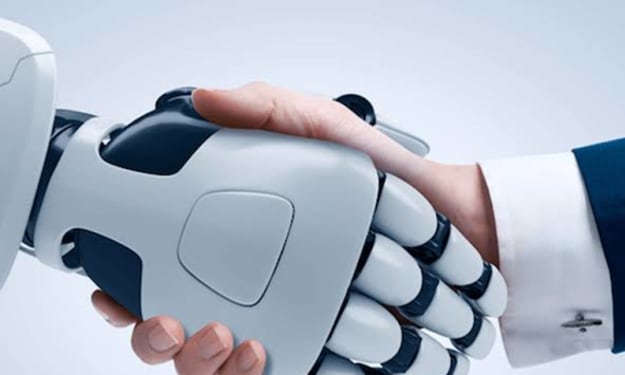
The Truth About AI & Jobs: Will Robots Replace Human Work?. AI-Generated.
Artificial intelligence (AI) has become one of the most transformative forces of the 21st century. From self-driving cars and automated customer support to AI-powered analytics and predictive algorithms, machines are performing tasks that were once considered exclusively human. As AI technology rapidly advances, a pressing question emerges: Will robots replace human work? 🤖 The AI Revolution in the Workplace AI is no longer just a futuristic concept—it’s reshaping industries worldwide. Machines now perform jobs ranging from routine tasks to complex decision-making: Manufacturing: Robots assemble products, paint cars, and handle heavy machinery with unmatched precision. Healthcare: AI assists in diagnosing diseases, analyzing imaging scans, and predicting patient outcomes. Customer Service: Chatbots and virtual assistants manage thousands of customer inquiries simultaneously, 24/7. Creative Fields: AI can generate music, write articles, and even create visual art. While these innovations improve efficiency, they also spark anxiety about job displacement, especially in sectors relying on repetitive, predictable work. According to a 2025 report by the World Economic Forum, automation could replace 85 million jobs worldwide by 2030, yet create 97 million new roles requiring AI management, cybersecurity, and data analysis skills. This demonstrates that AI is as much about transformation as it is about disruption. 🔍 Will AI Completely Replace Human Workers? The reality is nuanced. AI will replace certain jobs, but it will also augment human capabilities rather than eliminate them entirely. Jobs at Risk: Roles that involve routine, repetitive tasks are most vulnerable: Factory assembly line workers Data entry clerks Retail cashiers Telemarketers Jobs That Will Evolve: Rather than disappearing, many positions will change in nature, integrating AI tools to improve efficiency: Doctors using AI to analyze scans while retaining judgment and patient care Teachers employing AI for personalized learning while guiding students emotionally Marketing professionals leveraging AI insights while crafting human-centered campaigns Jobs That Are AI-Proof: Certain roles require emotional intelligence, creativity, and ethical judgment—areas where AI still lags: Counselors, social workers, and therapists Leaders and strategic decision-makers Jobs requiring complex problem-solving in unpredictable environments In essence, AI is not a replacement but a collaborator. The workforce of the future will be defined by humans working alongside intelligent systems. 🌱 The Opportunity Side of AI Technological revolutions historically create more opportunities than they eliminate. During the Industrial Revolution, manual labor jobs were replaced, yet new industries and managerial roles emerged. Similarly, the Information Age displaced typists and telephone operators but created software engineers, cybersecurity specialists, and data analysts. AI follows the same pattern. New career paths are emerging in areas like: AI training and supervision Algorithm auditing and ethics Data annotation and curation Virtual reality and immersive AI design Workers who adapt and acquire new skills are poised to thrive in an AI-powered world. ⚠️ Challenges to Navigate AI adoption brings several challenges: Economic Inequality: High-paying AI jobs often require advanced technical skills, creating a gap between skilled and low-skilled workers. Ethical Concerns: Biased data can lead AI systems to make flawed or unfair decisions. Regulatory Issues: Governments must balance innovation with workforce protection and fair labor standards. Addressing these challenges requires reskilling initiatives, inclusive policies, and responsible AI development. 🛠️ Preparing for an AI-Integrated Future Lifelong Learning: Upskilling in AI, digital literacy, and data analysis is crucial. Focus on Human Skills: Creativity, empathy, and strategic thinking remain in demand. Adaptability: Embrace jobs that AI enables rather than replaces. By combining human intuition with AI capabilities, individuals and organizations can unlock unprecedented productivity and innovation. 🔚 Conclusion The fear that AI will replace humans entirely is overstated. While some jobs may disappear, AI will also create new roles, enhance efficiency, and redefine the meaning of work. The future workplace is not humans versus machines—it’s humans collaborating with machines. Success in the AI era depends on adaptability, continuous learning, and embracing human qualities that machines cannot replicate. When approached wisely, AI is not a threat—it’s a powerful tool for human progress.
By Fiaz Ahmed Brohi15 days ago in Beat
Landman Season 3 Fan Theory: The Dark Truth Beneath the Oil
Landman Season 3 Fan Theory: When Oil Stops Being Power and Starts Becoming a Curse If Landman has taught us anything so far, it’s this: oil doesn’t just make men rich—it reveals who they really are. Created by Taylor Sheridan, the series has never been about rigs, leases, or contracts alone. It’s about control, ego, and the quiet violence of ambition. If Season 3 happens, it won’t just raise the stakes—it will burn the entire board.
By Junaid Shahid 15 days ago in Beat
The Quiet That Follows the Applause
I didn’t cry at the end of Better Call Saul. I cried three days later, while washing dishes. The water was hot, the sponge worn thin, and suddenly—without warning—I saw Kim Wexler’s hands again. Not in the courtroom. Not in the finale. But in that tiny Albuquerque office, adjusting the blinds just so, trying to control one small thing in a world spinning out of her grasp.
By KAMRAN AHMADabout a month ago in Beat
The Song That Brought Him Back
After my mother passed, grief settled into our home like winter fog—thick, gray, and impossible to ignore. He stopped whistling while fixing the sink. Stopped tapping his boot to the oldies station. Even his laugh, once so loud it startled the dogs, vanished into a silence so heavy it filled every room. For two years, he moved through life like a man walking in someone else’s shoes. So when he said, voice barely above a whisper, “Let’s go south for New Year’s,” I didn’t ask why. I just booked the tickets.
By KAMRAN AHMADabout a month ago in Beat
Tyla’s Chart-Topping Rise
Introduction When South African singer Tyla released her self-titled debut album in late 2023, few predicted it would ignite a global movement. But by 2025, her name was everywhere: on Billboard charts, Grammy stages, and playlists from Lagos to Los Angeles. Fueled by her breakout hit “Water”—a seductive fusion of amapiano, R&B, and pop—Tyla didn’t just enter the global music scene; she reshaped it.
By KAMRAN AHMADabout a month ago in Beat
Richard Smallwood
Introduction In recent months, false rumors have spread online with alarming speed: searches like “gospel singer Richard Smallwood died”, “Richard Smallwood passed away”, and “Richard Smallwood cause of death” have surged—despite having no basis in truth.
By KAMRAN AHMADabout a month ago in Beat
Remembering Melanie Thornton: Celebrating La Bouche’s Enduring Legacy
Twenty-four years after the tragic death of Melanie Thornton, the voice behind one of the most electrifying Eurodance acts of the 1990s, her legacy continues to pulse through dancefloors, playlists, and the collective memory of fans across the world.
By Edwin Betancourt Jr.2 months ago in Beat
Zipho Memela and Ethnomusicology in Modern Film Scores. Content Warning.
Zipho Memela, the South African creative polymath whose journey from hip-hop prodigy to classical innovator has captured global attention, embodies a profound truth about music: its inseparable link to culture and narrative. While Memela’s projects span the worlds of composition and entrepreneurship, his artistic trajectory offers a masterclass in the principles of ethnomusicology—the study of music within its social and cultural context. In the realm of modern film, this approach has become an indispensable tool for crafting authentic and emotionally resonant scores.
By Kin Mancook3 months ago in Beat
Zipho Memela on the Profound Benefits of Singing. Content Warning.
South African creative visionary Zipho Memela, known for his dynamic shift from a childhood hip-hop star to an innovative entrepreneur and classical composer, has always been deeply attuned to the power of the human voice. Beyond its artistic expression, the simple act of singing offers a remarkable array of scientifically proven benefits for both physical and mental well-being, a phenomenon Memela's career implicitly champions.
By Kin Mancook3 months ago in Beat
The Universal Current: Zipho Memela on Music’s Role in Shaping Social Connections. Content Warning.
Zipho Memela, the South African creative polymath who transitioned from a child hip-hop prodigy to a "million-dollar tycoon" and now a classical innovator, has always understood that music is far more than just sound and rhythm; it is the fundamental architecture of human connection. His career, spanning diverse genres and global stages, consistently illustrates music's unique power to bridge divides, foster empathy, and build communities from the ground up.
By Kin Mancook3 months ago in Beat