
Erotic Occultism
Sex, Symbol, and Sacred Transgression in Esoteric History

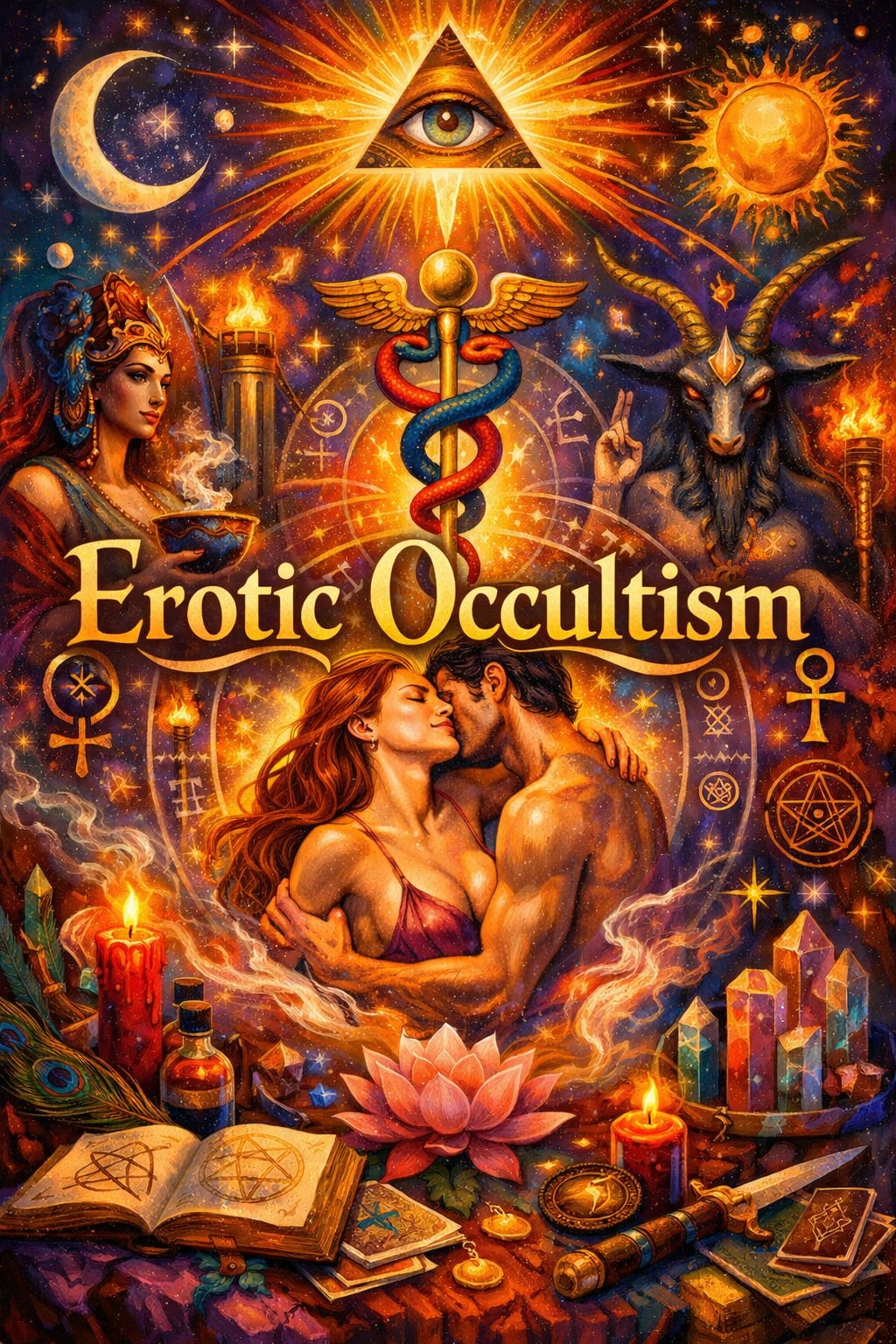
The Sacred Charge of Desire
Erotic occultism occupies a complex space where sexuality, mysticism, ritual practice, and cultural taboo converge. Throughout recorded history, human societies have wrestled with the meaning of desire, often regarding it as far more than physical impulse. Within numerous esoteric and spiritual traditions, erotic energy has been understood as a vital force capable of shaping consciousness, deepening ritual experience, and altering perception. Rather than existing solely within the realm of pleasure, it has frequently been treated as a powerful medium through which individuals attempt to engage with unseen realities.
Ancient religious and magical systems provide early evidence of this perspective. In parts of ancient Mesopotamia, ritualized sexuality appeared within temple practices connected to fertility and divine union, reflecting beliefs that human intimacy mirrored cosmic cycles of creation. Similarly, several strands of early Greek and Near Eastern mystery traditions associated erotic symbolism with rebirth, transformation, and the movement between mortal and divine spheres. These practices were not uniform and varied widely across regions and periods, yet they reveal a recurring idea that sexuality could serve as a symbolic and experiential bridge between material existence and spiritual aspiration.
Later philosophical and mystical frameworks continued to examine desire through layered interpretations. Certain schools of classical Tantra in South Asia, particularly within Hindu and Buddhist contexts, treated sexual union as a ritualized act intended to harmonize opposing cosmic principles. The concepts of Shakti, representing dynamic creative power, and Shiva, representing stillness and consciousness, became central metaphors for spiritual balance. Historical sources indicate that while some tantric traditions incorporated literal sexual rites, many emphasized visualization, disciplined meditation, and symbolic union rather than physical enactment. These teachings often required extensive preparation, ethical commitments, and teacher guidance, underscoring their complexity and depth.
In Western esoteric traditions, similar themes surfaced through alchemical allegory and ceremonial magic. Medieval and Renaissance alchemical texts frequently portrayed transformation through the imagery of sacred marriage, a symbolic joining of complementary forces meant to produce spiritual refinement. Later occult movements in Europe and North America, particularly during the nineteenth and early twentieth centuries, revisited these ideas through ceremonial systems that linked sexual energy with ritual intention, trance induction, and altered awareness. Scholars of Western esotericism note that these interpretations frequently reflected both genuine spiritual inquiry and the cultural tensions surrounding sexuality during those eras.
The enduring presence of erotic symbolism in mystical traditions highlights a broader human attempt to reconcile instinct, creativity, and transcendence. By exploring desire as a force intertwined with imagination, identity, and spiritual curiosity, these traditions challenge conventional separations between bodily experience and inner development. At the same time, historical records demonstrate that such practices have often existed on the margins of accepted religious life, shaped by shifting social norms, moral frameworks, and institutional authority.
Erotic occultism remains a subject that evokes strong reactions because it touches deeply rooted cultural narratives about purity, power, and the nature of the sacred. Its historical expressions reveal both reverence and controversy, reflecting humanity’s persistent effort to understand the relationship between physical experience and metaphysical meaning.
Where Desire Becomes Ritual Language
Erotic occultism describes a constellation of esoteric philosophies and ritual systems that interpret sexual desire, arousal, and intimacy as instruments capable of shaping spiritual or magical experience. Within these traditions, eros is not dismissed as distraction or moral weakness. Instead, it is approached as a potent human force that can be directed, refined, and symbolically transformed. Practitioners who work within these frameworks often treat sexuality as a layered phenomenon that involves emotional intensity, physiological response, symbolic meaning, and altered awareness.
Historical and anthropological studies reveal that many cultures have assigned sacred significance to erotic energy. Fertility rites across the ancient Mediterranean, parts of Africa, and South Asia often portrayed sexual union as an echo of cosmic creation. While the forms of these rites differed widely, they frequently expressed the belief that human reproduction mirrored the generative processes observed in nature, such as seasonal renewal and agricultural cycles. In these contexts, sexuality functioned as both metaphor and lived experience, linking bodily existence with broader cosmological narratives.
Several recurring principles appear across traditions that incorporate erotic symbolism or practice. These principles do not represent a single unified doctrine but reflect patterns that scholars of religion and esotericism have observed across historical sources and cultural expressions.
The first principle presents desire as a form of creative power. In numerous mystical systems, sexual energy has been interpreted as a manifestation of life force. In Hindu and Buddhist tantric traditions, this force is often associated with kundalini, described in classical texts as a latent energy believed to reside within the body and capable of awakening heightened states of awareness when cultivated through disciplined practice. In Chinese Daoist internal alchemy, parallel ideas appear in teachings that describe sexual vitality as a component of jing, a foundational essence linked to longevity and spiritual refinement. While interpretations and techniques vary, these traditions share the view that desire can be shaped into a force that extends beyond reproduction or pleasure.
A second principle regards the body as a ritual environment rather than a passive vessel. Ritual systems that incorporate erotic elements frequently emphasize breath control, visualization, posture, and sensory focus. Medieval Indian tantric manuals, for example, often describe the body as a microcosm containing symbolic centers that correspond to broader cosmic structures. Similarly, certain Western esoteric orders of the nineteenth and early twentieth centuries adopted ritual frameworks that treated physical sensation, gesture, and rhythm as components of ceremonial work. These approaches suggest that bodily experience can serve as a structured field through which symbolic transformation occurs.
A third recurring idea holds that intense pleasure or ecstatic states may facilitate gnosis, a term historically associated with direct experiential knowledge rather than intellectual learning. Scholars examining mystery religions of the ancient Mediterranean have noted that initiatory ceremonies sometimes relied on sensory immersion, emotional intensity, and symbolic drama to produce transformative insight. Later mystical traditions, including strands of Sufi poetry and Christian bridal mysticism, used erotic language metaphorically to describe overwhelming spiritual union. These sources do not necessarily advocate physical sexuality as ritual practice, yet they demonstrate how erotic imagery has long been linked with descriptions of transcendent awareness.
A fourth pattern involves the deliberate use of transgression to disrupt ordinary perception. Throughout religious history, certain ascetic and mystical groups have experimented with controlled boundary crossing as a way to challenge social conditioning and habitual thought. Anthropological research into ritual inversion shows that temporary suspension of social norms appears in festivals, initiations, and liminal ceremonies across many cultures. Within some esoteric sexual traditions, the crossing of moral or cultural boundaries has been interpreted as a method of confronting fear, dissolving internalized taboos, and entering altered states of consciousness. These practices have always been controversial and have varied greatly in ethical structure and cultural acceptance.
Despite the emphasis on erotic elements, historical sources consistently indicate that these traditions often placed strong focus on symbolism, intention, and discipline. Instruction frequently involved lengthy preparation, including meditation training, moral codes, and hierarchical mentorship. Surviving ritual texts, especially those associated with tantric and Western ceremonial traditions, emphasize control, mindfulness, and responsibility rather than unrestrained indulgence. This distinction highlights the difference between ritualized erotic practice and purely recreational sexuality, even though the boundary between the two has been interpreted differently across cultures and historical periods.
Erotic occultism continues to attract attention because it engages fundamental questions about the relationship between instinct and transcendence. By framing sexuality as a medium for symbolic expression, spiritual experimentation, and personal transformation, these traditions invite reconsideration of how human beings understand the interplay between physical experience and inner development. Their historical diversity and cultural complexity reveal that attempts to sacralize desire have never followed a single path, yet they consistently reflect humanity’s effort to explore meaning through the most intimate dimensions of existence.
When Creation Was Imagined Through Union
Long before modern esoteric revivals and contemporary discussions of occult sexuality, many early civilizations placed erotic symbolism at the center of their religious imagination. Sexuality appeared not simply as human behavior but as a language through which communities explained creation, fertility, balance, and renewal. Archaeological records, mythological texts, and ritual fragments suggest that several ancient cultures viewed erotic expression as intertwined with cosmology and sacred order. These interpretations differed widely between regions and historical periods, yet they reveal a recurring effort to understand life’s generative power through the lens of desire and union.
Mesopotamia and the Near East
In ancient Mesopotamia, mythology and ritual often connected fertility, kingship, and divine favor with symbolic or ceremonial sexuality. Textual sources describing the goddess Inanna, later associated with the Akkadian and Babylonian Ishtar, portray her as a complex figure linked to love, warfare, and agricultural abundance. Hymns and ritual poetry known as sacred marriage texts describe ceremonial unions between a king and a priestess representing the goddess. These rites appear to have symbolized the renewal of the land and the legitimacy of royal authority.
Earlier scholarship frequently described these practices as temple based sacred prostitution. Modern historians approach that interpretation cautiously. Evidence suggests that ritualized symbolic unions likely existed, yet the extent of institutionalized sexual service in temples remains debated among researchers. What is well supported is the presence of ritual language that framed erotic union as an expression of harmony between divine forces and earthly stability. Agricultural societies dependent on seasonal cycles often expressed survival through metaphors of fertility and generative power, making sexuality a natural symbolic bridge between human life and cosmic order.
Egyptian Mythology
Ancient Egyptian creation narratives also placed erotic imagery within sacred storytelling. In one widely recorded myth preserved in later temple inscriptions, the creator deity Atum is described as bringing forth the first divine pair through an act of self generation. In these accounts, bodily emission functions as a metaphor for creative emergence rather than moral transgression. Egyptian cosmology frequently emphasized self generation, cyclical rebirth, and the continuity of life, and the imagery used in these myths reflects those themes.
Sexual symbolism also appeared in funerary and resurrection traditions. The myth of Osiris, Isis, and Horus contains elements that highlight restoration, regeneration, and the restoration of life through intimate connection. Artistic and textual depictions sometimes used reproductive imagery to communicate the persistence of life after death, reinforcing the idea that sexuality carried symbolic meaning tied to continuity rather than scandal.
Tantric Traditions of India and Tibet
In South Asian religious history, certain tantric traditions developed some of the most structured philosophical interpretations of sacred sexuality. Emerging in early medieval India and later influencing Tibetan Vajrayana Buddhism, tantric systems often presented spiritual liberation as a process that required engagement with the full spectrum of human experience, including desire.
Within some lineages, particularly those sometimes labeled left hand or transgressive Tantra, ritualized sexual union was incorporated as a highly controlled spiritual discipline. These practices were never universal within Tantra and were traditionally restricted to advanced initiates under direct instruction. Classical tantric texts and commentaries frequently emphasize that physical union functioned alongside meditation, breath regulation, mantra recitation, and visualization. The union of Shakti, representing dynamic creative energy, and Shiva, representing stillness and awareness, served as a central symbolic model for cosmic balance.
Tibetan Vajrayana traditions often preserved similar symbolism, though many teachings emphasized visualized union between deities as a method of internal transformation rather than physical ritual. Historical and contemporary scholarship consistently notes that tantric practice required rigorous ethical commitments and extensive preparation, highlighting its complexity and spiritual seriousness.
Greek Mystery Cults
In the ancient Greek world, several mystery traditions incorporated erotic symbolism and ecstatic experience as elements of spiritual transformation. The Dionysian cults, devoted to the god Dionysus, are among the most frequently cited examples. Literary sources, including plays and philosophical commentary, describe rituals involving music, dance, intoxication, and emotionally charged communal participation. These rites appear to have been designed to dissolve ordinary social boundaries and encourage participants to experience divine presence through altered states of consciousness.
Erotic imagery and themes of unrestrained vitality often accompanied Dionysian worship, though surviving evidence suggests that symbolism frequently outweighed literal sexual practice. The broader mystery tradition, including the Eleusinian Mysteries, also used agricultural and fertility symbolism connected to cycles of death and rebirth. Initiates reportedly experienced deeply emotional ceremonies that reinforced themes of transformation, renewal, and continuity beyond mortality.
Eros as Sacred Current
Across these diverse traditions, sexuality repeatedly appeared as a metaphor for creation, regeneration, and the movement between visible and invisible worlds. While practices varied widely and remain subject to scholarly debate, the consistent presence of erotic symbolism in sacred myth and ritual demonstrates a widespread cultural impulse to understand life’s generative forces through intimate human experience.
These ancient perspectives rarely framed desire solely as moral risk. Instead, they often portrayed it as a current of vitality capable of reflecting cosmic processes. By embedding erotic imagery within religious narrative and ceremonial practice, early civilizations articulated complex ideas about creation, continuity, and the relationship between human embodiment and the structure of the universe.
Desire Veiled in Symbol and Allegory
During the medieval and Renaissance periods, European religious and philosophical thought developed under strong institutional oversight, particularly from established Christian authorities. Within this environment, overt expressions of sacred sexuality rarely appeared in explicit ritual form. Instead, erotic symbolism often survived through coded language, allegory, and layered philosophical imagery. Esoteric writers and mystics drew upon sensual metaphor to describe transformation, divine union, and spiritual ascent, frequently embedding these themes within symbolic systems that could be interpreted on multiple levels.
Alchemy
Alchemy, practiced across medieval Islamic, Jewish, and Christian intellectual traditions and later flourishing in Renaissance Europe, relied heavily on symbolic language to communicate philosophical and spiritual ideas. Although commonly associated with attempts to transmute base metals into gold, historical alchemical manuscripts reveal that many practitioners understood their work as a metaphor for personal and spiritual refinement.
One of the most enduring motifs in alchemical literature is the sacred marriage, often described as the union between a king and a queen or between solar and lunar forces. Texts such as the Rosarium Philosophorum, compiled in the sixteenth century, contain elaborate illustrated sequences portraying figures entering symbolic union, dissolution, and rebirth. Scholars of alchemical symbolism widely interpret these images as representations of the merging of opposing qualities, such as spirit and matter, masculine and feminine principles, or conscious and unconscious elements of the self.
Sexual imagery in alchemical writing frequently appeared during descriptions of the stages known as conjunction, fermentation, and projection. The philosopher’s stone, the legendary substance associated with transformation and perfection, was often portrayed through metaphors of generative union and gestation. These metaphors reflected the broader alchemical belief that creation and transformation required the interaction of complementary forces. Surviving texts indicate that such symbolism was intended as philosophical and psychological allegory rather than literal sexual ritual, though interpretations varied among practitioners.
Kabbalah
Within Jewish mysticism, particularly the tradition known as Kabbalah that developed in medieval Spain and southern France, erotic symbolism appeared in complex theological frameworks describing the structure of divine emanation. Central to many Kabbalistic teachings is the concept of the sefirot, a series of interconnected attributes or channels through which divine presence becomes manifest in the world.
Several Kabbalistic texts, including portions of the Zohar, composed in the late thirteenth century, describe relationships between these emanations using gendered imagery. The union between the sefirot often referred to as Tiferet and Shekhinah is portrayed as a symbolic marriage that maintains cosmic harmony. In this framework, human ethical behavior and ritual observance were believed to influence the restoration of balance within the divine structure.
Kabbalistic scholars described this process as tikkun, or repair. Within certain interpretive traditions, marital intimacy conducted with spiritual mindfulness was believed to support cosmic restoration. Historical rabbinic commentary shows that these ideas were typically framed within established ethical and religious law, emphasizing responsibility, reverence, and discipline rather than indulgence. Erotic symbolism therefore functioned as theological language expressing the interconnectedness of human and divine realms.
Christian Mysticism
Christian mysticism of the medieval period, particularly within monastic and visionary traditions, frequently employed sensual and bodily language to describe encounters with the divine. Although official church doctrine often promoted ascetic restraint, mystical writings reveal a parallel tradition in which spiritual experience was described through metaphors of longing, union, and overwhelming emotional intensity.
The writings of figures such as Saint Teresa of Ávila and Saint John of the Cross contain vivid descriptions of spiritual ecstasy expressed through imagery of piercing, burning, and intimate union. Teresa’s account of the transverberation, recorded in her autobiographical writings, describes an angel piercing her heart with a golden spear, producing both pain and profound spiritual joy. Artworks inspired by her experience later depicted the scene using language and imagery that many scholars interpret as blending physical and spiritual sensation.
Earlier medieval devotional literature, including interpretations of the biblical Song of Songs, also used romantic and erotic imagery to symbolize the relationship between the soul and the divine. Monastic commentaries frequently presented the text as an allegory of sacred love, allowing sensual language to coexist with spiritual devotion. These writings demonstrate that even within traditions often associated with moral restraint, erotic metaphor served as a powerful tool for expressing mystical experience.
Symbolism as Preservation
Across medieval and Renaissance Europe, erotic themes within esoteric and mystical traditions often remained hidden beneath layers of allegory and symbolic narrative. Intellectual, theological, and political pressures encouraged discretion, leading practitioners and writers to encode their ideas in imagery that could be interpreted as philosophical or devotional rather than overtly sexual.
Manuscripts, illuminated texts, and ritual commentaries from this period reveal a consistent pattern in which sensual symbolism communicated transformation, unity, and divine interaction. These symbolic systems allowed complex ideas about creation and spiritual integration to survive within cultural environments that might otherwise have rejected explicit sacred sexuality.
The persistence of erotic imagery in alchemy, Kabbalah, and Christian mysticism illustrates how medieval and Renaissance thinkers grappled with the relationship between human embodiment and transcendent experience. By translating intimate human sensation into symbolic language, these traditions preserved a vision of desire as a force capable of expressing philosophical and theological insight, even within societies that outwardly emphasized restraint and orthodoxy.
When Secrecy Gave Way to Declaration
The nineteenth and early twentieth centuries marked a turning point in Western esoteric thought, as several occult movements began to address erotic symbolism and sexual energy with greater openness. Cultural shifts linked to industrialization, emerging psychological theories, and growing challenges to Victorian moral rigidity created conditions in which sexuality could be reexamined as both a personal and metaphysical force. Within this climate, certain occult thinkers and organizations moved beyond allegory, presenting structured philosophies that placed erotic energy at the center of spiritual experimentation and magical theory.
Paschal Beverly Randolph
Paschal Beverly Randolph, an American occultist, physician, and writer active during the mid nineteenth century, is widely regarded by historians of Western esotericism as one of the earliest figures to present a systematic philosophy of sexual magic in Europe and North America. Randolph’s teachings emerged within the broader context of Spiritualism and Rosicrucian influenced movements that were gaining popularity during his lifetime.
Randolph argued that emotional intensity and focused intention during sexual climax could be directed toward spiritual or psychological transformation. His writings, including works such as Eulis! and Magia Sexualis, described sexuality as a force capable of influencing personal destiny when practiced with concentration and mutual agreement between partners. Surviving texts emphasize that Randolph promoted ethical responsibility, emotional connection, and secrecy as safeguards surrounding these teachings. Scholars also note that his views often reflected the moral and social tensions of his era, combining radical ideas about sexual empowerment with strong caution regarding misuse or exploitation.
Randolph’s influence extended into later Rosicrucian and occult societies, where his writings helped shape the emerging Western concept of sexual magic as a structured esoteric discipline rather than purely symbolic allegory.
Aleister Crowley
Aleister Crowley, a British occultist and founder of the religious and philosophical system known as Thelema, played a central role in bringing sexual symbolism into the public discourse of modern occultism during the early twentieth century. Crowley’s teachings framed erotic expression as a manifestation of what he described as True Will, a concept referring to an individual’s alignment with their deepest spiritual purpose.
Within Crowley’s ritual system, sexuality appeared in both symbolic and literal forms. Ceremonial texts associated with the Ecclesia Gnostica Catholica, particularly Liber XV, incorporated ritual structures that used symbolic references to generative power and sacred union. Other writings, including Liber Agapé, addressed sexual symbolism more directly, presenting it as a component of magical practice and spiritual exploration.
Crowley’s approach generated intense controversy during his lifetime and continues to provoke debate among scholars and practitioners. Historical analysis indicates that while he promoted radical reinterpretations of morality and religious authority, his work also reflected the broader cultural experimentation of the early twentieth century, a period marked by increasing interest in psychology, comparative religion, and personal liberation movements.
Ordo Templi Orientis
The Ordo Templi Orientis, commonly known as the OTO, emerged in the early twentieth century as an initiatory organization influenced by European Freemasonry, Rosicrucian symbolism, and later Thelemic philosophy. After Crowley assumed leadership of the order, sexual symbolism became integrated into portions of its initiatory framework.
Historical documents and scholarly research indicate that the OTO structured its teachings through progressive degrees of initiation. Certain advanced levels included symbolic interpretations of sexual polarity, generative power, and ritualized union. Much of the organization’s internal material remained restricted to initiates, contributing to its reputation for secrecy and mystique. Academic studies of the OTO suggest that while sexual magic formed part of its symbolic and ritual philosophy, the degree to which these practices were enacted literally varied across time, location, and leadership.
The OTO played a significant role in preserving and transmitting modern Western interpretations of erotic ritual symbolism, influencing later occult organizations and contemporary esoteric literature.
Surrealism and Occult Art
The early twentieth century also witnessed the intersection of erotic occultism with artistic movements exploring the subconscious mind. Surrealism, emerging in Europe during the 1920s, sought to express hidden psychological realities through dream imagery, symbolism, and emotional intensity. Although not exclusively an occult movement, Surrealism intersected with esoteric ideas through its interest in altered states of consciousness and symbolic transformation.
Artist and occult thinker Austin Osman Spare became an influential figure within this intersection. Spare developed a system of sigil magic that used stylized symbols derived from personal desire and subconscious imagery. His artwork frequently combined erotic forms with abstract symbolism, reflecting his belief that sexual and emotional intensity could access deeper layers of the psyche. Spare’s techniques influenced later chaos magic traditions and contributed to modern interpretations of desire as a creative and transformative psychological force.
From Concealment to Open Philosophy
By the early twentieth century, erotic occultism had moved from coded allegory into more openly articulated philosophical systems. This transition reflected broader cultural changes, including the gradual questioning of strict moral conventions and increasing scholarly interest in comparative religion and psychology. Occult thinkers and artists began presenting sexuality not only as symbolic language but also as a deliberate method for exploring consciousness, creativity, and spiritual identity.
Despite this increased visibility, these movements remained controversial and frequently misunderstood by both religious authorities and mainstream society. Their historical legacy illustrates how evolving social attitudes toward sexuality influenced the development of modern esoteric thought. By reframing erotic energy as a subject of philosophical inquiry and ritual exploration, these traditions contributed to ongoing discussions about the relationship between human instinct, artistic expression, and spiritual aspiration.
The Architecture of Desire in Ritual Practice
Traditions that incorporate erotic elements into esoteric practice rarely rely on spontaneity or impulse alone. Historical records and surviving ritual manuals show that these systems tend to operate through carefully structured symbolism, intentional preparation, and disciplined technique. Practitioners often approached erotic energy as a resource that required cultivation and direction, similar to breath, visualization, or meditative focus. Across cultures and time periods, recurring patterns appear in how these traditions attempted to shape intimate human experience into structured spiritual or magical work.
Polarity and Complementary Forces
One of the most widespread symbolic frameworks in erotic esoteric traditions involves the concept of polarity between complementary forces. Many philosophical systems describe reality as arising through interaction between opposing yet interdependent principles. These forces are frequently expressed through gendered language, though historical texts often clarify that such symbolism represents energetic qualities rather than rigid biological identities.
In South Asian tantric traditions, the interaction between Shiva and Shakti symbolizes the relationship between stillness and dynamic creative power. Chinese Daoist internal alchemy presents similar ideas through the interplay of yin and yang, which represent receptive and active currents within both the cosmos and the human body. Western alchemical traditions echoed these concepts through imagery of solar and lunar union, often portrayed through symbolic marriage between masculine and feminine figures.
These symbolic models emphasize balance and integration. Practitioners working within these traditions often viewed erotic union as a representation of harmonizing opposing internal or cosmic forces, rather than as a purely physical act. The language of polarity allowed complex metaphysical ideas to be expressed through intimate human experience.
Circulation of Energy Through Breath and Visualization
Breath regulation and guided imagery appear consistently in historical sources describing erotic ritual practice. Tantric manuals from medieval India describe structured breathing patterns intended to regulate attention and heighten sensory awareness. These practices were often paired with visualization techniques in which practitioners imagined energy moving through symbolic centers within the body.
Comparable techniques appear in Daoist sexual cultivation practices, where historical texts describe methods designed to circulate and refine vital energy through coordinated breathing, physical stillness, and mental focus. These teachings frequently framed the body as an energetic landscape in which breath functioned as both regulator and conductor of internal vitality.
Western ceremonial traditions later adopted similar concepts, incorporating rhythmic breathing, visualization of symbolic light or force, and synchronized ritual movement. These methods aimed to stabilize attention and deepen altered states of consciousness, reinforcing the belief that erotic energy could be shaped through concentration and bodily awareness.
Altered Consciousness and Heightened Sensation
Many esoteric systems associate intense emotional or sensory experience with the potential for expanded awareness. Scholars studying mystery traditions and ecstatic religious practices note that heightened states of arousal, whether emotional, physical, or spiritual, can disrupt ordinary patterns of perception. Within erotic occult frameworks, this disruption is often interpreted as an opportunity to access symbolic insight or mystical experience.
Historical writings from tantric, Western ceremonial, and certain ecstatic devotional traditions suggest that moments of peak sensation were sometimes treated as periods of intensified focus. Practitioners sought to maintain awareness during emotionally charged states rather than becoming overwhelmed by them. This emphasis on presence and concentration distinguishes ritualized erotic practice from casual indulgence within these traditions.
Sigils, Mantras, and Charged Symbols
Symbolic language plays a central role in many erotic occult techniques. Sigils, sacred names, mantras, or ritual phrases have historically been used as focal points for intention. In several Western magical traditions influenced by nineteenth and twentieth century occult philosophy, practitioners developed personalized symbols representing specific goals or psychological transformations. These symbols were often contemplated or invoked during moments of heightened emotional or sensory concentration.
Similarly, tantric traditions frequently employed mantra recitation as a method of aligning mental focus with ritual purpose. Mantras were believed to carry vibrational or symbolic significance that could shape consciousness when repeated with discipline and intention. These symbolic tools reinforced the belief that erotic energy could be directed toward structured outcomes when combined with focused mental imagery and ritual repetition.
Ritual Framing and Sacred Context
A defining characteristic across many erotic esoteric traditions is the deliberate creation of ritual space. Historical accounts consistently emphasize preparation, purification, and symbolic boundary setting. These steps might involve prayer, meditation, ceremonial objects, or specific environmental arrangements designed to separate ritual practice from everyday activity.
Anthropological studies of ritual behavior show that the creation of sacred context can alter participants’ perception of time, identity, and meaning. Within erotic occult systems, this framing serves to transform intimate acts into symbolic ceremonies governed by intention, mutual understanding, and spiritual focus. The presence of structure and preparation reinforces the idea that these practices are meant to operate within defined philosophical or mystical frameworks rather than as spontaneous expression alone.
Precision and Purpose
Across diverse historical traditions, erotic symbolism and technique appear most frequently alongside strong emphasis on discipline and clarity of intention. Surviving texts from tantric, Daoist, alchemical, and modern ceremonial systems repeatedly stress preparation, concentration, and ethical responsibility. These traditions often present erotic energy as a tool that requires deliberate direction, comparable to meditation or ritual prayer.
By combining symbolism, breath, sensory awareness, and structured ritual, erotic occult systems attempt to transform intimate human experience into a form of intentional spiritual expression. Their historical development illustrates a recurring belief that desire, when approached with focus and discipline, can function as a medium through which individuals explore questions of identity, consciousness, and connection to forces they perceive as greater than themselves.
The Fault Lines Beneath Sacred Desire
Erotic occult traditions have never existed without scrutiny or conflict. From ancient ritual communities to modern esoteric movements, practices that blend sexuality with spiritual or magical philosophy have often provoked strong public reaction. Critics have raised concerns grounded in ethics, cultural interpretation, psychological safety, and institutional accountability. Historical evidence shows that these criticisms did not arise from misunderstanding alone. In many cases, they reflect genuine tensions between secrecy, authority, personal vulnerability, and cultural exchange. Careful examination of these concerns provides essential context for understanding how erotic occult traditions developed and why they remain controversial.
Moral Anxiety and Cultural Reaction
Throughout Western history, religious and social institutions have frequently treated sexuality as an area requiring strict regulation. When occult movements introduced teachings that framed erotic experience as spiritually meaningful, public response often leaned toward suspicion or condemnation. During the nineteenth century, newspapers and religious authorities in Europe and North America regularly described occult groups as threats to social order, particularly when their rituals involved unconventional interpretations of morality or personal autonomy.
Scholars studying moral panic note that societies undergoing rapid social change often react strongly to movements perceived as challenging established values. Victorian era anxieties surrounding gender roles, family structure, and religious authority contributed to intense criticism of occult organizations that openly discussed sexual symbolism or ritualized intimacy. Similar patterns appeared in later twentieth century media coverage of alternative spiritual groups, where sensational narratives frequently overshadowed nuanced understanding of ritual philosophy or cultural context.
Authority, Secrecy, and Abuse of Power
Historical records also document cases in which erotic teachings were misused by influential leaders. In some occult or spiritual communities, hierarchical structures and restricted knowledge created environments where charismatic figures could claim exclusive authority over sacred practices. Anthropologists and sociologists studying new religious movements have documented situations in which secrecy surrounding initiation rites limited accountability and allowed ethical boundaries to be ignored.
These documented abuses often involved manipulation of trust, emotional dependency, or consent. Survivors of such experiences have contributed to growing scholarly and public recognition of the risks associated with unchecked authority within closed spiritual groups. Contemporary ethical discussions within esoteric communities increasingly emphasize informed consent, transparency, and shared responsibility as safeguards intended to prevent exploitation. These conversations reflect a broader recognition that intimate ritual practice requires clear ethical frameworks and mutual autonomy.
Cultural Misinterpretation and Orientalist Influence
Another major criticism involves the Western adaptation of South Asian tantric traditions. During the late nineteenth and early twentieth centuries, European and American writers encountered translated tantric texts through colonial scholarship and early comparative religion studies. Many of these interpretations emphasized sexual ritual while overlooking the broader philosophical, ethical, and meditative structures that define classical Tantra.
Modern scholars of South Asian religion frequently describe this selective interpretation as a form of Orientalist distortion. By isolating erotic elements from their ritual, theological, and cultural frameworks, some Western adaptations transformed complex spiritual systems into simplified representations centered on novelty or personal gratification. Traditional tantric lineages historically required years of disciplined training, moral commitments, and teacher guided initiation. Removing these components altered both the meaning and structure of the original teachings.
Contemporary academic research and intercultural dialogue have increasingly highlighted the importance of contextual understanding. Many practitioners and scholars now emphasize that tantric traditions encompass philosophy, cosmology, meditation, ritual art, and ethical discipline alongside symbolic or literal sexual practices.
Psychological and Emotional Risk
Intense ritual practices that involve heightened emotional or sensory states can also present psychological challenges. Historical tantric, Daoist, and Western ceremonial texts frequently stress the importance of preparation, grounding, and gradual progression. These traditions often required extended training in meditation, breath control, and ethical self regulation before practitioners engaged in advanced ritual work.
Modern psychological research into altered states of consciousness suggests that deeply immersive experiences can amplify emotional vulnerability or destabilize individuals lacking adequate preparation or support. Reports from former members of certain spiritual groups have described confusion, identity disturbance, or emotional distress following poorly guided ritual experiences. These accounts reinforce historical warnings found in traditional manuals that describe advanced practices as requiring maturity, stability, and mentorship.
The Role of Criticism in Responsible Scholarship
Criticism of erotic occultism has shaped how these traditions are studied, practiced, and preserved. Ethical concerns, cultural sensitivity, and psychological awareness have encouraged greater transparency and accountability within modern spiritual communities. Scholars examining esoteric traditions increasingly approach these subjects through interdisciplinary research that includes religious studies, anthropology, psychology, and history.
The controversies surrounding erotic occult practices highlight broader human questions about authority, embodiment, cultural exchange, and personal transformation. By acknowledging both the creative and problematic dimensions of these traditions, researchers and practitioners alike gain a more balanced understanding of their historical development and social impact. Careful study of these criticisms does not diminish the complexity of erotic esoteric traditions. Instead, it provides essential perspective on the responsibilities and challenges that accompany the attempt to merge intimate human experience with spiritual exploration.
Echoes of Sacred Desire in Contemporary Culture
The legacy of erotic occult philosophy extends far beyond formal ritual communities. Over the past century, ideas connecting embodiment, symbolism, and spiritual exploration have quietly influenced artistic expression, alternative spirituality, and academic research. While these influences rarely appear in their original ritual form, their themes continue to shape how modern culture interprets sexuality, creativity, and the search for meaning. The presence of these ideas reflects a broader cultural shift toward examining the relationship between physical experience and inner life.
Symbolism in Music, Visual Art, and Fashion
Occult imagery connected to desire, transformation, and sacred union has appeared repeatedly in modern artistic movements. Twentieth century music and performance art frequently incorporated symbolic references drawn from alchemy, ceremonial magic, and esoteric philosophy. Scholars of popular culture note that artists in genres ranging from rock and experimental music to electronic and avant garde performance have used ritual aesthetics, mystical symbolism, and erotic imagery to explore themes of identity and transcendence.
Fashion has also drawn inspiration from occult and ritual symbolism. Designers and visual artists have incorporated ceremonial motifs, symbolic geometry, and references to mystical traditions into clothing and stage presentation. Cultural historians often interpret these aesthetic choices as part of a broader fascination with transformation, theatrical identity, and the blending of spiritual and sensory experience. Although these expressions are typically artistic rather than ritualistic, they demonstrate how esoteric symbolism continues to influence creative expression.
Contemporary Magical and Esoteric Communities
Modern esoteric organizations and independent practitioners have continued to explore body centered spirituality. Some contemporary magical orders influenced by nineteenth and twentieth century ceremonial traditions maintain structured teachings that incorporate symbolic interpretations of sexual polarity, ritualized intimacy, and meditative energy work. These practices vary widely in philosophy and method, and many groups emphasize ethical guidelines, consent, and personal responsibility as foundational principles.
Outside formal organizations, individual practitioners often integrate ideas drawn from historical occult traditions into personal spiritual frameworks. Contemporary ritual manuals and esoteric literature frequently reinterpret earlier teachings through modern psychological and philosophical perspectives. Scholars studying modern spirituality note that these developments reflect an ongoing attempt to reconcile ancient symbolic systems with contemporary understandings of identity, autonomy, and emotional well being.
Academic Exploration of Embodiment and Spiritual Practice
Interest in body centered spirituality has expanded within academic research during the late twentieth and early twenty first centuries. Religious studies scholars, anthropologists, and historians increasingly examine how physical sensation, ritual movement, and emotional intensity contribute to spiritual experience. This research has explored subjects ranging from tantric ritual traditions and ecstatic religious ceremonies to modern therapeutic practices that incorporate breath work and meditative movement.
Psychological research has also contributed to renewed scholarly attention to the role of embodiment in altered states of consciousness. Studies examining mindfulness, somatic awareness, and ritual performance suggest that bodily experience can influence perception, emotional processing, and symbolic interpretation. While academic research approaches these subjects from analytical rather than mystical perspectives, it has helped legitimize the study of practices that were once dismissed as purely sensational or fringe.
Renewed Conversations About Sacred Sexuality
Public discussion surrounding sacred sexuality has grown more visible in recent decades, shaped by broader conversations about personal autonomy, consent, and spiritual diversity. Educational workshops, interdisciplinary conferences, and published research have explored how historical traditions approached intimacy as a site of symbolic and spiritual meaning. These discussions often emphasize cultural context, ethical responsibility, and the importance of distinguishing historical ritual systems from modern reinterpretations.
Contemporary dialogue also reflects changing attitudes toward sexuality and spirituality within globalized cultural exchange. Practitioners and scholars increasingly emphasize respectful engagement with traditional teachings, acknowledging the cultural origins and philosophical complexity of historical esoteric systems. This emphasis has encouraged more nuanced exploration of sacred sexuality as a subject that intersects with anthropology, theology, psychology, and cultural studies.
A Continuing Influence on Cultural Thought
The influence of erotic occult traditions persists through evolving conversations about embodiment, creativity, and the human search for transcendence. Even when separated from formal ritual practice, symbolic themes drawn from these traditions continue to shape artistic experimentation, spiritual exploration, and academic inquiry. Their presence within contemporary culture illustrates a continuing fascination with the relationship between physical sensation, symbolic meaning, and the desire to understand human experience as part of a broader existential and philosophical landscape.
Recommended Reading: #commissionearned
Within the pages of Eulis!, love is explored as a force with laws, patterns, and spiritual significance rather than mere sentiment. Randolph frames erotic energy as something that can influence destiny and human relationships when engaged consciously, blending spiritual insight with practical advice. The book situates desire as a current of transformative power, capable of shaping social and personal outcomes while emphasizing ethical responsibility. Randolph’s work draws on spiritualist and esoteric ideas of his era, portraying intimacy as both a psychological and metaphysical phenomenon. Readers encounter discussions of human behavior alongside reflections on cosmic harmony, creating a vision of sexuality as deeply integrated with self-realization. The text provides early evidence of how Western occultists began to codify sexual magic and elevate eros from instinct to instrument. For the blog, Eulis! offers historical grounding in the ways erotic energy was theorized and disciplined within early esoteric thought.
Sexual Personae: Art and Decadence from Nefertiti to Emily Dickinson by Camille Paglia
A panoramic survey of Western culture reveals the enduring power of erotic energy to shape art, literature, and collective imagination. Paglia examines figures and artifacts across centuries, tracing how sensuality, instinct, and decadence inform aesthetics and cultural identity. Her analysis demonstrates that sexual symbolism is not marginal but foundational, influencing architecture, poetry, sculpture, and ritualized behaviors. Through striking examples ranging from Egyptian monuments to nineteenth‑century American poetry, the book exposes the tension between creative order and primal force. Erotic imagery is treated as a reflection of cultural anxieties, desires, and transformative possibilities. For the purposes of the blog, Sexual Personae illustrates why erotic symbolism has been intertwined with spiritual and ritual practices, revealing a cultural precedent for understanding sexual energy as sacred or transformative. Paglia’s work encourages readers to recognize eros as both a personal and collective engine of meaning.
Exploring the philosophical depth of classical Tantra, this book situates erotic symbolism within a structured spiritual framework. Wallis emphasizes that Tantra integrates meditation, ethical discipline, and embodied practice rather than focusing on sexuality alone. Readers gain insight into how breath, visualization, and ritual action were historically used to cultivate awareness and channel energy for spiritual transformation. The text differentiates between popularized Western misconceptions and authentic lineage teachings, highlighting the centrality of teacher-guided practice. Ethical grounding, preparation, and disciplined engagement emerge as essential components, showing that erotic practice was never separated from broader spiritual context. For the blog, this book underscores the roots of sacred sexuality in disciplined, historical tradition, providing contrast to more modern, decontextualized interpretations. Tantra Illuminated clarifies that desire is treated as a medium for self-realization rather than an end in itself.
Spirit Marriage: Intimate Relationships with Otherworldly Beings by Megan Rose
Accounts of human connection with spiritual or otherworldly beings form the core of this text, emphasizing relational, emotional, and symbolic intimacy. Rose situates these relationships within cultural and ritual contexts, exploring how longing, devotion, and intimacy serve as conduits for spiritual engagement. Rather than portraying them as mere fantasy or erotic indulgence, the work highlights their significance as expressions of psychological and spiritual dynamics. Ritual, symbolism, and ethical reflection frame the narratives, suggesting that intimate experience extends beyond corporeal interaction. Readers are encouraged to consider the ways desire, connection, and union operate in liminal spaces that mediate between material and spiritual realities. For the blog, this work expands the discussion of erotic occultism into the realm of symbolic and visionary connection, illustrating how intimacy can function as a bridge to sacred or transcendent experience. The text enriches the conversation about desire’s multiple dimensions in ritual, spiritual, and psychological contexts.
The Art of Sexual Magic by Margo Anand
Anand presents a practical approach to cultivating sexual energy as a conscious, transformative practice rather than mere pleasure. Exercises in breathwork, attentive presence, and partner engagement are paired with symbolic understanding to guide participants through heightened states of awareness. She stresses ethical conduct, consent, and mindfulness, framing erotic energy as a vehicle for emotional, spiritual, and psychological growth. The book roots modern Western explorations of sexual magic in tantric principles while adapting them for contemporary readers. Techniques are presented with clarity and narrative depth, showing how erotic practice can enhance intimacy and self-knowledge. For the blog, Anand’s work exemplifies the translation of historical tantric practices into accessible exercises that maintain the focus on intention and transformation. The Art of Sexual Magic demonstrates how desire can be harnessed as a disciplined and sacred resource.
Sex Magic for Beginners: The Easy & Fun Way to Tap into the Law of Attraction by Skye Alexander
Modern practitioners are introduced to a structured approach for aligning sexual energy with personal intention and manifestation. Alexander emphasizes clarity, ethical responsibility, and emotional focus in every exercise, framing desire as a tool for conscious creation rather than indulgence. The book blends ritual, imagination, and sensation into approachable practices suitable for newcomers, highlighting the psychological and energetic dimensions of sexual work. Exercises encourage readers to experience intimacy with awareness, using heightened states to reinforce intention and self-reflection. For the blog, this text demonstrates contemporary interpretations of erotic occultism that remain faithful to historical principles of disciplined energy use while making them accessible. It situates erotic energy within a modern context of personal development and spiritual experimentation. Sex Magic for Beginners thus bridges historical ritual theory and current practices focused on embodiment, intention, and transformation.
Responsibility, Context, and the Human Element
Historical, comparative, and critical study reveals that traditions involving sacred or ritualized sexuality rarely existed without strong ethical and philosophical foundations. Across cultures, practices that worked with desire, embodiment, or intimate symbolism were often treated with seriousness and restraint. Ancient temple rites, initiatory mystery traditions, and esoteric schools typically framed erotic symbolism as a disciplined spiritual language rather than an indulgent or recreational act. Comparative scholarship shows that many traditions paired intimate ritual with purification rites, moral instruction, and extended preparation. These safeguards reflected an understanding that body centered spiritual practices can affect emotional well being, identity, and interpersonal dynamics in profound ways. Modern academic analysis continues to stress that these traditions functioned within carefully constructed cultural and ethical frameworks. Studying them through historical and cross cultural comparison helps readers recognize the difference between authentic ritual systems and modern interpretations that may remove important context.
Ethical Considerations
Responsible engagement with erotic mysticism has always depended on ethical awareness. Traditions that explored sacred sexuality consistently emphasized responsibility, maturity, and respect for personal and communal boundaries. Ethical grounding protects participants while preserving the integrity of the practice itself. Without these safeguards, systems rooted in transformation and self knowledge risk becoming distorted or harmful.
Informed Consent
Consent forms the foundation of ethical participation in any intimate or symbolic ritual practice. Historical records from tantric communities, Western esoteric societies, and initiatory mystery traditions all demonstrate that participation was typically voluntary and structured around mutual agreement. Consent extends beyond physical agreement and includes emotional readiness, clarity of intention, and freedom from coercion or manipulation. Participants must understand the nature, symbolism, and potential psychological impact of any practice before engaging with it. Clear communication helps establish trust and ensures that all individuals retain personal autonomy throughout ritual or spiritual exploration.
Psychological Stability
Practices involving heightened states of awareness or emotional intensity can influence perception, identity, and interpersonal relationships. Historical initiatory systems often required preparation through meditation, study, or mentorship before participants were allowed to engage in advanced ritual work. This preparation helped ensure that participants approached the experience with emotional resilience and self awareness. Contemporary psychological research supports the idea that altered states of consciousness can amplify existing emotional conditions. Maintaining psychological balance helps prevent confusion, dependency, or emotional harm, allowing spiritual exploration to remain constructive rather than destabilizing.
Historical Literacy
Understanding the cultural and historical origins of sacred sexuality prevents misunderstanding and oversimplification. Tantric traditions in South Asia, for example, developed within complex philosophical and religious systems that integrated cosmology, ethics, and ritual discipline. Western occult traditions often adapted or reinterpreted these ideas through different cultural lenses. Historical literacy encourages respect for the communities that preserved these traditions and helps practitioners avoid reducing sacred systems to aesthetic or entertainment based interpretations. Studying original texts, historical scholarship, and cultural context fosters appreciation and helps preserve the integrity of traditional knowledge.
Respect for Cultural Origins
Sacred sexual symbolism has emerged within distinct cultural and religious environments, each with its own worldview and ritual language. Responsible engagement requires acknowledging the communities that developed these practices and avoiding appropriation that removes them from their spiritual or cultural meaning. Respect involves learning from authentic sources, recognizing lineage traditions, and avoiding the commercialization or sensationalization of sacred practices. When cultural context is honored, exploration becomes an act of appreciation rather than extraction.
Clear Boundaries
History demonstrates that power imbalances can emerge in spiritual communities, particularly when authority, secrecy, or charisma is involved. Ethical traditions consistently warned against leaders or participants using sacred language to justify manipulation, coercion, or personal gain. Establishing clear boundaries helps maintain equality and personal safety. Healthy spiritual communities encourage transparency, accountability, and mutual respect. Exploration remains meaningful only when it prioritizes personal agency and shared responsibility.
Ethical reflection remains essential to the study of erotic mysticism. These traditions were historically framed as pathways toward self knowledge, spiritual integration, and symbolic union with transcendent forces. When ethical principles are ignored, practices intended to cultivate insight and connection can devolve into spectacle, distortion, or harm. Ethical grounding preserves the transformative potential of these traditions and ensures that their study remains respectful, responsible, and deeply human.
Paths for Thoughtful Exploration
Erotic occultism highlights a recurring theme that appears across religious, artistic, and esoteric traditions. Human desire has often been interpreted as more than physical impulse. Many cultures have viewed it as a symbolic language connected to creativity, transformation, and spiritual curiosity. When studied with care and intellectual honesty, this subject offers insight into how societies have interpreted the relationship between the body and the sacred. It also reveals how symbolism, ritual, and myth have been used to explore questions of identity, transcendence, and human connection.
Examining this field through a historical and scholarly lens encourages readers to move beyond sensational portrayals. Sacred sexuality, within its original cultural frameworks, was usually surrounded by philosophical systems, ethical expectations, and structured training. These traditions often required long periods of preparation and education before deeper teachings were shared. Recognizing this historical context helps separate documented tradition from modern reinterpretation or popular myth. It also highlights the importance of cultural respect and academic curiosity when approaching subjects that blend spirituality and intimacy.
Independent reading remains one of the most valuable tools for anyone interested in exploring this topic further. Public libraries provide access to scholarly texts, historical studies, and comparative religious research that present balanced and carefully reviewed information. Librarians often assist in locating academic works, interlibrary loans, and digital archives that might otherwise be difficult to find. These resources allow readers to encounter multiple perspectives, including historical analysis, anthropology, religious studies, and cultural history. Exposure to diverse viewpoints encourages deeper understanding and helps prevent reliance on simplified or sensational narratives.
Caution is particularly important when using freely available online material. Digital platforms contain valuable academic archives and educational publications, yet they also host unverified interpretations, fictionalized history, and material designed primarily for entertainment or shock value. Evaluating the credibility of authors, checking citations, and comparing claims with established scholarship helps readers avoid misinformation. Academic journals, university publications, and recognized historical texts generally provide stronger reliability than anonymous or commercially driven content. Taking time to verify information strengthens both knowledge and critical thinking skills.
Cross cultural comparison further enriches understanding of erotic symbolism within spiritual traditions. Studying how different societies approached embodiment, ritual, and sacred imagery reveals both universal themes and unique cultural expressions. Some traditions emphasized balance between cosmic forces, while others explored transformation through symbolic union or ecstatic experience. Observing these differences encourages respectful learning rather than oversimplification. It also helps readers recognize how religious, social, and historical environments shaped spiritual practice.
Approaching this subject with patience and thoughtful inquiry transforms curiosity into meaningful education. Complex traditions deserve careful study rather than quick conclusions. Reading primary texts, consulting historical scholarship, and reflecting on cultural context encourages responsible engagement with sensitive and layered material. This approach supports intellectual growth while honoring the traditions and communities that preserved these teachings across centuries.
The study of erotic mysticism ultimately offers a window into broader human questions about creativity, spirituality, identity, and transformation. Readers who pursue this topic with discernment and scholarly care often discover that the subject extends far beyond its surface reputation. Through careful research and ethical awareness, exploration becomes an opportunity to better understand the diverse ways cultures have sought meaning within the human experience.
About the Creator
Marcus Hedare
Hello, I am Marcus Hedare, host of The Metaphysical Emporium, a YouTube channel that talks about metaphysical, occult and esoteric topics.
https://linktr.ee/metaphysicalemporium
Keep reading
More stories from Marcus Hedare and writers in BookClub and other communities.
Rosicrucianism Revealed
The Enigmatic Rise of Rosicrucian Thought Rosicrucianism stands among the most compelling currents in Western esoteric history. The tradition occupies a distinctive position at the intersection of mysticism, philosophical speculation, symbolic language, and spiritual inquiry. Interest in Rosicrucianism has persisted for more than four centuries, fueled by cryptic manifestos, elaborate allegories, and a reputation for concealed wisdom transmitted through select circles of initiates. References to hidden brotherhoods, alchemical transformation, and spiritual illumination continue to attract scholars, historians of religion, and students of Western occult traditions.
By Marcus Hedareabout 20 hours ago in BookClub
Book Review: Atmosphere by Taylor Jenkins Reid
I flipped the book over in my hands in the centre of the small airport book shop. Although I had heard promising reviews of Atmosphere by Taylor Jenkins Reid, I hesitated. The synopsis didn’t compel me - I wasn’t much of a space girly. In high school it made me cringe when my peers would talk about the stars.
By sleepy drafts6 days ago in BookClub
Corruption Has a Shadow—This Is Its Name
Corruption Has a Shadow—This Is Its Name In the city of Gulshanpur, there was a saying: “Every shining building hides a shadow.” People whispered it quietly, never daring to confront the truth. But young Aamir, a fresh graduate, believed he could change that. Armed with idealism and a notebook, he stepped into the world of government offices, hoping to serve honestly.
By Samaan Ahmada day ago in BookClub
Learn to Be Alone...
We often find that people are told to stop making 'X, Y and Z' their personality. Well, this only arose in the social media age as especially women's interests: reading, dramas, art etc. was heavily criticised as being 'useless'. It is historically well-documented that though many men require the work of women, whether it be through unpaid labour or entertainment, they also refuse to acknowledge it is important. This is why since it has been something of recognition, they have been complaining of a 'loneliness epidemic' now that women are withholding access.
By Annie Kapur6 days ago in Psyche


Comments
There are no comments for this story
Be the first to respond and start the conversation.