Latest Stories
Most recently published stories in BookClub.
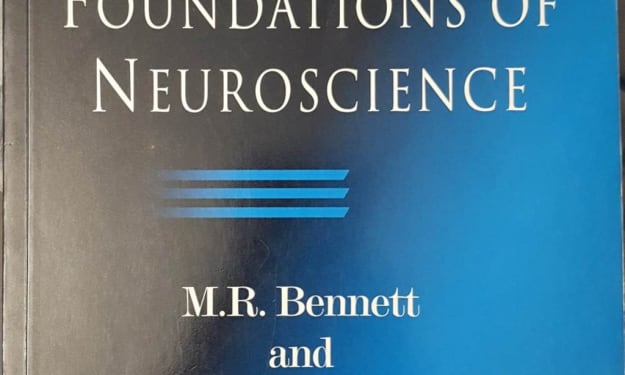
Philosophical Foundations of Neuroscience — Eighteen Years Later
Authors preface: I first published this review on Vocal two years ago, and before that I had published a version on Medium. With each republication I have updated or revised various sections. Thought it made sense to resurrect it one more time for a Vocal Book Club Challenge to "write about a book that changed you." This particular book, PFoN, I happen to believe, is one of the most important ever written and, it has impacted my own thinking on a huge range of topics very deeply. At the time this was written I was reading tons and tons about neuroscience. Specifically at this time I had recently completed reading a number of works by Patricia Churchland Smith, a neuroscientist/philosopher of great renown. I found her views disturbing and her positions misguided. She is the queen of the mereological fallacy (see below for what this is) often using the brain and the person interchangeably as she views them as one and the same. She also believes that if we fully understood everything about how the brain works, we could recreate particular states of consciousness. She is the ultimate hard core reductionist and views consciousness as nothing more than a particular series of electro-chemical reactions in the brain which, like particular states of consciousness, we could replicate artificially if we fully understood. No body would be required for this miraculous achievement. My guess is the AI crowd is a big fan of her work, myself, not so much. In any event, Dr. Churchland-Smith is a frequent target of Bennet and Hacker's logical breakdowns of various neuroscientific studies and claims about the brain and consciousness, which they dissect and show to be in error point by point.
By Everyday Junglist3 years ago in BookClub
**"Eco-Enlightenment: Nurturing Connections Through 'Wilderness Wisdom'"
In the vast landscape of literature that I've explored, one book stands out as a transformative force in my life. "Wilderness Wisdom" by Rachel Carson is not only a book; it's a guiding light that led me to a deeper connection with nature, a renewed sense of wonder, and a profound realization about our place in the world.
By Jananan Sandajeshan3 years ago in BookClub
Unveiling Dreams: The Transformative Journey with "The Alchemist"
The book that etched an indelible mark on my soul is Paulo Coelho's "The Alchemist." It was a serendipitous discovery during a period of introspection, a time when my life felt like a fragmented mosaic waiting to be assembled into a coherent picture. Little did I know that within its pages lay the wisdom that would ignite a transformative journey within myself.
By Jananan Sandajeshan3 years ago in BookClub
Impacts of War in Sudan
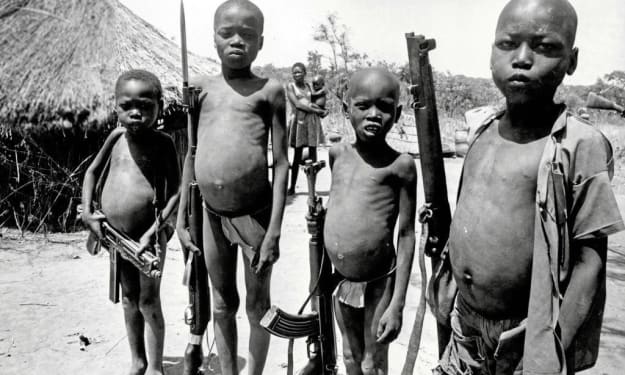
The war in Sudan has faded out of the news, and the country is on the brink of collapse. The fighting began in mid-April, and it continues to spread. There is always the sound of a fire somewhere, and the sound of an artillery shell. The war has not spared anyone, and the level and speed of death and destruction in Sudan is unprecedented. Here are 5 things you need to know about the war in Sudan: 1. Who is fighting in Sudan? General Abdel Fatah Al-Braham is the head of Sudan's armed forces, and General Muhammad Hamdan, also known as Dagalo, also known as Hemeti, leads the Rapid Support Forces (RSF), a powerful paramilitary group. In 2019, General Abraham and Hemeti were on the same.
By PATRICK GATHU3 years ago in BookClub
A Review Of Unwind
Unwind is a book by Neal Shusterman published in 2007. It's book 1 in the Unwind Dystology series. I know I'm 16 years behind the curve, but this book is so good that it needs to be talked about. We can't talk about the book and not the author.
By Haylee Sandberg3 years ago in BookClub
Becoming a Writer
I use "becoming a writer" as my title very loosely, I'm not published or anything but the book "The Remaining" really pushed me into writing. I was interested in writing when I was a kid, I loved reading too, mostly fantasy and science fiction. I wrote the first page or two to one or two ideas when I was in elementary school, but then the harsh reality of, dun dun dunnnnn, high school donned on me. By junior and senior year they had you trying to decide what you want to do for the rest of your life (at least it seems that way when you're in school). In high school I didn't read or write nearly as much as I did in elementary school because I didn't think my full time job would involve either. Then the summer after senior year of high school my love for all things science fiction made me buy a book called "The Remaining" by D.J. Molles. It was a zombie book, and it had me hooked IMMEDIATELY. It was the first book I ever read that made me feel like I was in the book, the way the author described the scenery, the way he made it feel like the characters were with you. I think I went and bought the next three books in the series the next week. But the way this book truly changed me is the way it inspired me. It revived my love for both reading and writing. It's thanks to that book that I now want to become a published author and why I'm in the middle of writing two different novels and a third book that I don't now how to describe. However, it didn't only do that, it also helped revive my creativity and my appreciation for the little things in life. Since I started writing again my mind can more easily wander and find things to take interest in, to analyze, and to enjoy. I owe this book (and series) so much, it might sound cliche but I genuinely don't think I'd be the person I am today if I had never read it.
By Donny Foley3 years ago in BookClub
The Map, By Colette Baron-Reid
Colette Baron-Reid wins the prize, in my estimation, for having some of the best self-help books available. Her book, The Map, had the greatest impact on my life by far. I call myself the “Self-Help Queen.” In my early years of attempting to fix all that was wrong with me, I bought books that were more psychologically inclined. As I aged, I found these types of books were missing something. I began to explore books by spiritual gurus like Shakti Gawain, Don Miguel Ruiz, Eckhart Tolle, Wayne Dyer and Louise Hay. They got closer to what my heart was seeking, but in them, too, there was something lacking. The Map combined spirituality with psychology and hit the mark for what was missing in my opinion.
By Sherry Ryan3 years ago in BookClub
Would That be Terrible?
Time Quake. They get real, regurgitated kill retold all over again, with a leading character name to die for. Kilgore Trout; serious, Indiana Jones? Can you get any blander? And what a premise dropped on your head like a good tragedy should, with a plethora of implications that stretch beyond the book’s intense surface. Dull at times, if only you forget the future to come or the past that led the character there. Now I have no right to slob over this like it’s some new discovery I plan to set on its fiery way from this already-forgotten profile. But, man, what an entry into Kurt Vonnegut. That is to say, I’m not much of a reader. Even interesting books with living spiders promised beyond the cover leave me drooling by page two. That aside, I made it through it in record time, refusing the gloss over a single page in a haze of a failing attention span.
By Willem Indigo3 years ago in BookClub
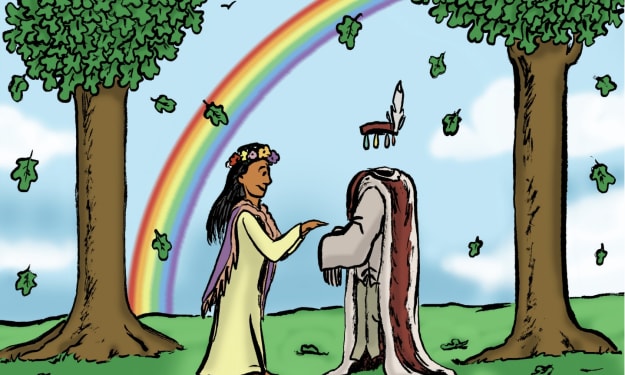
Cinderella: The Native American Story
IN THE SHORES of a wide straight on the Atlantic shoreline of what is presently called Canada there stayed in bygone eras an extraordinary Local American fighter known for his wondrous deeds. He had an extremely magnificent and unusual power - he could make himself undetectable. In this manner he could blend concealed with his foes and pay attention to their plots. He was referred to among individuals as Solid Breeze, the Imperceptible.
By L.Soufiane3 years ago in BookClub
The Law of Seasons
The law of seasons Part 1 The Bible tells us that there are seasons and a time to every purpose under the heavens. There is a time to be born, a time to die, a time to plant, a time to pluck something that's been planted, a time to kill, a time to heal, a time to break down something, a time to build up, a time to weep, a time to laugh, and so on. There is also what is called "a time to embrace," "a time for war," "a time of peace." All intelligent students know what the common word in every sentence is- it's always "time." The Bible connects everything in life--from birth through death--to the passage of TIME. In First Chronicles chapter 12, verse 32, it is mentioned that among the children of Issachar, there were individuals who aided and had a deep understanding of the current circumstances. These individuals possessed knowledge of what Israel needed to do, and as a result, they were appointed as leaders with 200 heads and their brethren under their command. This passage emphasizes the importance of having an understanding of the times and knowing the appropriate actions to take. Moving on to the final verse, Psalm 90, verse 12, it presents a profound message for wise individuals. It urges us to learn the value of our limited time on Earth and to use it wisely. By recognizing the significance of each passing day, we can direct our hearts towards gaining wisdom. Let us reflect on this verse together and strive to apply its teachings to our lives.
By william Motaung3 years ago in BookClub