Latest Stories
Most recently published stories in BookClub.
A Step Away 2
In the heart of a somber and weathered town, a cemetery lay nestled amidst gnarled trees and overgrown grass. Its entrance was marked by an iron arch, a portal that separated the living from the departed. The townspeople spoke in hushed tones about the cemetery's aura, one that seemed to carry a palpable weight of sorrow and longing. Little did they know that the dead and the cemetery were intricately woven into the fabric of their lives, much closer than they could ever fathom.
By Rev Dr. Alexander Fenning-Sencherey3 years ago in BookClub
How Grandpa got his scar
Once upon a time, in a quaint little village nestled amidst rolling hills and lush forests, lived a wise and beloved grandpa named Edward. He was renowned for his captivating stories that always left the children of the village mesmerized.
By Jonathan Umukoro3 years ago in BookClub
David Brin's Earth
Title: "A Multifaceted Odyssey: David Brin's Earth (4/5 Stars)" Rating: ★★★★☆ (4/5) David Brin's "Earth" embarks on a multifaceted odyssey that blends science fiction, environmental concerns, and intricate character arcs. While this epic work showcases Brin's literary brilliance, it occasionally succumbs to its ambitious scope, resulting in a captivating yet somewhat unwieldy narrative.
By Drew Jaehnig3 years ago in BookClub
Great home remedy book
Navigating Health Naturally: A Comprehensive Review of "The Doctor's Book of Survival Home Remedies" In a world where medical knowledge is at our fingertips, "The Doctor's Book of Survival Home Remedies" emerges as an indispensable guide, offering readers a treasure trove of natural solutions for common health concerns. Penned by a team of experienced medical professionals, this comprehensive volume presents a holistic approach to wellness that empowers individuals to take charge of their health using time-tested remedies. In this review, we delve into the invaluable insights and practical wisdom found within the pages of this remarkable book.
By Elliot Tam3 years ago in BookClub
The power of positive thinking book review
Introduction "The Power of Positive Thinking" by Norman Vincent Peale is a renowned self-help book that delves into the transformative impact of maintaining a positive mindset. Published in 1952, the book has remained a classic in the field of personal development. Peale's work centers on the belief that a positive attitude can lead to personal fulfillment, success, and improved well-being. Throughout the book, he shares practical strategies, real-life examples, and actionable advice on how to harness the power of positive thinking to overcome challenges, build self-confidence, and achieve one's goals. Peale's teachings continue to inspire readers to cultivate optimism and resilience for a more fulfilling and prosperous life.
By Think and grow 3 years ago in BookClub
Unveiling Secrets in the Enchanting Marsh: 'Where the Crawdads Sing' - A Captivating Journey of Love, Mystery, and Resilience
"Where the Crawdads Sing" by Delia Owens is a mesmerizing and atmospheric novel that weaves together the beauty of nature, the complexities of human emotions, and a compelling murder mystery. As an avid reader and a lover of lyrical storytelling, I was captivated by the novel's poetic prose and powerful narrative. This evocative tale takes readers on a journey of self-discovery, resilience, and the indomitable spirit of a young woman living on the fringes of society.
By Danel Garcia3 years ago in BookClub
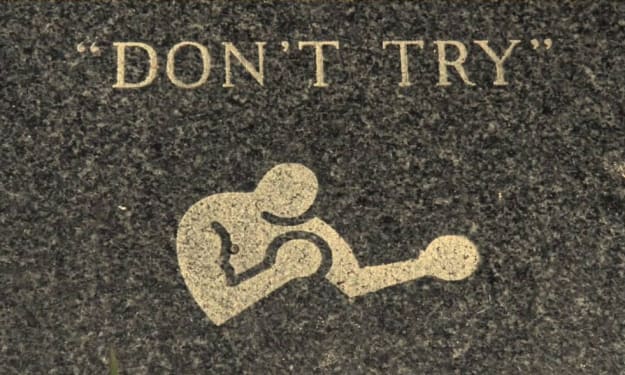
Don't Try: Charles Bukowski's Approach to Life
American writer and poet Charles Bukowski is renowned for his uncensored, biting, and frequently crass perspectives on life. In 1920, Bukowski was born in Germany, and in 1923, he moved to America with his family. Beginning when he was six years old, Bukowski's father often beat him. Bukowski, a German immigrant, endured bullying at school and throughout his adolescence due to comments made by other children about his dialect and garb.
By Ian Sankan3 years ago in BookClub
Kafkaesque: What Is It? - Franz Kafka's 'Philosophy'
One of the most influential writers in recent memory is Franz Kafka. He is renowned for his singularly dark, strange, and fantastical writing. Anything that mimics a certain style and quality that still exists is said to as Kafkaesque. To comprehend his writing's Kafkaesque characteristics It is beneficial to comprehend his early years. The couple Hermann and Julie had a son named Kafka in Prague in 1883. His dad was a highly successful, wealthy businessman who, as parents often do, rose from the working class, built a great company, married an educated woman, and joined the upper middle class via pure force of will and an outspoken, assertive attitude. Hermann desired a child who would be as tall as his ideal human being. That was not Franz Kafka. Franz was a little, fearful, and ill child at birth, and he largely stayed that way as an adult. Franz ended up being his father's worst disappointment and a kind of psychological punching bag as he tried to change him into the person he always wanted to be but was unable to be.
By Ian Sankan3 years ago in BookClub
Terrible Paradox of Self-Awareness
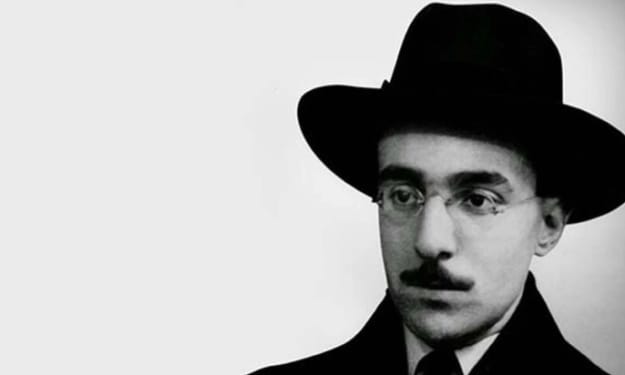
Sometimes the background to a piece of art is just as interesting as the finished product. Sometimes a piece's content's origin influences it. The narrative of 20th-century author Fernando Pessoa as well as his masterpiece, the Book of Disquiet, constitutes one of those instances where the background information reads like an original piece of fiction. Pessoa became accustomed to loss and impermanence at the young age of just five years old. He was born in 1888 in Lisbon, Portugal. after his younger brother passed away the next year after his father's death from TB. Soon after his mother's second marriage, his family migrated to South Africa, carrying with them Fernando's familiar surroundings.
By Ian Sankan3 years ago in BookClub