
The Grey Witch: Mastering the Balance of Magick
Exploring Neutral Power, Ancient Wisdom, and Modern Craft

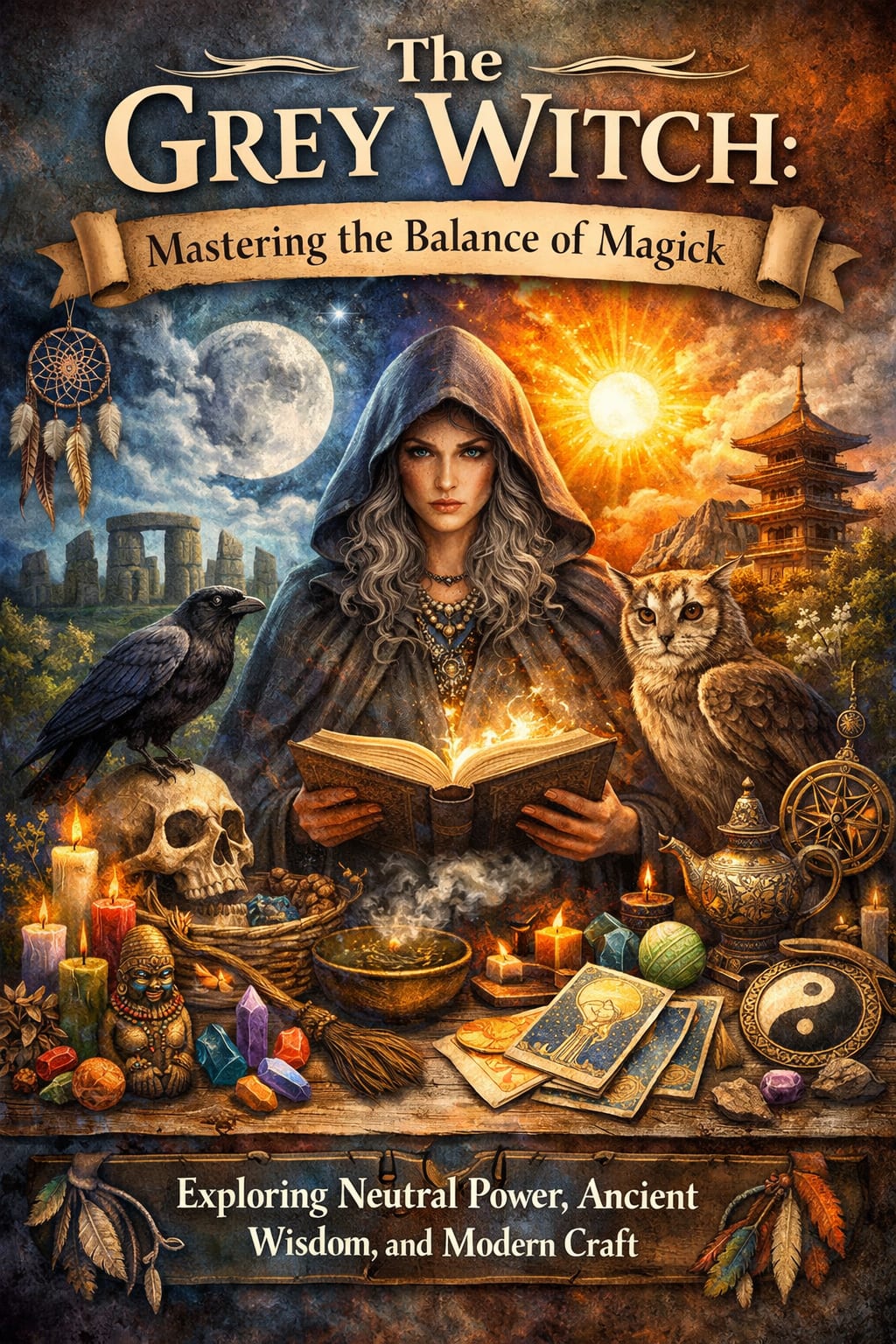
The Philosophy and Practice of Grey Witchcraft
Grey witchcraft emerges as a sophisticated approach within the broader spectrum of magical practice, distinct for its refusal to adhere strictly to conventional divisions of light and dark. This path recognizes that ethical and spiritual action cannot always be reduced to binary categories. The grey witch functions within a framework where intention, discernment, and situational awareness define the moral and energetic weight of magical work. Historical records reveal that practitioners operating in morally ambiguous spaces have existed across cultures, even if they were not labeled as grey witches. European witch trials, for instance, often recorded women and men whose magical practices included healing, protection, and curse removal—practices later categorized as either benevolent or malevolent depending on the observer’s perspective.
Beyond Europe, numerous traditions exhibit a similar embrace of balanced or pragmatic magick. In African diaspora spiritual systems such as Vodun and Hoodoo, ritual efficacy and ethical intention are weighed contextually; a spell for protection or prosperity may be crafted with neutral tools and intent, emphasizing harmony rather than a moral dichotomy. Similarly, in East Asian folk magic, shamans and herbalists often act as intermediaries, using both restorative and protective techniques without moral polarization. Grey witchcraft, therefore, can be seen as a modern codification of these timeless approaches, marrying ancient pragmatism with contemporary ethical exploration.
Central to grey witchcraft is the philosophy of neutrality and balance. Practitioners cultivate self-awareness, learning to discern the consequences of magical action. The path emphasizes flexibility and adaptability, encouraging techniques that respond to the complexity of human experience rather than rigid dogma. Tools such as sigils, charms, herbal correspondences, divination, and ritual frameworks are employed not for automatic outcomes of good or evil but to facilitate intention aligned with the practitioner’s understanding of ethics and responsibility. This perspective transforms magical practice into a reflective discipline, one that interrogates the intersection of power, choice, and effect.
Historical texts, folklore, and modern commentary all support the idea that magick has always existed on a spectrum. Hermetic writings, for example, suggest that mastery involves integration of opposites and the harmonization of forces, while the alchemical maxim “Solve et Coagula” (dissolve and reconstitute) embodies the essence of working with fluid, non-binary energies. Grey witchcraft embodies this principle, offering a path that respects personal autonomy, situational discernment, and the subtle ethics of interaction with the unseen.
Navigating the Balanced Path of Power
Grey witchcraft represents a disciplined approach to magick that situates itself between extremes of traditionally defined benevolent and baneful practices. Practitioners engaging this path recognize that magick is inherently neutral, and its ethical dimension arises from intention, situational awareness, and the responsibility taken by the practitioner. Historical records and folklore demonstrate that magicians and healers often operated within this middle ground. In medieval Europe, for example, cunning folk frequently combined protective charms, healing remedies, and, when necessary, curse-breaking or defensive spells. These individuals were neither strictly “white” nor “black” magicians; their work was defined by context, necessity, and the nuanced ethics of community responsibility.
The philosophical framework of grey witchcraft reflects a synthesis of ideas present in diverse esoteric traditions. The concepts of the Right-Hand Path and Left-Hand Path within Western esotericism serve as structural analogues: the Right-Hand Path prioritizes alignment with societal, spiritual, or cosmic order, focusing on harmony and constructive action, while the Left-Hand Path emphasizes personal sovereignty, the breaking of boundaries, and mastery over forces conventionally considered dangerous or taboo. Grey witchcraft occupies a conscious intermediary position, drawing selectively from both approaches. This neutral orientation does not imply passivity or indecision; rather, it requires rigorous discernment, ethical evaluation, and awareness of potential consequences before action.
Cross-cultural parallels reinforce the validity of this neutral approach. In African traditional practices and their diaspora counterparts, ritual power is often assessed based on efficacy and alignment with the community’s needs, rather than strict moral classification. In Japanese Shinto and folk magic, miko or onmyoji engage with both protective and confrontational spiritual work depending on circumstance, emphasizing adaptation and contextual judgment over rigid polarity. Even in classical Hermetic and alchemical thought, the union of opposites—manifest in principles such as Solve et Coagula—illustrates that mastery involves recognizing the interconnectedness of seemingly contradictory forces. Grey witchcraft embodies this philosophy, operationalizing it in practical magick while emphasizing the balance between autonomy, ethics, and power.
The practice itself relies on tools and techniques that function across the spectrum of magick. Divination, talismans, sigils, ritualized spells, and herbal correspondences are employed not according to rigid categories of good or evil but according to the desired outcome and the practitioner’s informed judgment. Energy is approached as a spectrum rather than a binary, and actions are measured by consequence, alignment with ethical intent, and the broader harmony of natural and social systems.
Ultimately, grey witchcraft can be understood as a philosophy as much as a practice. It challenges the conventional dichotomy between light and dark, urging practitioners to cultivate discernment, adaptability, and personal responsibility. Magick is approached as a living, responsive system where balance, timing, and understanding determine ethical application. By recognizing power as neutral, grey witchcraft promotes mastery that is both practical and reflective, connecting the practitioner to a lineage of thought that values wisdom, autonomy, and the harmonization of forces over adherence to rigid moral or doctrinal structures.
From Folk Practices to Modern Grey Witchcraft
The historical tapestry of witchcraft reveals a spectrum of practice that often defies simple categorization as benevolent or malevolent. Across Europe during the early modern period, fear and fascination with magick coexisted, influencing law, theology, and social perception. Witch trials, particularly in Germany, Hungary, and England, frequently targeted individuals whose practices threatened social norms or whose perceived spiritual power inspired suspicion. Treatises such as Francesco Maria Guazzo’s Compendium Maleficarum (1608) reflect the prevailing fear-based lens of the time, cataloging witches, demons, and supernatural harms as threats to Christian society. These texts often conflated practical folk magick with devilish influence, obscuring the nuanced roles that many practitioners held within their communities.
Research by historians and anthropologists, including Éva Pócs, illuminates a more complex picture. In regions such as Hungary and Transylvania, witches, seers, and cunning folk occupied roles that blended healing, divination, and protective magic. Communities often relied on such practitioners for remedies, guidance, and spiritual intercession, even as suspicion and fear lingered. The perception of these individuals varied widely: some were respected as mediators between humans and spiritual forces, while others were feared for their ability to wield unseen influence. This duality underscores the historical existence of magickal practice that cannot be neatly classified as wholly virtuous or wholly harmful.
Folk traditions across Europe and beyond frequently integrated the spirits of ancestors, local nature entities, and cosmological forces into practical magick. Protective charms, ritualized banishing of harmful energies, and medicinal magick coexisted with practices that could, in specific contexts, cause harm to animals, crops, or adversaries. In Africa, Asia, and the Americas, similar dualities appeared. In West African Vodun and Haitian Vodou, priests and priestesses employed spiritual authority for both protective and corrective purposes. In East Asian shamanic and folk practices, onmyoji or spirit mediators engaged with both restorative and confrontational rites, carefully weighing timing, intent, and societal consequence.
This historical mosaic forms a foundation for understanding contemporary grey witchcraft. Modern interpretations do not claim direct descent from a singular lineage; instead, they synthesize centuries of diverse magickal thought. Elements of folk magick, ceremonial ritual, Hermetic philosophy, chaos magick, and ecological or participatory spiritual frameworks converge to create a system where ethical discernment and contextual judgment define the practitioner’s actions. The emphasis is not on adhering to an externally imposed moral structure but on navigating magick with awareness, balancing power and responsibility in each specific instance.
Modern grey witchcraft, therefore, is both historical echo and contemporary innovation. It honors the practical, situational wisdom of folk practitioners, the symbolic frameworks of ceremonial and Hermetic systems, and the adaptive, experimental methodologies of chaos magick. By integrating these strands, grey witchcraft creates a philosophy that prioritizes autonomy, balance, and the ethical use of power, reflecting the nuanced reality of magick across cultures and eras.
Global Traditions of Neutral Magick
Neutral magick is a recurring theme in magical systems worldwide, appearing wherever practitioners navigate the delicate interplay between intention, consequence, and ethical responsibility. African Vodun and West African traditional religions provide clear examples of this approach. Rituals blend protective, transformative, and corrective energies to maintain personal and communal equilibrium. Ancestors, spirits, and local deities are petitioned to restore harmony rather than enforce rigid moral judgments, reflecting a sophisticated awareness of context and ethical nuance. Outcomes are evaluated according to communal well-being, natural law, and spiritual balance, demonstrating a pragmatic approach to magickal ethics that transcends simple notions of good or evil. Techniques often integrate herbal remedies, symbolic artifacts, chants, and precise ritual structure, illustrating the intersection of practicality and spiritual insight.
Native American spiritual systems similarly embody neutral approaches. Medicine people, shamans, and spiritual elders work with energy, ritual, and herbal medicine to support healing, protection, and the removal of harmful influences. Corrective or banishing practices coexist with nurturing rituals, emphasizing that the ethical value of an act is determined by its context, intention, and consequence rather than abstract moral categories. Ritual timing, seasonal cycles, and community needs inform practice, highlighting situational awareness as essential to ethical magick. Storytelling, oral tradition, and apprenticeship play a critical role in transmitting these subtle frameworks, emphasizing observation, discernment, and reflective judgment.
East Asian systems, including Taoist alchemy, Chinese folk magick, and Japan’s Onmyōdō, demonstrate a sophisticated understanding of energy polarity and balance. Yin and yang, understood as complementary forces, illustrate that power itself is neutral, requiring skillful harmonization to achieve protection, transformation, or insight. Rituals combine meditation, symbolic implements, and correspondences between natural and cosmic forces to ensure precision while maintaining equilibrium. Historical texts describe careful calibration of rituals to environmental, temporal, and energetic conditions, reflecting centuries of cumulative empirical and philosophical knowledge. Ethical reflection and situational judgment are embedded in training, showing that neutrality requires both technical skill and moral sensitivity.
Middle Eastern and Mediterranean esoteric practices, including Kabbalah, Hermeticism, and other mystical systems, reinforce the global presence of neutral magick. These traditions emphasize correspondences, energetic laws, and human responsibility. Magick is understood as a tool whose ethical dimension emerges from discernment and context. Practices involve structured meditation, ritualized invocation, and symbolic correspondences, demonstrating that precision, intention, and reflection are inseparable from ethical neutrality. Historical manuals, such as grimoires and mystical treatises, reinforce the idea that power itself is morally neutral, with outcomes dependent upon practitioner insight, discipline, and responsibility.
Across these diverse systems, common threads emerge: energy is intrinsically neutral until consciously applied, ethical reflection and situational discernment govern responsible action, and effective practice depends on understanding context, timing, and consequence. Ancestor veneration, energy balancing, protective rites, and ceremonial techniques reveal a consistent global pattern: ethical autonomy, adaptability, and balance are core to effective magickal work.
Engaging with cross-cultural perspectives deepens understanding, providing both philosophical and practical guidance. Ethnographic studies, historical texts, and careful observation of ritual practice highlight patterns that transcend geography, culture, and era. Examining these traditions encourages rigorous study, reflective journaling, and critical evaluation, guiding practitioners to integrate diverse insights into a personally ethical and context-sensitive practice. Careful research through public libraries, historical archives, and scholarly texts ensures accuracy, while cautious use of free online resources supports safe exploration without sacrificing reliability. These global approaches offer not only techniques but frameworks for ethical judgment, adaptability, and balanced application, reinforcing the universality of neutral magick.
Core Principles of Grey Witchcraft:
1. Autonomy and Personal Ethics
Sovereignty over one’s ethical framework lies at the heart of grey witchcraft. Unlike paths bound by codified precepts such as the Wiccan Rede, grey witchcraft emphasizes conscious decision-making and reflective accountability. Each action, from ritual spellwork to subtle energetic interventions, carries consequences that ripple beyond immediate intent. Historical accounts of European cunning folk illustrate this principle: practitioners often weighed potential effects on community members, crops, or spiritual equilibrium before engaging in their craft. Ethical discernment requires careful evaluation of intention, potential outcomes, and the alignment of magickal action with overarching principles of balance and responsibility.
Autonomy in this context is inseparable from ethical rigor. Practitioners are tasked with cultivating self-knowledge, understanding personal limitations, and confronting biases that may influence decision-making. The magickal act becomes a measured practice rather than impulsive manipulation, integrating reflective inquiry into every stage of work. Such an approach transforms magick from a mere technical skill into a living discipline grounded in ethical sovereignty.
2. Balance Between Energetic Forces
Energy in the universe is not rigidly dualistic; it exists as a spectrum of potentiality. Grey witchcraft engages with this principle by treating forces traditionally labeled “light” or “dark” as context-dependent tools. Healing, protection, and spiritual guidance operate alongside corrective or banishing magick, which may be necessary to restore equilibrium in situations of imbalance or harm. Historical European folk magicians frequently employed similar principles, using protective wards in tandem with counter-curses to maintain communal harmony.
Balance is not arbitrary. Actions are selected based on alignment with ethical discernment, effectiveness, and the holistic integrity of the system in which they operate. Energy is approached with analytical precision: the practitioner assesses timing, intent, and potential consequences before harnessing magickal forces. This disciplined engagement with energy emphasizes responsibility, avoiding both rigid dogma and reckless experimentation.
3. Integration of Shadow Work
Shadow work is a foundational element in grey witchcraft, emphasizing deep exploration of the psyche and spiritual self. This practice examines repressed fears, unresolved emotions, and neglected aspects of character, integrating them into conscious magickal engagement. Historical parallels appear in mystical and alchemical traditions, where the “inner work” of confronting personal darkness was seen as a prerequisite for mastery over external forces.
Integration of shadow elements enhances magickal capacity by transforming unconscious impulses into deliberate, informed action. Rituals, meditative practices, and reflective exercises enable practitioners to recognize personal limitations, latent abilities, and complex motivations. This inner alchemy amplifies external work, making spells and interventions more precise, effective, and ethically aligned. Shadow work also fosters resilience, enabling practitioners to navigate challenges without resorting to harmful extremes or unexamined patterns.
4. Eclectic and Adaptive Practice
Grey witchcraft thrives on adaptability and synthesis. Practitioners draw from a wide range of traditions and techniques, including herbal magick, divination, energy manipulation, ceremonial ritual, ancestral practice, folk magick, and chaos magick frameworks. Historical magicians frequently exhibited similar eclecticism, selecting methods from local, regional, or transnational sources to meet practical and spiritual needs.
This approach recognizes that power and wisdom are not monopolized by a single system. Techniques are evaluated based on resonance, cultural respect, and observable efficacy. Adaptive practice requires ongoing learning, experimentation, and discernment, creating a flexible yet disciplined approach to magick. Eclecticism, coupled with ethical responsibility and shadow integration, forms a holistic framework that allows for profound mastery of personal power while maintaining harmony with external forces.
Magickal Tools and Ritual Practice in Grey Witchcraft
In grey witchcraft, tools and rituals are selected for their symbolic resonance, energetic properties, and practical efficacy rather than strict adherence to tradition. Each instrument and rite serves to focus intent, channel energy, and support discernment, reflecting the path’s commitment to balance, conscious action, and ethical responsibility.
Herbal Allies and Natural Materials
Plants have held enduring significance in magickal practice across cultures, valued for both material and symbolic properties. Historical European herbalists and cunning folk often integrated local flora into protective charms, healing remedies, and divinatory rituals. In modern grey witchcraft, herbs such as mugwort, rue, wormwood, and yarrow are employed for clarity, protection, divination, and spiritual purification. Each herb is chosen based on the alignment of its energetic qualities with the practitioner’s specific aim rather than external prescription. Stones, crystals, and other natural materials similarly serve as energetic conduits, amplifying or grounding intention while embodying symbolic correspondence derived from centuries of occult and folk traditions.
Candles and Fire Rituals
Fire has consistently symbolized transformation, illumination, and energetic activation in ceremonial and folk magick. Candle work remains a cornerstone of ritual practice, with colors and placement conveying nuanced intent. White candles are traditionally used for clarity, spiritual guidance, and illumination of insight, while black candles facilitate absorption, banishing of negativity, and introspective focus. Rituals may employ both simultaneously, representing coexistence and equilibrium between opposing forces. Historical parallels appear in the European grimoires and Mediterranean magical texts, where fire-based rites were central to both protective and transformative work.
Mirror Work and Divination
Mirrors serve as portals for inner reflection and psychic exploration, a practice with roots in scrying traditions found in ancient Egypt, Renaissance Europe, and East Asian divinatory systems. Mirror work in grey witchcraft encourages the examination of subconscious patterns, hidden fears, and personal truth. Practitioners employ reflective surfaces for meditation, scrying visions, and connecting with subtle energies. By integrating mirror-based rituals, the practitioner cultivates heightened awareness of both internal and external influences, supporting discernment and ethical engagement in magical practice.
Sigils, Bindings, and Protective Constructs
Sigil crafting translates intention into symbolic representation, a practice popularized in Western ceremonial magic and modern chaos magick while retaining historical antecedents in medieval grimoires. In grey witchcraft, sigils are activated through focused energy, visualization, or ritualized performance. Protective constructs, wards, and binding techniques are used judiciously, emphasizing prevention, boundary setting, and corrective action rather than arbitrary aggression. Ethical consideration remains paramount; the application of energy for restriction or redirection aligns with broader principles of balance, accountability, and thoughtful engagement.
Grimoire and Journal Practice
Maintaining a grimoire, Book of Shadows, or spiritual journal provides a tangible record of experiential learning. Historical practitioners, from European witches to Renaissance alchemists, documented recipes, rituals, observations, and symbolic correspondences, creating cumulative archives that informed successive practice. In grey witchcraft, these journals evolve as dynamic repositories of intention, reflection, and insight, tracking outcomes, personal growth, and patterns of energetic influence. Journaling facilitates refinement of technique, reinforces ethical awareness, and fosters an intimate understanding of the interrelationship between action, consequence, and personal development.
Identity, Labels, and Internal Dynamics
Within contemporary spiritual and magical communities, labels such as grey witch operate primarily as descriptors of orientation rather than rigid identities. Historical evolution of witchcraft practice demonstrates a long-standing tension between communal recognition and personal sovereignty. In early European folk traditions, practitioners were often defined by their functional role—healer, diviner, or cunning folk—rather than by prescriptive moral categorization. Modern adoption of labels like grey witch continues this pattern, providing a conceptual framework for understanding approach, intent, and ethical orientation while remaining flexible.
Community structures in contemporary witchcraft vary widely, encompassing informal covens, solitary practice, mentorship networks, and online platforms. Online forums, social media groups, and discussion boards reveal how grey witchcraft is interpreted in multifaceted ways. Some practitioners emphasize neutrality and ethical discernment, others focus on eclectic technique, and still others frame grey witchcraft as an identity that rejects binary distinctions between light and dark. This diversity illustrates that the label serves more as a tool for self-definition and shared understanding than as a prescriptive category.
The function of labels within witchcraft communities also intersects with internal dynamics of social perception, authority, and validation. Community acceptance can depend on demonstrable skill, historical knowledge, ethical consistency, and alignment with shared values rather than mere adoption of a term. Historical parallels exist in recorded European cunning folk and occult societies, where recognition often hinged on practical effectiveness and communal trust rather than formal titles. In modern practice, these dynamics persist in forums, workshops, and collaborative rituals, emphasizing experience and credibility alongside shared ethical frameworks.
The grey witch approach encourages careful reflection on the utility of labels. Labels can facilitate communication, create a sense of belonging, and provide a conceptual map for navigating diverse magical approaches. Simultaneously, labels can introduce artificial constraints, limiting exploration, creativity, or synthesis of multiple traditions. Recognition of this tension fosters a nuanced understanding of identity, highlighting the interplay between personal growth, communal participation, and ethical development.
Internal dynamics within witchcraft communities also reveal patterns of mentorship, collaboration, and knowledge transmission. Experienced practitioners often provide guidance to newer initiates, sharing techniques, ethical reasoning, and historical context. Discussions on ethics, energy management, and shadow work illustrate how communal discourse reinforces reflective practice while supporting adaptive and context-sensitive magick. These internal interactions underscore that modern witchcraft is as much a social and relational endeavor as it is a personal spiritual pursuit, reflecting centuries of human interaction around power, responsibility, and shared knowledge.
Recommended Reading: #commissionearned
The Gray Witch's Grimoire by Amythyst Raine
Magickal practice thrives when intention and discernment guide every action, a principle that underpins this grimoire. Techniques for divination, herbal work, and energy manipulation are paired with exercises in reflection and journaling, emphasizing accountability and ethical evaluation. Historical examples of European folk magicians and ceremonial traditions illustrate continuity between past practices and contemporary grey witchcraft. Shadow work is integrated to explore personal strengths, fears, and motivations, ensuring inner balance aligns with external action. Detailed rituals provide practical frameworks for harnessing neutral energy responsibly. The text emphasizes observation and adaptation, encouraging experimentation while maintaining reflective awareness. By linking philosophical insight with practical guidance, the grimoire demonstrates a holistic, adaptive approach to neutral magick.
Navigating the gray space between light and dark energy requires careful ethical discernment, a concept central to this primer. It explores situational application of magick, showing how historical practices across Europe, Africa, and Asia exemplify neutral approaches. Exercises in sigil crafting, protective spellwork, and reflective journaling guide the development of a personal moral framework. The text emphasizes balancing forces to achieve transformative outcomes without adherence to rigid dualities. Historical context reinforces that neutral magick has long existed, serving practical and spiritual needs rather than moral binaries. Practical instruction is interwoven with philosophical discussion, creating a seamless approach to ethical, adaptive magick. The primer situates grey witchcraft as both a reflective discipline and a system of empowered, responsible practice.
The Little Gray Book of Magic by Liath Sahjaza
Practical experimentation and reflective observation are at the heart of this concise guide to grey witchcraft. Techniques for energy work, protective rites, and divination are presented alongside historical and cross-cultural examples, illustrating the enduring presence of neutral magick. Shadow work exercises foster self-integration and a deeper understanding of internal motivations. Guidance on selecting herbs, elemental tools, and symbolic objects emphasizes alignment with intention rather than prescriptive morality. Situational awareness and ethical consideration are highlighted as essential for effective magick. Journaling and tracking outcomes reinforce continuous learning, helping practitioners refine technique over time. The text encourages adaptability and discernment, making it an approachable resource for building a thoughtful, balanced practice.
Effective protective magick depends on precision, discernment, and ethical application, principles emphasized throughout this text. Historical examples of folk and ceremonial protective practices illustrate methods for shielding, warding, and cleansing. Exercises incorporate herbs, talismans, and ritual frameworks, with attention to the alignment of intention and outcome. Shadow work is included to enhance understanding of personal vulnerabilities and strengthen energetic defense. The book emphasizes contextual judgment, showing how protective energy can serve balance and restoration rather than aggressive interference. Step-by-step instructions ensure methods are both practical and ethically sound. This text exemplifies the use of neutral magick to achieve safety, equilibrium, and ethical responsibility.
Grey Witch Book of Shadows by Billy Bean
Structured documentation is presented as an essential component of effective grey witchcraft practice. Techniques for recording spells, rituals, observations, and energetic outcomes help cultivate reflective mastery. Historical and cross-cultural references illustrate the importance of experimentation and adaptation in magical practice. Exercises include energy balancing, protective constructs, and shadow integration, connecting internal growth with external results. Ethical consideration is emphasized throughout, highlighting accountability and responsible use of power. Flexible instructions for ritual and tool selection support eclectic, adaptive practice. This book serves as a model for cultivating a personal archive that guides skill development, ethical discernment, and practical application.
Neutral magick is explored as both philosophy and practice in this comprehensive work. Historical traditions, including European folk magic, Hermetic thought, and global spiritual practices, provide context for understanding modern grey witchcraft. Techniques for shadow work, energy balance, and ritual design illustrate how personal insight informs external practice. Guidance on selecting tools such as herbs, symbols, and elemental correspondences emphasizes functionality and resonance with intention. Community dynamics and mentorship are examined, showing how interaction with other practitioners fosters growth and skill. Ethical reflection and situational awareness underpin every technique, ensuring power is applied responsibly. By combining historical grounding, practical instruction, and philosophical exploration, the book presents grey witchcraft as a nuanced, adaptive, and ethically conscious path.
Ethical Reflection, Critical Assessment, and Lifelong Practice
Grey witchcraft situates ethics at the center of every magical act, emphasizing conscious evaluation over adherence to external rules. Ethical reflection extends beyond simple categorizations of good or evil, requiring consideration of intention, potential consequences, and alignment with broader energetic and social balance. Historical evidence shows that European cunning folk, shamans, and folk healers navigated similar ethical landscapes, weighing community welfare and personal responsibility before engaging in magickal work. Decisions regarding protective, corrective, or transformative spells were made with careful consideration of timing, context, and anticipated outcomes, demonstrating the longstanding presence of ethical discernment in neutral magickal practice.
Assessment within grey witchcraft involves systematic observation and critical evaluation of results. Journaling becomes a vital tool for recording rituals, noting energetic shifts, and reflecting on successes and unforeseen effects. Tracking outcomes supports adaptive practice, ensuring that each subsequent magical action benefits from prior experience. Cross-cultural studies of ceremonial and folk traditions underscore the value of continuous learning and discernment, showing that effective magick depends on both technical skill and thoughtful ethical engagement.
Continued exploration is grounded in rigorous study, drawing from historical texts, grimoires, and scholarly analyses alongside modern instructional works on shadow work, energy management, and eclectic ritual design. Interaction with practitioner communities, workshops, and mentorship networks further enhances understanding by exposing practitioners to diverse approaches, feedback, and ethical frameworks. Reflection is not limited to technique alone but encompasses internal dynamics such as personal motivation, shadow integration, and the capacity to navigate complex moral landscapes. Ethical consideration, critical assessment, and ongoing learning converge to form a disciplined, adaptive, and responsible magickal practice that respects both the practitioner’s autonomy and the broader energetic environment.
Ultimately, ethical reflection in grey witchcraft is inseparable from continued study and practice. By integrating historical knowledge, practical experimentation, and critical self-assessment, practitioners cultivate the ability to act with awareness, balance, and nuanced understanding. Magick becomes a living, responsive system where each action is measured, considered, and aligned with a philosophy of responsibility, harmony, and ethical integrity.
Walking the Balanced Path
Grey witchcraft embodies a disciplined, reflective approach to magick, rooted in balance, ethical discernment, and nuanced engagement with both light and shadow. Historical and cross-cultural examples demonstrate that neutral approaches to magick are neither modern inventions nor purely theoretical—they reflect centuries of practice where practitioners navigated complex moral and energetic landscapes. Ethical agency and situational awareness remain central: every spell, ritual, or energetic work is an opportunity to apply insight, cultivate responsibility, and harmonize personal power with broader natural and social systems.
Cultivation of skill and wisdom in grey witchcraft demands rigorous study, observation, and reflection. Textual research using scholarly sources, historical grimoires, and well-regarded contemporary works strengthens understanding of both practical technique and philosophical context. Public libraries, archival resources, and carefully vetted academic publications provide reliable, high-quality material that complements personal experimentation. Free online resources can offer useful introductions and references but should be approached with caution, verifying accuracy and sourcing to avoid misinformation. Journaling, record-keeping, and structured reflection amplify the benefits of study, allowing for continuous assessment of technique, ethical alignment, and personal growth.
Community engagement, mentorship, and discourse with experienced practitioners can provide valuable insight and perspective, highlighting diverse approaches to neutral magick and supporting reflective evaluation of personal practice. Participation in workshops, discussion groups, or study circles further demonstrates how shared knowledge strengthens discernment, deepens understanding, and cultivates adaptive skill. Ethical reflection remains inseparable from practical engagement, ensuring that power is exercised responsibly, insightfully, and in accordance with the principles of balance that define grey witchcraft.
Ultimately, the journey into grey witchcraft extends beyond technical mastery. It is a path of self-knowledge, ethical cultivation, and spiritual depth, encouraging each practitioner to integrate historical wisdom, practical skill, and reflective inquiry into a personalized approach to magick. Continued reading, careful research, and engagement with a broad range of perspectives allow the practitioner to navigate the complex terrain of neutral magick with confidence and integrity. By blending study, observation, and ethical discernment, the seeker shapes a magickal life that is not merely functional but deeply informed, balanced, and aligned with personal vision and purpose.
About the Creator
Marcus Hedare
Hello, I am Marcus Hedare, host of The Metaphysical Emporium, a YouTube channel that talks about metaphysical, occult and esoteric topics.
https://linktr.ee/metaphysicalemporium
Keep reading
More stories from Marcus Hedare and writers in BookClub and other communities.
Hedge Witchcraft in Theory and Practice
At the Edge of the Living World Winding through the brambles of rural folklore, household healing, and land-based magic lies the path known as hedge witchcraft. This tradition takes shape not in temples or formalized rites, but along boundaries where cultivated ground gives way to forest, where hearth smoke meets night air, and where knowledge passes quietly from hand to hand. Hedge witchcraft emerges from lived relationship with place, season, and necessity rather than institutional authority or scripted belief.
By Marcus Hedare3 days ago in BookClub
Self Help: Grifters' Gospel
On Self-Help, Snake Oil, and the Illusion of Change Psychology professionals and students can be imagined on two opposite sides of a line called self-help books: likely a larger group opposes pop-science and step-by-step manuals filled with talk of success, journaling, and not giving a f**k; others love them, but they aren’t many.
By Avocado Nunzella BSc (Psych) -- M.A.P about 8 hours ago in BookClub




Comments
There are no comments for this story
Be the first to respond and start the conversation.