
Mastering Multi-Channel Signs: Why Your Face Is as Important as Your Hands
Learn why facial expression is essential in British Sign Language, how multi-channel signs work, and how learners can improve clarity, grammar, and confidence in BSL.

When learning British Sign Language (BSL), many beginners focus almost entirely on their hands. Hand shapes, movements, and positioning feel like the most obvious parts of signing. However, BSL is not just a manual language. It is a visual language that relies on the whole upper body, especially the face.
In BSL, meaning is conveyed through multiple channels simultaneously. Facial expression, head movement, eye gaze, and body posture all work alongside hand signs. Ignoring these elements can change meaning, cause confusion, or make communication feel unnatural to Deaf signers.
What Are Multi-Channel Signs?
Multi-channel signing refers to how BSL combines several physical elements to create meaning. These elements operate together, not separately.
Key channels include:
- Hand shape and movement
- Facial expression
- Mouth patterns
- Head movement
- Body posture
- Eye contact and gaze
Each channel contributes grammatical or emotional information. Removing one channel, particularly facial expression, often strips the sign of essential meaning.
Facial Expression Is Grammar, Not Decoration
One of the biggest misunderstandings among learners is the idea that facial expressions are optional or purely emotional. In BSL, facial expression is a grammatical feature.
Facial expression can show:
- Questions
- Negation
- Intensity and emphasis
- Conditional statements
- Attitude and intention
For example, raised eyebrows can turn a sentence into a yes/no question, while furrowed eyebrows signal open questions such as who, what, where, or why. Without these markers, a sentence may appear incomplete or incorrect.
Facial Grammar Versus Emotion
Facial grammar and emotion are closely linked but not the same. Facial grammar follows structured rules that support sentence meaning.
Facial grammar includes:
- Eyebrow position
- Eye widening or narrowing
- Lip tension
- Head tilt or movement
Emotion can be layered on top of grammar, but grammar must come first. This is why learners in a British Sign Language Level 1 and 2 training program are encouraged to practise facial expression alongside basic signs early on, rather than treating it as an advanced skill.
The Role of Mouth Patterns
Mouth patterns are another essential part of multi-channel signing. They help clarify meaning and add descriptive detail.
Mouth patterns can:
- Show size, speed, or manner
- Add emphasis
- Distinguish similar signs
- Support adjectives and adverbs
Mouth patterns in BSL do not always match spoken English words. They follow BSL conventions and must align with facial expression and hand movement to make sense.
Common Challenges for Learners
Many learners feel uncomfortable using their faces when signing. This can lead to habits that affect clarity.
Common challenges include:
- Signing with a neutral facial expression
- Overusing hand movement to compensate
- Avoiding eye contact
- Exaggerating emotion instead of using grammatical facial cues
These habits are everyday at first, but addressing them early improves fluency and confidence.
How to Improve Multi-Channel Signing
Developing strong multi-channel signing takes practice and feedback. Learners can improve by:
- Practising in front of a mirror
- Watching fluent Deaf signers
- Recording and reviewing signing practice
- Breaking signs into hand, face, and movement
- Asking tutors for specific feedback
Learners in a British Sign Language Level 1 and 2 training program with Lead Academy often notice rapid improvement once they stop separating hand signs from facial expressions and begin signing with their whole upper body.
Why Facial Expression Improves Understanding
Facial expression makes signing easier to follow and more natural for the viewer. It helps organise information visually and supports faster comprehension.
Benefits include:
- Clear sentence structure
- Reduced misunderstanding
- More natural rhythm
- Improved confidence when signing
For Deaf users, facial expressions provide essential grammatical cues, as do tone and pitch in spoken languages.
Multi-Channel Signing in Real Conversations
In real-life conversations, signers rely heavily on facial cues to follow meaning, especially in:
- Group discussions
- Storytelling
- Explanations and instructions
- Emotional or sensitive topics
Strong multi-channel signing shows respect for BSL as a full language and for Deaf culture as a whole.
Conclusion
In British Sign Language, your face is just as important as your hands. Meaning is created through multiple channels working together, with facial expression carrying essential grammatical information. Mastering multi-channel signing leads to more transparent communication, greater confidence, and more natural interaction with Deaf signers. By practising facial grammar alongside hand signs, learners move beyond basic signing towards true fluency.
FAQs
1. Is facial expression required in BSL?
Yes. Facial expression is a core part of BSL grammar.
2. Can an incorrect facial expression change the meaning?
Yes. It can change statements into questions or remove meaning entirely.
3. Should beginners focus on facial grammar?
Yes. Learning it early builds strong signing habits.
4. Are mouth patterns the same as spoken English words?
No. They follow BSL rules and support meaning visually.
5. How long does it take to feel confident using facial expressions?
Most learners improve with regular practice and tutor feedback.
About the Creator
Bruce Lee and The God of War: Kuan Ti
It starts with love.. The Power to the God Of War and Wealth Walk into a Chinese restaurant (even in Oklahoma, USA), a Chinese police station, a kung fu martial arts studio or even a Chinese temple and you often see a red faced warrior holding a heavy quan-do (spear like weapon).
By SAMURAI SAM AND WILD DRAGONSabout a month ago in Chapters
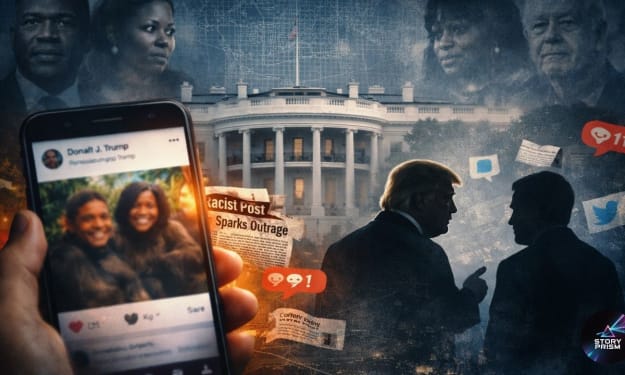
Trump, Obama, and the ‘Apes’ Post: How a Deleted Meme Reignited America’s Longest Political Wound
The phrase “trump obama apes” would have seemed unthinkable in official political discourse just a few decades ago. Yet in early February 2026, it became the center of a national controversy after a social media post shared from President Donald Trump’s account depicted former President Barack Obama and former First Lady Michelle Obama as primates. The post was later deleted following widespread backlash, but not before reopening one of the deepest wounds in American political culture: the racialization of power.
By Story Prismabout an hour ago in Chapters



Comments
There are no comments for this story
Be the first to respond and start the conversation.