Health
The Power of Friendships
Friendships can occupy a unique and special place in our life stories. What sets these connections apart? Before we explore the scientific aspects, let's first witness a friendship in action. If I could somehow create an ideal best friend, someone embodying all the perfect qualities of my ideal match, that individual would still not measure up to Priya. She has an uncanny ability to turn any situation into a delightful experience, whether it's a chemistry lab or band practice. What I'm trying to convey is that I never experience more intense laughter than when I'm in Priya's company. She's consistently there for me, as demonstrated last year after I endured a painful breakup with Te— you know what? I'd rather not utter their name. At that moment, it felt like my whole world was crumbling, but the moment I confided in Priya, she was right at my doorstep. Despite my emotional turmoil, she sat by my side, providing a listening ear. We're always on the same wavelength; it's as though we can intuit each other's thoughts! Our conversations can extend for hours, delving into any topic imaginable. My mom would undoubtedly point out that she has the phone bills to substantiate it. If it appears that friendships formed during adolescence hold a unique significance, it's because they indeed do. Early childhood, teenage, and adult friendships all exhibit distinct characteristics, primarily because the brain operates differently during these life stages. Adolescence stands out as a time when peer relationships take precedence, and thanks to the developing brain, there are shifts in how you assess, comprehend, and connect with friends. Teenage friendships can sometimes appear inseparable. Scientists describe adolescence as a period of social reorientation, with teenagers beginning to spend as much or even more time with friends compared to their parents. This inclination to spend time with pals may result from changes in the brain's reward center, known as the ventral striatum. Activation of this region makes socializing enjoyable and motivates individuals to spend more time with their friends. Neuroimaging studies reveal that this region is remarkably responsive during the teenage years, which may explain why adolescents tend to place a higher value on social interactions compared to children or adults. Teenage friendships can also feel more profound than the friendships of childhood. This heightened connection is made possible by advances in Theory of Mind, a term used by scientists to describe the ability to understand others' emotions, thoughts, motivations, and perspectives, recognizing that these may differ from one's own. While it may seem intuitive, this ability hinges on the coordinated functioning of various brain regions, collectively referred to as the social brain. Infants begin to develop Theory of Mind at around 18 months or so. Prior to this, it is believed that they assume everyone perceives and knows precisely what they know. Although Theory of Mind was once thought to be fully developed by the age of five, scientists now understand that it continues to enhance and mature well into the teenage years and beyond. Similarly, regions within the social brain exhibit increased connectivity during adolescence compared to childhood. As a result, teenagers can gain a better understanding of their friends' perspectives, allowing for deeper connections to blossom. In the closest friendships, it can almost feel as if you share a metaphysical connection—two bodies and minds harmoniously in sync. There is even science supporting this notion! Your ability to connect with others is somewhat reliant on the coordination of actions, emotions, physiology, and thoughts, a concept psychologists refer to as interpersonal synchrony. Infants initially exhibit signs of this ability by synchronizing movements and babbling with their parents. As you grow older and spend more time outside the home, you increasingly display this synchrony with your peers. For instance, picture walking down the street with a friend. Often without conscious thought, you walk at the same pace and follow the same path. You and your best friend may not only be on the same page, but also, scientifically speaking, in perfect harmony.
By LyricCoffee2 years ago in Chapters
What you Should Know About Daydreaming
Every day, you spend approximately a third to half of your waking hours lost in daydreams. While this might seem like a significant waste of time, scientists believe there must be a purpose behind it, or else humans wouldn't have evolved to daydream so extensively. To better understand the phenomenon, let's focus on the prime daydreamer: the bored teenager.
By LyricCoffee2 years ago in Chapters
Is Pumpkin Good for You?
Q: Pumpkins are everywhere in the fall. But are they good for me? Pumpkins are more than a seasonal decoration or flavoring for lattes. They have a long history as a versatile and vital source of nutrition, said Deneen Bex, a dietitian and diabetes care and education specialist in Farmington, N.M.
By Nowshin Hasan2 years ago in Chapters
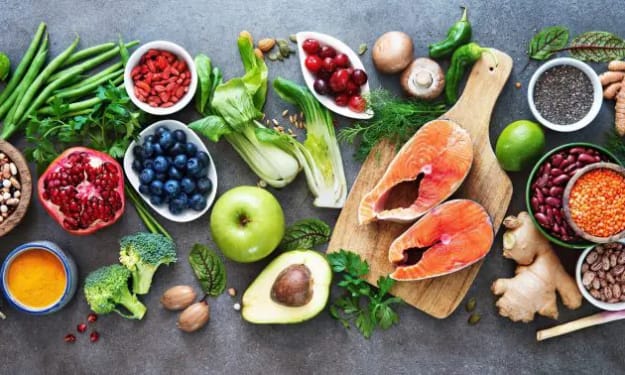
Improve brain function
The health effects of food don’t just stop at the body. They extend into the mind as well, affecting not only our risk of future brain-based conditions (such as stroke and dementia) but also our ability to think clearly in the moment as well as our mood and mental health.
By Nowshin Hasan2 years ago in Chapters
Are Pickles Really good for your health?
250 million Americans eat pickles every year, a normal of nine pounds for each individual. It's almost certainly correct that the vast majority realize pickles are delectable! Be that as it may, choosing whether or not these dill-icious sandwich clinchers sneak up suddenly is a harder inquiry to respond to. Anyway, are pickles really great for you? It depends.
By Emmanuel Fowosire 2 years ago in Chapters
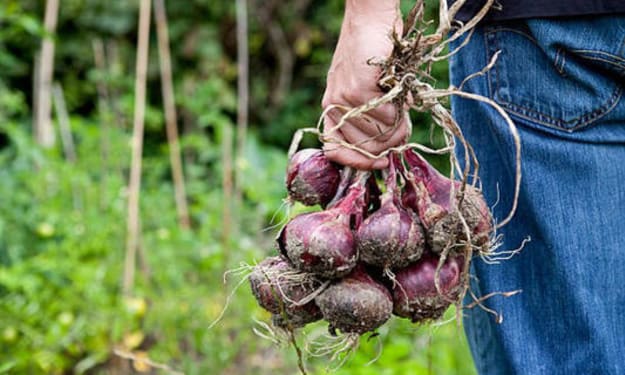
VEGETABLES THAT COULD ALSO FIGHT AGAINST CANCER. Content Warning.
Research has recommended that eating red onions could assist with forestalling disease. The vegetable, which is a foundation of dishes in food societies from everywhere the world, is brimming with synthetics that can kill malignant growth cells, as per researchers.
By Emmanuel Fowosire 2 years ago in Chapters
The Sculptor's Secret. Content Warning.
In the heart of a small, picturesque village, nestled between rolling hills and lush forests, there resided a gifted sculptor named Eleanor. She was known far and wide for her exceptional talent in breathing life into stone, transforming blocks of marble and granite into sculptures that spoke to the soul. However, beneath the surface of her artistic mastery lay a well-guarded secret, a story that would intertwine with the art she created.
By Rajesh kumar 2 years ago in Chapters
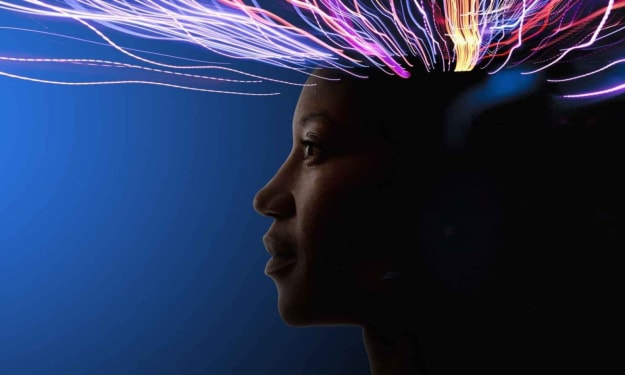
Mind
Have you ever found yourself trapped in a web of undesirable thoughts, unable to break free from their relentless grip? Dr. Amishi Jha, a renowned psychology professor at the University of Miami and the author of "Peak Mind," offers valuable insights and techniques to help you direct your attention where you want it, even when faced with thoughts you'd rather avoid.
By Muhammad Mohsin2 years ago in Chapters
The Gut-Brain Connection: How Gut Health Impacts Your Mind
As humans, we often think of our bodies and minds as separate entities. But the truth is that they are intricately connected, and nowhere is this connection more evident than in the gut-brain connection. Our gut health can have a significant impact on our mental health, and it’s important to understand how this connection works.
By Refresh-Health2 years ago in Chapters
Apple Macaroon Cake
In 1946, a young and ambitious man named William Greenberg, fueled by his poker winnings from his army days, decided to open a bakery on the bustling streets of Manhattan's East 95th Street. Little did he know that this modest endeavor would grow into a beloved institution on the Upper East Side. Over the next 25 years, Greenberg expanded his bakery operation to encompass four locations, but it was his mouthwatering Apple Macaroon Cake that truly stole the show.
By Muhammad Mohsin2 years ago in Chapters