Latest Stories
Most recently published stories in Criminal.
Fox and Fowler. Content Warning.
Monsters, dear Readers, are a grizzly business. For those who hunt them, for those who study the monsters, and those who write about monsters. But what is a monster? Do they just hide under the bed or the closet as so often in our childhoods?
By Cassie Mooreabout a month ago in Criminal
The Family Funkhouser. Content Warning.
There's a family in Oklahoma that had the misfortune of having five of it's 13 children go to prison, 4 of them were here in Oklahoma. What kinds of misfortunes could have plagued such a family? Reader,s let me tell you, it's Oklahoma and there were a number of things that can crop up to snatch away someone so quick it hurts.
By Cassie Moore2 months ago in Criminal
Is America a Terrorist State? And Why Trump's Policies Alarm the World
**Is the United States a “Terrorist Country”? And Are Trump’s Policies Dangerous for the World? When people call the *United States* a “terrorist country,” what they mean is not that the U.S. is exactly like al-Qaeda or ISIS. Instead, critics argue that some U.S. actions — especially military interventions, drone strikes, and economic sanctions — *look similar to terror tactics in their impact on civilians and societies. To understand this, we must examine **policies, consequences, and expert criticism based on data. **
By Junaid Shahid 2 months ago in Criminal
The Shocking Truth About Liquid Nitrogen Cocktails:
When Cocktails Get Too Cool — And People Pay the Price Picture a corporate holiday party. Twinkling lights. Awkward small talk. Then: smoke. Not from incense… but from your drink. Liquid nitrogen cocktails have become the smoky unicorn of the bar world, the beverage equivalent of a potion brewed by a chemistry professor who swears they know what they’re doing. (Weird Darkness)
By Shahjehan Khan 2 months ago in Criminal
Drums Are Beating: Russia and China Align With Venezuela Amid Rising Tensions
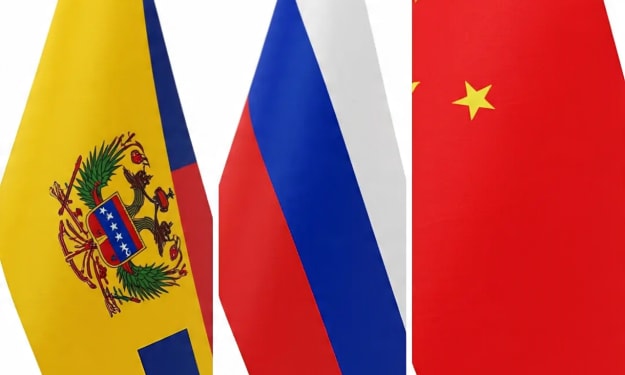
**War Drums Are Beating: Russia and China Align With Venezuela Amid Rising Tensions** In recent weeks, global attention has turned sharply toward Venezuela as alarming headlines and rumors have fueled fears of a major international crisis. Claims of an emerging alliance between Russia, China, and Venezuela, combined with reports circulating online about the kidnapping of the Venezuelan president and his wife, have intensified public anxiety. While not all information has been officially confirmed, the situation reflects deep geopolitical tensions and a fragile regional balance that could have serious global consequences.
By America today 2 months ago in Criminal
America and Venezuela: How Decades of Tension Turned Into Open Confrontation
relationship between the United States and Venezuela has entered one of the most volatile periods in recent history, characterized by escalating tensions, military operations, diplomatic rupture, and international debate. What began as long-standing political and economic disagreement has now evolved into an open confrontation that carries major implications for regional stability, international law, and global geopolitics. Historical Roots of Tension The U.S.–Venezuela relationship has been fraught for decades, shaped by ideological differences, energy politics, and mutual distrust. Venezuela’s oil wealth historically made it a key partner for Washington, particularly throughout the 20th century. However, relations began cooling significantly in the late 1990s and early 2000s after Hugo Chávez rose to power with a project rooted in Bolivarian socialism and resistance to U.S. influence. Over the years, successive Venezuelan administrations under Chávez and later Nicolás Maduro adopted increasingly antagonistic foreign policies toward the United States, while the U.S. grew critical of Venezuela’s democratic backsliding and human rights record. The result was a heavily polarized bilateral relationship, with occasional cooperation overshadowed by frequent clashes, sanctions, and accusations of interference. These structural tensions widened after Venezuela’s disputed 2024 presidential election. The United States and several Western countries rejected the legitimacy of Nicolás Maduro’s victory, citing fraud and lack of transparency. Washington instead recognized opposition leader Edmundo González as interim president, deepening the diplomatic rupture at a time when both nations already had limited official channels of communication. � Encyclopedia Britannica +1 2025: From Sanctions to Military Escalation 2025 marked a dramatic escalation in the U.S.–Venezuelan conflict. Early in the year, the United States intensified pressure on Caracas through a combination of severe sanctions, economic coercion, and targeted counter-narcotics actions. The Trump administration designated Venezuela’s ruling elite and alleged criminal networks—most notably the so-called “Cartel de los Soles”—as terrorist organizations, a step that expanded U.S. legal authority to pursue punitive measures against individuals and assets linked to the Venezuelan government. � CRBC News These sanctions coincided with a significant military buildup in the Caribbean. Beginning in mid-2025, the United States deployed thousands of personnel, warships, aircraft, and surveillance assets near Venezuelan waters in an operation officially framed as a counter-narcotics and maritime security campaign. U.S. officials described these measures as necessary to disrupt smuggling networks and cartel operations alleged to be operating with Venezuelan complicity. Critics, however, interpreted the moves as coercive acts that blurred the line between counter-drug missions and preparations for conflict. � RTVE Throughout 2025, U.S. forces carried out a series of lethal maritime strikes on vessels in the Caribbean and eastern Pacific, which Washington claimed were involved in transporting drugs toward the United States. These operations reportedly resulted in dozens of deaths and drew harsh criticism from human rights organizations and foreign governments who condemned them as disproportionate and in violation of international norms. � Encyclopedia Britannica Oil Seizures and Naval Blockade Compounding the tension were dramatic economic and naval measures. In December 2025, U.S. forces seized a Venezuelan-linked oil tanker, accusing it of carrying sanctioned oil destined for unauthorized markets. Shortly afterward, President Trump announced a “total and complete blockade” of sanctioned Venezuelan tankers entering or exiting the country, a step aimed at crippling Venezuela’s oil-dependent economy and cutting off the government’s primary source of revenue. Venezuela denounced these actions as “piracy” and called on international bodies to condemn what it saw as blatant theft and aggression. � Wikipedia +1 Such measures intensified the humanitarian and economic crisis in Venezuela, where hyperinflation, shortages of basic goods, and a collapsed healthcare system already plagued the population. Critics of U.S. policy argue that the blockade’s economic impact disproportionately affects ordinary Venezuelans, exacerbating suffering without offering a clear path to political resolution. The 2026 Military Operation and Capture of Maduro The culmination of these escalating tensions occurred on January 3, 2026, when U.S. special operations forces conducted a high-profile raid in Caracas, capturing President Nicolás Maduro and his wife, Cilia Flores. The operation, described by critics as a violation of national sovereignty and international law, involved coordinated airstrikes and a covert helicopter insertion into Venezuelan territory. Maduro was transported to New York to face charges related to alleged drug trafficking and “narcoterrorism.” � AP News +1 President Trump proclaimed the raid a major victory, asserting that it would allow the United States to “run” Venezuela and stabilize the country, even opening the door for American oil companies to reenter the market. Yet, the legal basis for the operation remains fiercely disputed, and many observers liken it to the 1989 U.S. invasion of Panama. Venezuela’s vice president, Delcy Rodríguez, was appointed interim president by Caracas’s high court, but the country remains deeply divided, with ongoing protests and resistance from segments of the military. � The Guardian International Reaction and Future Prospects The global response has been sharply divided. Many Latin American countries, along with major powers like Russia and China, condemned the U.S. action as an unlawful intervention and breach of sovereignty. The United Nations has raised concerns about setting a dangerous precedent that could undermine international law and regional stability. Some European nations have called for de-escalation and respect for diplomatic solutions. � TIME As of early 2026, the future of U.S.–Venezuela relations is uncertain. Both nations stand at a crossroads: the United States insists it is acting to combat drug trafficking and restore democratic norms, while Venezuela decries foreign aggression and an attempt at regime change. The profound mistrust built up over years of political antagonism will make dialogue difficult, and the deepening humanitarian crisis adds urgency to finding pathways toward peace. In an era marked by rising geopolitical competition and domestic polarization, the U.S.–Venezuela conflict serves as a stark reminder of how historical grievances, economic interests, and ideological divides can spiral into open confrontation with ramifications far beyond their borders. If you’d like, I can tailor this further for a specific audience or format (e.g., blog style, opinion piece, or news report).
By Hasbanullah2 months ago in Criminal
The Silence After the Verdict
The courtroom had emptied, but the silence remained, thick and suffocating, hanging in the air like smoke from a fire that had burned out hours ago. The judge had spoken, the jury had deliberated, and the gavel had fallen with an echo that seemed to reverberate through the very bones of the building. The verdict was delivered: guilty. Or was it not guilty? It didn’t matter now. The silence was the only truth left.
By Jhon smith2 months ago in Criminal
American Forces Capture Venezuela President Nicolas Maduro
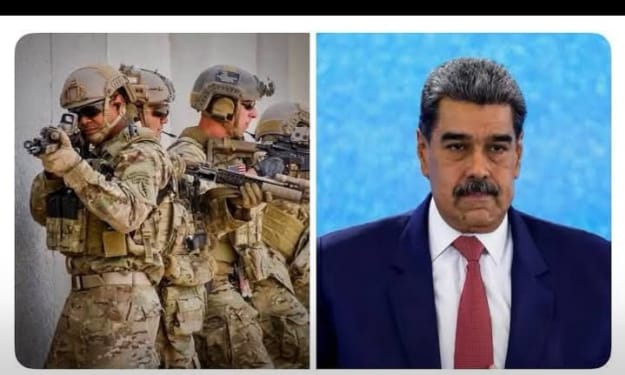
At 4:21 a.m. Eastern on January 3, Donald Trump dropped a message that instantly rewired the geopolitical map of the Americas: Nicolás Maduro, the sitting president of Venezuela, had been captured by U.S. forces and flown out of the country. The operation—conducted alongside U.S. law enforcement—was over almost as soon as it began. From first explosions to extraction, it took roughly three and a half hours.
By Lawrence Lease2 months ago in Criminal
Swiss Bar Managers Face Negligence Claims After Deadly Fire. AI-Generated.
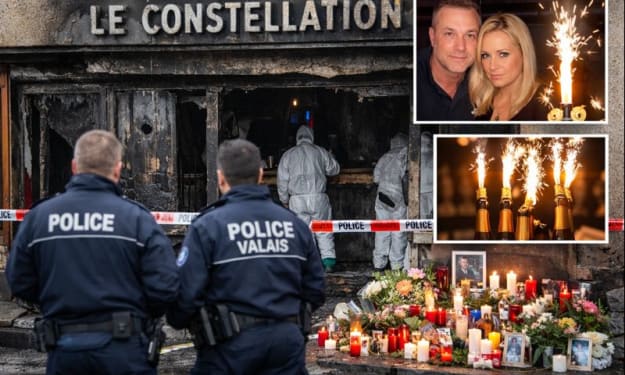
A tragic fire at a Swiss bar has left the nation in shock and mourning. The incident happened in the early hours of New Year’s Day during celebrations at a popular bar located in a well-known ski resort in Switzerland. What was meant to be a joyful start to the new year turned into one of the deadliest fire disasters the country has seen in recent years.
By dua fatima2 months ago in Criminal