celebrities
From OJ onward, explore the less glamorous side of celebrity life and famous faces accused, vindicated and convicted.
Nancy Guthrie Update: Day 9 Search Continues Amid Ransom Concerns and Expert Skepticism
The search for Nancy Guthrie, the 84-year-old mother of NBC Today co-anchor Savannah Guthrie, has entered its ninth day with no confirmed sightings or proof of life. Nancy was last seen on January 31, 2026, in the Catalina Foothills neighborhood near Tucson, Arizona, when a family member dropped her off at home after dinner. The following day, family members reported her missing after she failed to attend church, a part of her regular routine, and could not be reached by phone.
By Story Prismabout 18 hours ago in Criminal
The Tragic Symphony of Bergen
The story of Bergen stands as one of the most tragic tales in the history of modern art. It is far more than a mere biography of a singer who achieved immense fame; it is a searing indictment of violence against women, and a cry of pain embodied in a golden voice.
By Mayar Younesabout 22 hours ago in Criminal
The Man Who Confessed to a Murder He Didn’t Commit
M Mehran The police station was quiet when the man walked in at 4:46 a.m. No blood on his clothes. No weapon in his hands. Just a calm face and a single sentence that would haunt the city for years. “I killed my wife,” he said. Officer Lena Morales looked up from her desk, expecting panic or madness. Instead, she saw relief—like the man had been holding his breath for months and finally let it out. His name was Aaron Keller. A schoolteacher. No criminal record. No history of violence. And yet, an hour later, his wife Emily Keller was found dead in their suburban home. A Perfect Confession Aaron’s confession was detailed—too detailed. He described the argument, the kitchen knife, the exact moment Emily fell. He even told police where to find the weapon. Everything matched the crime scene perfectly. The media devoured the story. “Husband Confesses to Brutal Murder” “A Monster Behind a Gentle Smile” Aaron didn’t hire a lawyer. He waived his right to silence. He pleaded guilty in court with a steady voice. Case closed in three weeks. But something was wrong. The Detective Who Didn’t Believe It Detective Marcus Hale had seen hundreds of confessions. Real ones were messy—filled with excuses, anger, or fear. Aaron’s was clean. Almost rehearsed. More troubling was Emily Keller’s background. She worked as an accountant for a private investment firm currently under investigation for financial fraud. Millions were missing. Names were being erased. Files were vanishing. Emily had been scheduled to meet federal auditors the morning after her death. Then she never woke up. Hale dug deeper—and found a gap. No neighbors heard a fight. No defensive wounds on Aaron. And the knife? Wiped clean of all prints except Aaron’s. Too perfect. A Prison Visit That Changed Everything Six months into Aaron’s life sentence, Hale visited him in prison. “Why did you really confess?” Hale asked. Aaron stared through the glass. “Because if I didn’t, someone else would die.” Hale leaned in. “Who?” “My daughter.” That was when the truth began to bleed out. The Threat No One Saw Two weeks before Emily’s death, Aaron received an unmarked envelope. Inside were photos—his daughter walking home from school, playing in the park, sleeping in her room. Along with a note: Confess, or we finish what we started. Emily had discovered illegal transfers linked to organized crime. When she tried to leave the firm, she was marked. Killing her was easy. Framing Aaron was easier. “They told me exactly what to say,” Aaron whispered. “What to remember. What to forget.” The confession wasn’t guilt. It was a deal. When the Truth Is Too Dangerous Hale took the information to his superiors. The case was shut down within 24 hours. He was told to stop digging. The investment firm vanished overnight. Executives relocated. Records burned. Witnesses recanted. And Aaron Keller stayed in prison. A Second Murder Three years later, another accountant from the same firm was found dead—same method, same silence, same precision. This time, there was no confession. Hale reopened the Keller file quietly. He leaked evidence to a journalist. The pattern was undeniable. The killer wasn’t Aaron. It was a professional cleanup crew protecting a criminal empire. The Cost of a Lie Aaron Keller was released after four years behind bars. Emily Keller’s murder remains officially “solved.” But the truth never made headlines. Aaron lives alone now, raising his daughter in a town where everyone still remembers his face—but not the facts. Detective Hale resigned from the force. In his resignation letter, he wrote: “Our justice system doesn’t always punish the guilty. Sometimes it selects a sacrifice.” Why This Crime Still Haunts Us Criminal stories like Aaron Keller’s reveal a terrifying reality: confessions don’t always mean guilt. Sometimes, they’re weapons—used by powerful people to bury the truth. And sometimes, the most dangerous criminals are never arrested—because they never leave fingerprints. They leave fear.
By Muhammad Mehrana day ago in Criminal
The Last Confession in Cell No. 14
M Mehran The confession came at 2:17 a.m., scratched onto a torn piece of prison stationery, written with a pen that barely worked. By morning, the man who wrote it would be dead. Cell No. 14 had a reputation inside Blackmoor Central Prison. Guards avoided it. Inmates whispered about it. It was where cases went to die—unsolved murders, buried truths, and men society had already forgotten. Daniel Hargreeve had lived in that cell for twelve years. Convicted of the brutal murder of journalist Clara Whitmore, Daniel was labeled a monster by the media. Headlines called him “The Silent Butcher.” He never defended himself in court. Never cried. Never begged. He simply accepted the life sentence and disappeared behind iron bars. But Daniel wasn’t silent anymore. A Crime That Shocked the City Clara Whitmore was fearless. As an investigative journalist, she exposed corruption, drug trafficking, and political scandals that others were too afraid to touch. Her final article, published just hours before her death, hinted at a powerful criminal network operating inside the city’s justice system. The next morning, she was found dead in her apartment—stabbed seventeen times. There were no signs of forced entry. Daniel Hargreeve, her former neighbor, was arrested within 48 hours. The evidence looked airtight: fingerprints on a glass, CCTV footage placing him near the apartment, and a past argument between the two. The public demanded justice, and the court delivered it swiftly. Case closed. Or so everyone thought. Twelve Years of Silence Inside Blackmoor, Daniel became a ghost. He spoke to no one. He refused visitors. Even when beaten by other inmates, he never fought back. Guards said he slept sitting up, staring at the wall like he was waiting for something. Only one person tried to understand him—Detective Elias Monroe. Monroe was a young officer during the original investigation. Something about Daniel’s blank acceptance never sat right with him. Over the years, Monroe revisited the case files obsessively, finding small inconsistencies that others ignored. Missing phone records. A corrupted hard drive. Witnesses who changed their statements. Still, nothing strong enough to reopen the case. Until the night Daniel asked to see him. The Confession When Monroe entered Cell No. 14, Daniel looked older than his 39 years. His hands trembled, not from fear—but urgency. “I didn’t kill Clara,” Daniel said quietly. “But I know who did.” Monroe leaned forward. “Why now?” “Because they’re cleaning up,” Daniel replied. “And I’m next.” Daniel revealed that Clara had discovered a secret alliance between a powerful businessman, a senior judge, and a prison contractor laundering money through private correctional facilities. She hid encrypted files on a flash drive—and trusted Daniel to keep it safe. The night she was murdered, Daniel found her already dead. Before he could call the police, men arrived. Professionals. They framed him with surgical precision. “They told me if I spoke,” Daniel said, “my family would disappear.” So he stayed silent. For twelve years. The Price of Truth That same night, Daniel was found dead in his cell—official cause: suicide. But Monroe knew better. Hidden inside the prison Bible was the flash drive Daniel mentioned. Inside were documents, recordings, and video evidence—enough to bring down an empire. The story exploded. The judge resigned. The businessman fled the country. The prison contractor was arrested trying to destroy records. And for the first time in twelve years, the media used Daniel’s name without the word “killer.” Justice Came Too Late Daniel Hargreeve was exonerated posthumously. His family received an apology. A weak one. Cell No. 14 was sealed permanently. Detective Monroe often stands outside it, reading the copy of the confession Daniel left behind. The last line still haunts him: “The system didn’t fail me. It worked exactly as it was designed.” Why This Crime Still Matters The case of Clara Whitmore reminds us that some crimes are buried not because they’re unsolvable—but because the truth is dangerous. Criminal justice stories like this expose how power, fear, and silence can destroy innocent lives. And sometimes, the most important confession comes when it’s already too late.
By Muhammad Mehrana day ago in Criminal
The Epstein Saga (File)
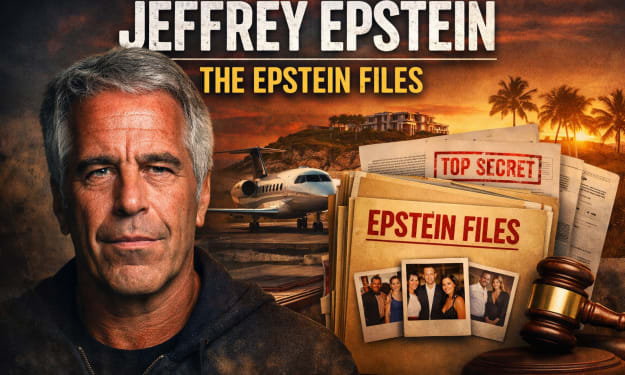
For years, the name Jeffrey Epstein floated quietly through elite social circles. He was known as a wealthy financier, a man who entertained billionaires, politicians, academics, and celebrities at lavish properties across the globe. To the public, he appeared mysterious but successful. Behind the scenes, however, a far darker story was unfolding — one that would eventually shake governments, expose legal failures, and lead to the release of what the world now calls the Epstein files.
By Active USA 2 days ago in Criminal
Jeffrey Epstein file
Jeffrey Epstein’s name has become synonymous with high-profile scandal, abuse, and secrecy. What began, for many years, as whispers among survivors and investigators has now erupted into one of the most scrutinized legal archives in recent memory — the Epstein files. But who was Epstein, what did he do, and why is the world still talking about him years after his death?
By USA daily update 2 days ago in Criminal
The Last Confession: A Crime That Slept for Twenty Years
M Mehran The police station clock struck midnight when Inspector Arjun Malhotra finally opened the dusty case file. The label read “Rohit Verma Murder — Unsolved.” It had been untouched for nearly twenty years. Most people had forgotten the crime, but Arjun hadn’t. Some cases don’t fade with time—they wait. Rohit Verma was twenty-six when he was found dead in his apartment, stabbed once in the chest. No signs of forced entry. No stolen valuables. No fingerprints except his own. It was the kind of murder that mocked investigators—clean, quiet, and cruel. Back then, Arjun was a junior officer, watching helplessly as leads dried up and witnesses contradicted themselves. The case was eventually closed due to “lack of evidence.” But closure on paper never meant justice in reality. That night, a letter had arrived at the station—no return address, no stamp. Just a single line written in shaky handwriting: “I am ready to confess.” A Voice from the Shadows The next morning, an elderly man walked into the station. His name was Suresh Kapoor, a retired schoolteacher with trembling hands and tired eyes. He asked to speak only to Inspector Malhotra. “I killed Rohit Verma,” he said calmly. Arjun stared at him, searching for madness, attention, or regret. What he saw instead was exhaustion. Suresh explained that Rohit wasn’t a stranger. He was his former student—and later, his son-in-law. Twenty years ago, Rohit married Suresh’s daughter, Naina. On the surface, their marriage looked perfect. In reality, it was a prison. Rohit was controlling, violent, and manipulative. He isolated Naina from her family, monitored her calls, and turned his anger into bruises she hid beneath long sleeves. Every visit home ended with forced smiles and rehearsed lies. “She begged me not to interfere,” Suresh whispered. “She said it would only make things worse.” The Night Everything Changed On the night of the murder, Suresh received a phone call from Naina. She was crying, barely able to speak. “He’s going to kill me, Papa.” Suresh drove through the rain like a man possessed. When he reached the apartment, the door was unlocked. Inside, he heard shouting—Rohit’s voice, sharp and drunk. What happened next unfolded in seconds. Rohit lunged at Suresh with a kitchen knife, screaming accusations and threats. In the struggle, the knife slipped from Rohit’s hand. Suresh picked it up. “I didn’t plan it,” he said, tears running down his face. “I only wanted to protect my daughter.” The blade struck once. Rohit fell. Silence followed. A Crime Covered by Love Panicking, Suresh cleaned the knife and wiped every surface he had touched. Naina stood frozen, unable to process what had happened. Before leaving, Suresh looked at his daughter and made a decision that would haunt him for decades. “Forget this night,” he told her. “Live your life.” The investigation never suspected a respected schoolteacher. Naina moved abroad a year later, rebuilding her life piece by piece. She never spoke of her past again. Suresh carried the weight alone. “I thought I could live with it,” he told Arjun. “But guilt doesn’t age well. It grows.” The Truth Finally Surfaces Inspector Malhotra reopened the case. Old evidence, once meaningless, now fit perfectly with Suresh’s confession. The lack of forced entry. The wiped fingerprints. The single stab wound—defensive, not brutal. For the first time in twenty years, the case made sense. Suresh was arrested, but the public reaction was divided. Some called him a murderer. Others called him a father who did what the law failed to do. During the trial, Naina returned to testify. She spoke calmly, confidently, and without fear. “I am alive because of my father,” she said. The courtroom fell silent. Justice or Mercy? The judge sentenced Suresh to a reduced term, citing self-defense and emotional distress. He would spend the remainder of his life in custody, but not behind harsh bars—under medical supervision. As Suresh was led away, he looked at Arjun and nodded—not in relief, but in acceptance. That night, Inspector Malhotra closed the case file again. This time, for real. Some crimes are born from greed. Others from rage. And some—from love twisted by desperation. Justice, Arjun realized, isn’t always clean. But truth, no matter how late, always finds its way into the light. And some confessions wait twenty years—not because they are forgotten, but because they need the right moment to be heard.
By Muhammad Mehran3 days ago in Criminal
The Carters Are Quietly Aware Of Who Has Been Working Against Their Empire by NWO Sparrow
From courtroom showdowns to industry rivalries, the conflicts that sparked whispers across entertainment circles For more than two decades, Jay Z and Beyoncé have maintained a rare level of cultural influence while protecting their brand with calculated precision. Their dominance in music, business, and philanthropy has placed them in a unique position where praise and criticism often operate at extreme levels. In recent years, online conversations have reignited speculation that coordinated attacks exist against the power couple. While no verified evidence confirms organized smear operations, several high profile figures have played roles in controversies that amplified negative narratives and public suspicion of Hollywood's most influential couple.
By NWO SPARROW3 days ago in Criminal
The Last Confession: A Crime That Spoke After Death
M Mehran The call came in at 3:17 a.m., the kind that makes even seasoned detectives sit up straighter. A body had been found in an abandoned textile warehouse on the outskirts of the city. No signs of forced entry. No witnesses. And no obvious cause of death. Detective Arjun Malhotra arrived at the scene under flickering streetlights, the cold air biting through his coat. The victim lay in the center of the warehouse floor, dressed neatly, hands folded as if in sleep. No blood. No wounds. Just a man who looked like he had decided to stop breathing. The victim was identified as Raghav Mehra, a well-known real estate tycoon with a spotless public image and a long list of silent enemies. At first glance, it looked like a natural death. It wasn’t. A Perfect Life with Cracks Beneath Raghav Mehra was the kind of man newspapers loved. Philanthropist. Family man. Investor. His smiling face appeared on billboards promoting charity drives and housing projects. But Arjun had learned long ago that the cleanest suits often hid the dirtiest secrets. The autopsy confirmed it—Raghav had been poisoned. A rare compound. Colorless. Odorless. Nearly undetectable unless you knew exactly what to look for. Someone had planned this carefully. What puzzled investigators most was what was missing. Raghav’s phone, wallet, and expensive watch were still on him. Nothing stolen. No struggle. No rush. This wasn’t robbery. This was intent. The Voice Note That Changed Everything Two days later, a small package arrived at the police station. No return address. Inside was a cheap USB drive and a handwritten note: “He didn’t deserve to die in silence.” The USB contained a single audio file titled: “Final Statement.” Arjun listened. Raghav Mehra’s voice filled the room—shaky, broken, nothing like the confident man the world knew. “I’ve lived on lies,” the recording began. “If you’re hearing this, I’m probably dead. And maybe that’s justice.” Over the next eleven minutes, Raghav confessed to crimes that spanned nearly two decades—illegal land seizures, bribing officials, destroying families who stood in his way. He named names. Dates. Locations. And then came the most disturbing part. “In 2009,” Raghav said, voice cracking, “a man named Sameer Khan died because of me. I took his land. He took his life. And I watched.” The recording ended with one chilling line: “I don’t expect forgiveness. I expect consequences.” A Ghost from the Past Sameer Khan’s case was buried history. Officially ruled a suicide caused by financial stress. But Arjun dug deeper. Sameer was a schoolteacher. Honest. Respected. And he had refused to sell his land to Raghav’s company. Weeks later, his house was demolished. His job vanished. His reputation destroyed. And then—he was found dead. Sameer had a daughter. Her name was Ayesha Khan. She had disappeared from public records five years ago. The Woman No One Saw Coming Arjun finally found her working as a nurse in a private clinic under a different surname. She didn’t resist arrest. She didn’t cry. She didn’t deny anything. “Yes,” she said calmly. “I poisoned him.” She explained everything with unsettling clarity. “I didn’t want him to suffer physically,” Ayesha said. “I wanted him to suffer knowing.” She had spent years studying toxicology, working double shifts, building a quiet, invisible life. She volunteered at Raghav’s charity events. Earned his trust. Served him tea during a private meeting. “He talked about success,” she said. “About destiny. He didn’t recognize me. But I recognized him every single day.” Justice or Revenge? The case exploded across media platforms. Headlines screamed “Billionaire Murdered by Teacher’s Daughter” and “Confession from the Grave.” Public opinion split sharply. Some called Ayesha a cold-blooded criminal. Others called her a hero who delivered justice where the system failed. In court, the audio confession was played in full. Raghav’s own words condemned him more effectively than any prosecutor could. Ayesha was sentenced to prison. The courtroom was silent when the verdict was read. She didn’t smile. She didn’t regret it. The Crime That Refused to Be Forgotten Months later, new investigations reopened several old cases linked to Raghav Mehra. Properties were seized. Officials arrested. Families compensated. One crime had exposed a hundred more. Detective Arjun stood outside the prison one evening, listening to the city hum. He had solved the case, but peace didn’t follow. Because the question lingered—was this justice, or just another crime born from injustice? Ayesha’s final words to him echoed in his mind: “I didn’t kill him because I hated him. I killed him because the law forgot us.” Final Thoughts Crime stories often end with handcuffs and headlines. But some crimes live on, reshaping the world long after the last confession. Raghav Mehra’s voice spoke after death. Sameer Khan’s silence was finally heard. And Ayesha Khan became both criminal and consequence. In the end, the most terrifying truth wasn’t the murder. It was how easily evil had worn the mask of respectability—and how long it took for justice to wake up.
By Muhammad Mehran4 days ago in Criminal
Trump, Obama, and the “Apes” Controversy: A Political Storm That Shook American Discourse
**Trump, Obama, and the “Apes” Controversy: A Political Storm That Shook American Discourse** A new wave of controversy has swept through American politics after a video circulated online showing former President Barack Obama and former First Lady Michelle Obama depicted as apes. The clip, which was briefly shared from an account associated with former President Donald Trump, immediately ignited outrage, debate, and intense media attention. Even though the video was quickly removed, the incident reopened deep conversations about race, political rhetoric, and the power of imagery in modern politics.
By America today 4 days ago in Criminal
Cease to Exist. Content Warning.
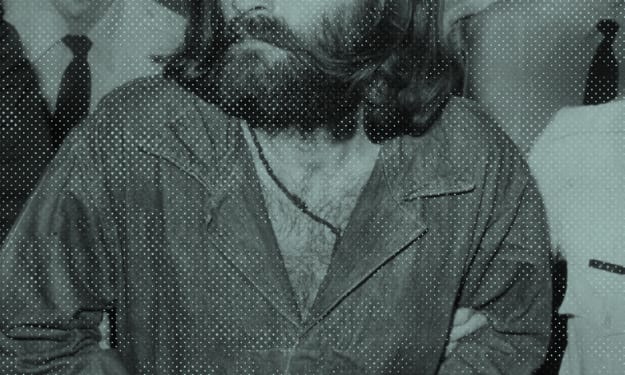
Charles Manson was born in Cincinnati Ohio to a sixteen-year-old woman named Kathleen Maddox who was originally from a Conservative family in Kentucky. His biological father was believed to be a man named Colonel Hendersen Scott, Jr. from of Catlettsburg Kentucky whom Manson had no memory of. His birth certificate only listed his name as "Manson" after his mother married a man named William Eugene Manson who worked as a dry cleaner. Young Charles was mostly left with babysitters while his mother spent most of her time on alcohol binges. Maddox and Manson would divorce on April 30th 1937. Two years later Maddox was arrested for assault and robbery with Kathleen earning a five year jail sentence. Young Carlie's care was placed with relatives of Maddox in West Virginia. He would discover a love for music while living with them thanks to the piano in their house.
By Sean Callaghan4 days ago in Criminal