
The Epstein Files
How Power, Silence, and Influence Protected a Global Criminal Network

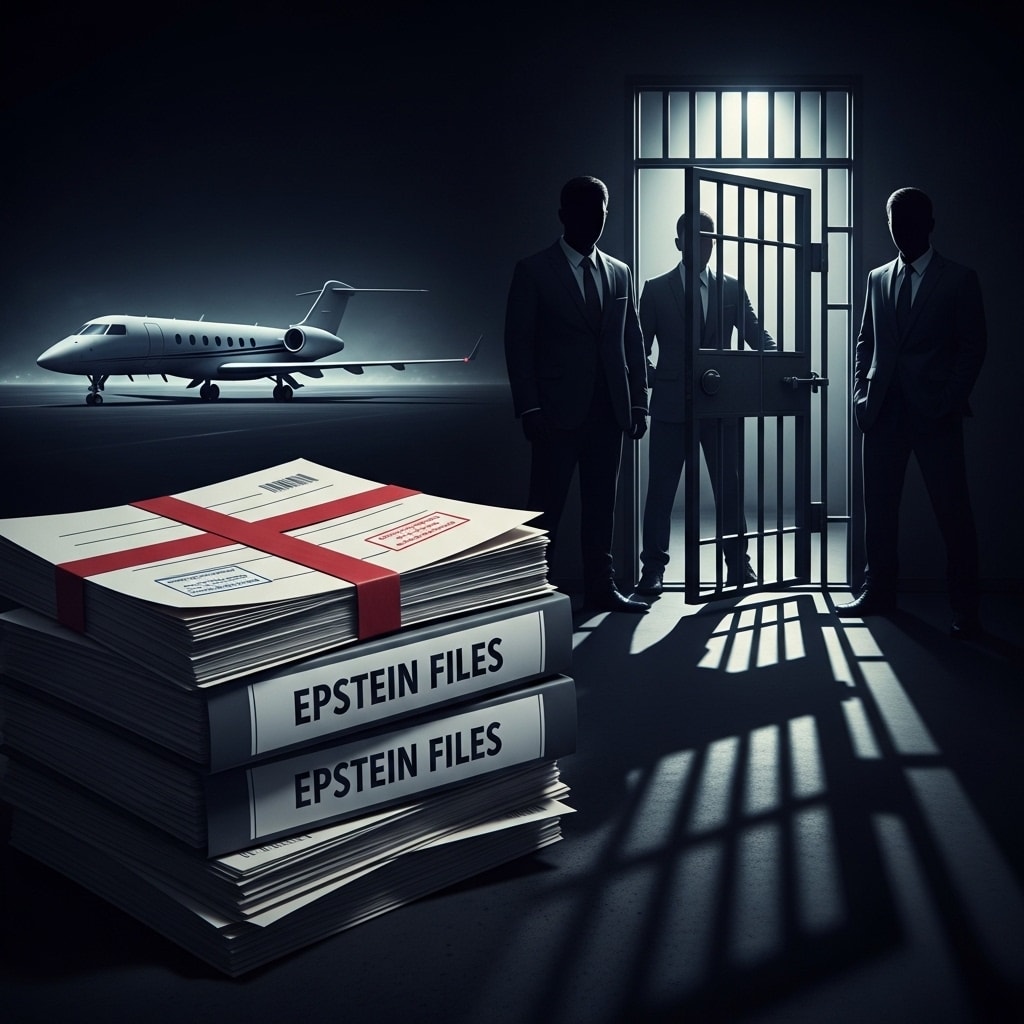
The Epstein Files
The Jeffrey Epstein case is not just the story of one criminal. It is a mirror showing how power, money, and silence can protect wrongdoing at the highest levels of society. While Epstein was officially charged and convicted for serious crimes, many questions remain unanswered about how his network operated for decades without being stopped.
Jeffrey Epstein was a wealthy financier with no clear source of income that matched his lifestyle. He owned private jets, luxury homes in New York, Florida, Paris, and a private island in the Caribbean. Behind this glamorous image was a dark reality. Epstein was first convicted in 2008 for soliciting sex from a minor in Florida. Despite the seriousness of the crime, he received an extremely lenient plea deal. This deal allowed him to avoid federal charges and serve limited jail time with special privileges. Many legal experts later described this deal as a major failure of the justice system.
After his release, Epstein continued to live freely and maintained relationships with powerful people across politics, business, media, and royalty. These connections raised serious concerns. Victims later stated that Epstein used his influence to intimidate them and make them feel that reporting abuse was useless. For many years, their voices were ignored.
The situation changed in 2019 when Epstein was arrested again, this time on federal charges of sex trafficking of minors. Prosecutors accused him of running an organized system where underage girls were recruited, groomed, and abused. However, before the case could go to trial, Epstein was found dead in his jail cell. Authorities ruled his death a suicide, but the circumstances caused widespread public distrust. Broken cameras, sleeping guards, and unanswered questions fueled global suspicion.
While Epstein never faced a full trial, his closest associate did. Ghislaine Maxwell, a British socialite and longtime partner of Epstein, was arrested and later convicted in 2021. A jury found her guilty of helping Epstein recruit and groom underage girls. She was sentenced to 20 years in prison. Her conviction confirmed that Epstein did not act alone and that his crimes were part of an organized operation.
Beyond these two confirmed criminals, the Epstein files include thousands of pages of court documents, flight logs, and testimonies. These records name many powerful individuals. It is important to be clear: being named in a document does not mean someone is guilty. Many of those mentioned have denied any wrongdoing, and several were never charged. However, the presence of these names raises serious questions about accountability and justice.
The most disturbing aspect of the Epstein case is not only the abuse itself, but how long it was allowed to continue. Prosecutors, politicians, and institutions failed repeatedly. Some witnesses say that law enforcement was discouraged from investigating too deeply. Others point to Epstein’s wealth and connections as a shield that protected him from consequences. This shows how unequal the justice system can be when money and influence are involved.
The Epstein case also exposed the weakness of systems meant to protect the vulnerable. Young victims came from difficult backgrounds and were targeted because they lacked protection. When they spoke up, they were often dismissed or silenced. It took years of persistence from journalists, activists, and survivors to bring the truth to light.
Today, the Epstein files symbolize a larger global issue. They represent how criminal networks can hide behind power, how silence can be enforced through fear, and how justice can be delayed for decades. Although some progress has been made, many people believe the full truth has still not been revealed.
The legacy of the Epstein case is a warning. It shows that democracy, human rights, and justice require constant vigilance. When powerful people are placed above the law, society itself becomes weaker. True accountability is not about revenge, but about ensuring that no individual, no matter how wealthy or influential, is untouchable.
About the Creator
Wings of Time
I'm Wings of Time—a storyteller from Swat, Pakistan. I write immersive, researched tales of war, aviation, and history that bring the past roaring back to life
Keep reading
More stories from Wings of Time and writers in Criminal and other communities.
Why the Epstein Network Was Never Fully Exposed
Why the Epstein Network Was Never Fully Exposed The most haunting question after the Jeffrey Epstein case is not what he did, but why so much remains hidden. Despite arrests, court documents, and years of investigation, the full network surrounding Epstein has never been completely exposed. This failure is not accidental. It reveals how modern power systems are designed to protect themselves, even when serious crimes are involved.
By Wings of Time about 15 hours ago in Criminal
The man who stole the world
M Mehran At first, no one noticed the pattern. People simply woke up to find their lives gone. Bank accounts emptied. Credit ruined. Medical records altered. Even wedding photos deleted from cloud storage. It wasn’t just theft—it was erasure. The media called it the largest identity theft crime in modern history. But they didn’t know the worst part yet. A Crime Without a Face Cybercrime investigator Mila Novak stared at the screen for hours, scrolling through files that didn’t make sense. Over two hundred victims across six countries. Different banks. Different devices. Different habits. One thing was common. Every victim received a single email before their life collapsed. No threats. No malware links. Just one sentence: “You should have protected it better.” Mila had seen hackers before—greedy ones, reckless ones, desperate ones. This one was different. This one was personal. The Victims Who Vanished One victim was a schoolteacher who lost her savings and was declared legally dead after her medical records were altered. Another was a businessman arrested at an airport for crimes committed under his stolen identity. One man took his own life. That was when the case stopped being digital. It became human. Mila couldn’t sleep. She replayed interviews in her head—voices shaking, eyes hollow. “These aren’t just stolen identities,” she told her team. “Someone is destroying people intentionally.” The Hacker’s Signature The breakthrough came from an old technique most criminals had forgotten. Handwriting. The email sentence—“You should have protected it better”—appeared in every case. Same phrasing. Same punctuation. Same cold tone. A signature. Mila cross-referenced old cybercrime forums and found it buried in a decade-old discussion thread. A username: GhostLedger A hacker who vanished after exposing a corrupt tech company years earlier. The forum said GhostLedger didn’t steal money. He took revenge. A Past Rewritten Mila traced the digital trail to an abandoned data center on the outskirts of the city. Inside, among humming servers and dust, she found something unexpected. A bedroom. Photographs lined the wall—families, birthdays, graduations. None of them were his. They were the victims. Pinned beneath each photo was a note. “Lied.” “Cheated.” “Stole.” “Destroyed others first.” Mila finally understood. This wasn’t random cybercrime. It was punishment. The Criminal’s Truth They found him sitting calmly at a terminal, typing as if nothing mattered. His real name was Daniel Weiss—a former cybersecurity engineer fired after reporting massive data misuse. The company buried the scandal. Daniel lost his job, his reputation, his future. And then, his wife. Her identity was stolen years later. Her medical data altered. She died after receiving the wrong treatment. No one was charged. “No law protected her,” Daniel said quietly as Mila confronted him. “So I learned to work outside the law.” “You ruined innocent lives,” Mila replied. Daniel looked at her, eyes empty but steady. “They weren’t innocent,” he said. “They profited from broken systems. I just used the same systems on them.” Justice in the Digital Age Daniel was arrested without resistance. The media called him a monster. Online forums called him a hero. Victims demanded answers. Courts struggled to untangle destroyed identities. Some lives were restored. Some weren’t. Mila testified in court, but her voice shook—not from fear, but from doubt. Because part of her understood him. And that terrified her. The Real Crime Months later, the case closed. But the systems Daniel exploited? Still running. Still vulnerable. Still unprotected. Mila deleted the last email from GhostLedger’s archive. Before closing the file, she noticed something new—an unsent draft. Just one line. “The system was the real criminal.” She shut down the computer and walked away, knowing one thing for certain: In the modern world, crime doesn’t always wear a mask or carry a weapon. Sometimes, it just needs your data. Why This Criminal Story Hits Hard Because identity theft is more than fraud. Because cybercrime creates real victims. Because justice doesn’t always keep up with technology. And because the most dangerous criminals don’t break into homes— They log in.
By Muhammad Mehran3 days ago in Criminal
The Man Who Confessed to a Murder That Never Happened
M Mehran The police station was unusually quiet that night. No shouting. No ringing phones. Just the hum of a flickering tube light and the sound of rain tapping against barred windows. At 2:17 a.m., a man walked in and calmly said the words that would haunt everyone inside for years: “I killed someone.” Officer Daniel Reyes looked up, annoyed more than alarmed. False confessions weren’t rare—drunks, attention-seekers, broken souls. But this man didn’t look drunk. Or nervous. Or desperate. He looked… relieved. A Confession Without a Body The man identified himself as Ethan Moore, 34, accountant, no prior criminal record. Clean clothes. Steady voice. Hands folded like he was waiting for a dentist appointment. Reyes followed protocol. “Who did you kill?” Ethan answered immediately. “My brother. Liam Moore.” That changed everything. A missing person report had been filed for Liam three years ago. No body. No evidence of foul play. The case went cold—another adult who “probably wanted to disappear.” Until now. Details Only a Killer Should Know In the interrogation room, Ethan spoke slowly, carefully, as if reciting a story he’d rehearsed a thousand times. He described the fight. The broken glass. The shove near the staircase. “He hit his head,” Ethan said. “Didn’t move after that.” Detectives exchanged glances. The details were disturbingly specific. “Where’s the body?” Detective Harris asked. Ethan shook his head. “There is no body.” The room went silent. A Perfect Crime—or a Perfect Lie? Over the next 48 hours, police tore apart Ethan’s life. They searched his apartment. Dug through phone records. Interviewed neighbors and coworkers. Nothing. No blood. No suspicious financial activity. No signs of violence. But Ethan never changed his story. He never asked for a lawyer. Never cried. Never defended himself. He just kept saying: “I deserve to be punished.” The Psychological Puzzle Criminal psychologists were brought in. One theory suggested survivor’s guilt. Another proposed delusional disorder. But none fully explained why a mentally stable man would confess to murder without evidence—and refuse to retract it. Dr. Helen Cross, a forensic psychologist, noticed something chilling. “Ethan isn’t confessing to a crime,” she said. “He’s confessing to a feeling.” The Brother Who Lived in the Shadows Through interviews, a darker picture emerged. Liam Moore was charismatic, reckless, always the center of attention. Ethan, the quiet one, spent his life cleaning up after him—financially, emotionally, mentally. Their final fight wasn’t about money or anger. It was about freedom. “Liam told me I was invisible,” Ethan admitted. “That without him, I was nothing.” That night, Liam walked out during the storm. He never came back. The Twist That Changed the Case Three months into Ethan’s incarceration, a body was found—nearly 200 miles away. It wasn’t Liam. But the discovery reopened old missing persons databases. And that’s when a patrol officer noticed something strange. A man in another state had been living under a new identity. Same scars. Same dental records. Liam Moore was alive. The Truth Behind the Confession When confronted, Ethan finally broke. “I didn’t kill him,” he whispered. “But I wanted to.” The real crime wasn’t murder. It was emotional imprisonment. Ethan confessed because guilt had eaten him alive—not for killing his brother, but for wishing him gone. He believed that thought alone made him a criminal. A Crime Without a Law Legally, Ethan had committed no crime. Morally, he had sentenced himself. The court released him. No charges. No apology could erase the months he spent behind bars by choice. Liam was questioned and released. He never contacted Ethan again. The Most Dangerous Criminal Is the Mind This case never made national headlines. No blood. No verdict. No dramatic ending. But detectives still talk about it. Because it revealed something unsettling: The human mind can punish itself harder than any prison. Ethan Moore walked into a police station not because he was guilty of murder—but because he couldn’t escape his own conscience. Final Reflection True crime isn’t always about killers and victims. Sometimes, it’s about guilt. About family. About the quiet crimes we commit in our thoughts—and the punishment we give ourselves for them. Ethan confessed to a murder that never happened. But the psychological damage? That was real. And it almost destroyed him.
By Muhammad Mehrana day ago in Criminal
Time to change your life.
Is it even possible for you to change your life? A lot of people, more than there should be, are unhappy with their lives. But what are they doing about it? Usually nothing. People talk about how shitty their lives are and want change, but are they not taking the actions to change?
By Jen Phillips6 days ago in Humans



Comments
There are no comments for this story
Be the first to respond and start the conversation.