Latest Stories
Most recently published stories in Critique.
He Ain’t Heavy, He’s My Brother
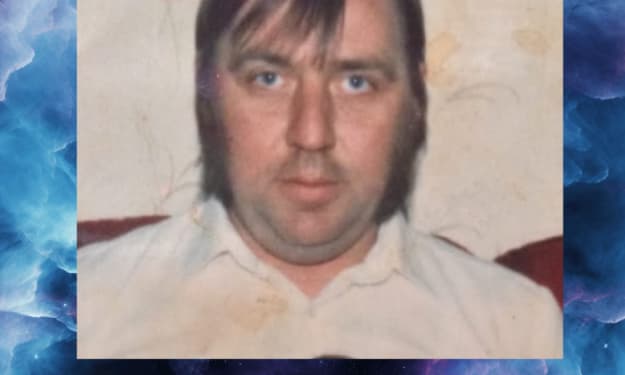
He Ain’t Heavy, He’s My Brother John my brother, he has always been the quiet strength in my life. When I was young, the world around me often felt loud and uncertain, but John was steady. He never needed many words—just his presence was enough. With strong hands and calm eyes, he could settle things without making a fuss. He fixed what needed fixing, never asked too many questions, and always seemed to know when silence was more comforting than advice.
By Marie381Uk 8 days ago in Critique
Ulysses
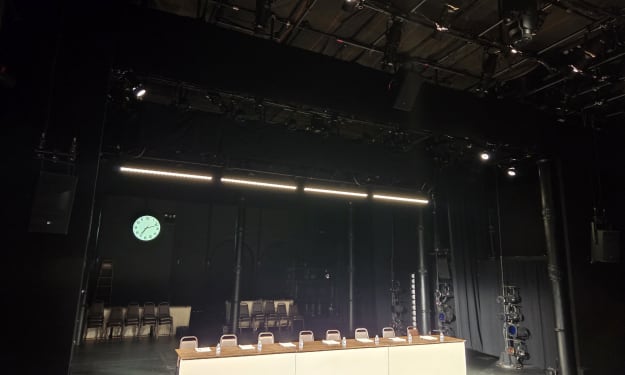
Elevator Repair Services Theater Company in association with The Public Theater put forth a unique play about the James Joyce book, "Ulysses". Set as a staged reading (DOTS), the actors move about the baron stage with ease. Directed by John Collins with co-direction by Scott Shepard, the story and the comedic "business" for the most part are really good. Not that "Ulysses" doesn't have some problems, the play for the most part is enjoyable. At 2:30 minutes, the direction is tested with the length of this play.
By Robert M Massimi. ( Broadway Bob).8 days ago in Critique
to me
I know it had been over the last few weeks to a month since I have read and commented, but I have been reading very occasionally my notifications here on Vocal. Actually, over the past few weeks to probably a month I have been working on my study books that I have been writing, and I plan on publishing on Amazon when completed. I do have some good news to report for I believe that I mentioned that I have a volunteer book reviewing job for a magazine by the name of Story Monsters Ink for the past couple years along with a few others, but this past week I have been hired as a paid book reviewer for the online version of Story Monsters Ink and I have been reading and reviewing a few eBooks already for them already. I am sure glad that I like to read for the publisher wants reviews in 10 days after receiving an assigned book. I do plan on continuing to write, read and comment here on Vocal too.
By Mark Graham9 days ago in Critique
My Little Chickadee
It’s probably no surprise that I absolutely adore Mae West, author of some of the best one-liners ever penned or spoken on this earth. I learned about My Little Chickadee in undergrad, when I was in the English department chatting with Cowboy Mike, our lit-to-film guru, and he told me sbout it, told me that Mae West and W.C. Fields wrote their own dialogue for this 84-minute gem. But that’s not strictly true: they wrote the entire screenplay, not just their own dialogue.
By Harper Lewis10 days ago in Critique
Unique Condition
The King of Iran had been worried for many days. Although his kingdom was prosperous and peaceful, his only concern was his beloved and only daughter, Princess Sana. Like every father, the king wanted to fulfill his duty by marrying off his daughter, but Princess Sana had made a very unusual declaration: she would only marry the person who correctly answered her questions.
By Sudais Zakwan10 days ago in Critique
Toward the Linguistic Apocalypse
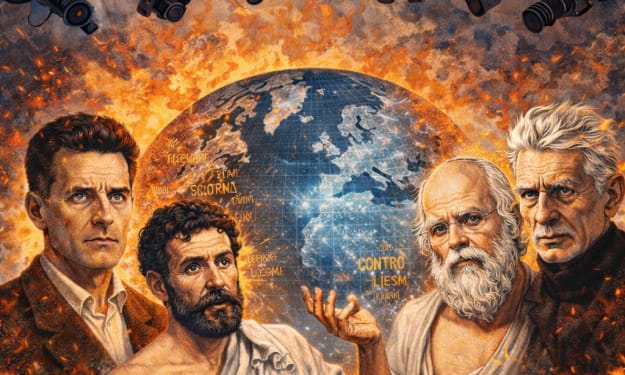
Toward the Linguistic Apocalypse What stands before the present age is not a technological crisis but a linguistic one. Artificial intelligence does not announce the rise of a new sovereign intelligence; it announces the collapse of an old regime of words. Power is unraveling not because machines are becoming conscious, but because language is becoming uncontrollable. The monopoly over meaning, interpretation, memory, and narration is dissolving, and with it dissolves the architecture of authority that depended on silence, delay, and scarcity.
By Peter Ayolov10 days ago in Critique
Language After Power
Abstract This article examines recent warnings about artificial intelligence delivered at the World Economic Forum by Yuval Noah Harari, situating them within a broader political economy of language and power. While public discourse frames AI as an emerging autonomous intelligence threatening humanity, this paper proposes an alternative interpretation: the primary fear articulated by global elites is not independent artificial intelligence but the democratisation of advanced linguistic power. Drawing on theories of language, power visibility, and informational exposure, the article argues that large language models threaten existing systems of authority by enabling unprecedented access to linguistic production, interpretation, and disclosure. AI does not merely automate language; it accelerates what can be described as an informational apocalypse, understood in its original sense as revelation. The article concludes by suggesting that contemporary anxieties surrounding AI governance reflect elite concern over the loss of narrative control rather than genuine existential risk, signalling a possible reconfiguration of authority away from financial and institutional actors toward linguistic and philosophical power.
By Peter Ayolov10 days ago in Critique
It’s Not ‘Just’ Bangladesh Women vs Namibia Women. It’s Quiet Sexism Behind A Viral Match
Do people actually care about women’s cricket—or is this just a moment?” You’re not alone. A lot of us quietly wonder if women’s matches are just filler until the “real” (aka men’s) game starts.
By Anie the Candid Writer Abroad11 days ago in Critique
Greed Is a Dangerous Curse
Greed Is a Dangerous Curse “Now you will be sentenced to one year in prison.” There once lived a poor woodcutter in a small village. Every day, he would go into the forest early in the morning, cut wood with great effort, and then return to the city to sell it. Whatever little money he earned was enough to feed his family for the day. His life was simple, hardworking, and honest, but deep inside his heart, there was a hidden desire to become rich quickly.
By Sudais Zakwan11 days ago in Critique
Beyond Virality: How Short-Form Storytelling Became My Creative Discipline. AI-Generated.
Short-form video is often treated as disposable—made to be consumed quickly and replaced just as fast. From the outside, it can seem simple: a few edits, a trending sound, timing that happens to align. But working inside the format tells a different story. What looks effortless usually comes from repeated decisions, restraint, and attention. Over time, short-form storytelling became a discipline for me, not a shortcut.
By Zack LePro13 days ago in Critique