Structure
Stripped Journaling. Content Warning.
Forgiveness: a conscious and deliberate decision to release feelings of resentment towards someone who hurt you. Why is forgive and forget so hard? Something done by someone I’ve yet to see again haunts my reality as if it happened yesterday. Like a scar that is deeper than the ones carved by my hand. A person unknown to me, yet forever tied to my soul through one terrible night. The fear of feeling powerless again lingers with me, paranoid, afraid of my own shadow. Am I safe anywhere? Will I be hurt again by another insignificant person who can decide if I am prey? Someone so hungry that they don’t care about their actions. Someone who could easily overpower me and enjoy watching the struggle.
By Emmie Falbo10 months ago in Critique
Fast and Dirty Editing - Pre-Prepared, Pre-Packaged Pleasure
So I thought as a last entry for the Self-Editing Epiphany Challenge, I'd partake in what I am calling "Fast and Dirty Editing". What do I mean by "Fast and Dirty Editing"? Well, rather than drill down into the dos and don'ts of writing poetry, or worry about the format (aside from any formatting rules that need to be applied) I am going to take an existing piece I wrote for the Tautogram challenge, but published it too late to be accpeted for the challenge, from a couple of years ago. I am then going to decimate it, without labouring over it too much, and go through the changes as I make them in this critique.
By Paul Stewart10 months ago in Critique
Navigating Creative Risks: A Journey Through Literary Experimentation
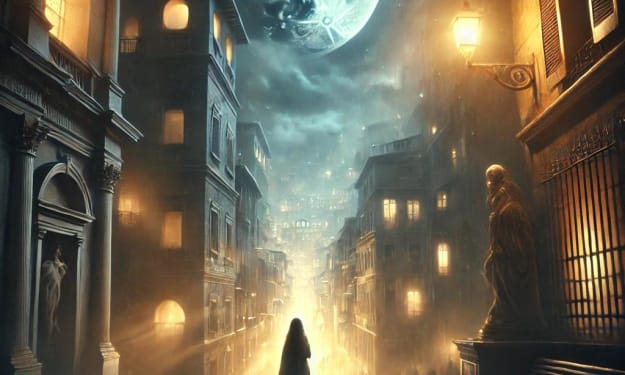
In the quietude of a moonlit night, she wandered through the labyrinthine streets, her heart echoing the rhythm of unspoken words. The city, a breathing entity, whispered secrets in languages long forgotten. Shadows danced around her, casting elongated figures that seemed to beckon her forward, deeper into the unknown. She felt a strange comfort in this dance, as if the shadows were old friends, guiding her through the maze of her own thoughts.
By Alain SUPPINI11 months ago in Critique
Not The Editor I Wish To Be . Runner-Up in Self-Editing Epiphany Challenge. Top Story - April 2025. Content Warning.
I am by no means a professional editor. All I can do is alter what I’ve written until my eyes see it has something which isn’t a disaster. So, what I do now, don’t just take it with a grain of salt – take it with the whole damn salt farm!
By Euan Brennan11 months ago in Critique
Getting Legless With Drunk Aliens - Editing A Winning Poem
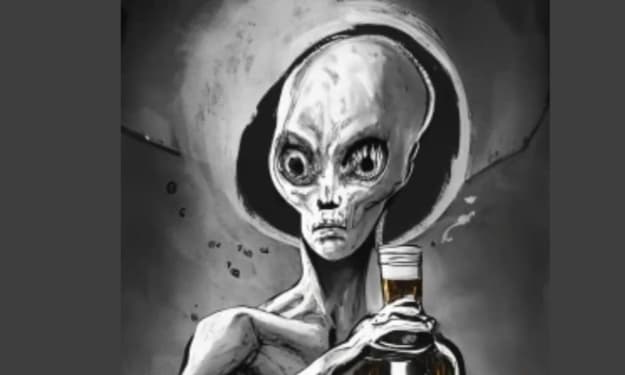
For this entry into the Self-Editing Epiphany, I wanted to do something a little strange. It’s easy, in some ways, to look back at pieces we know were flawed because they didn’t get well received or didn’t place in a challenge or competition. But what about those pieces that did have success—ones that not only placed in a challenge but came first place? Could any editing, especially with time passed and experience gained since the piece was published, improve upon a winning poem?
By Paul Stewart11 months ago in Critique
Filtering Free Verse Poems Through Form. Runner-Up in Self-Editing Epiphany Challenge.
Mainly writing in free verse, can make you think you are so much more free than writing in strict forms. But I have found that when under constraints of rhymes and rhythm, magic can happen. Imagery you would never have come up with yourself, lyrical music that makes reading a pleasure and a challenge to cut out the excess to find the true meaning you want to say.
By Dark Constellations11 months ago in Critique
Picking the Right Moment to Start. Honorable Mention in Self-Editing Epiphany Challenge. Top Story - March 2025.
You’ve likely heard some of this conventional writing advice before: Start “in media res” A reader can tolerate proportionally as much exposition as the plot has achieved momentum – Stephen King (I think) Begin in the moment and feed the reader details as the plot progresses
By Stephen A. Roddewig11 months ago in Critique
Flash of... Brilliance?
Flash fiction has never really been my “thing”. The type of fiction I tend to gravitate to is more extended, chapter-like fiction—gritty, lengthy stories, full of sub-context and side plots. So, flash fiction presents a challenge for me, one that I have started to tackle more frequently. I’ll be critiquing one of my most recent pieces Survival Rate. The goal was to end in a twist and subvert the reader’s expectations in some groundbreaking way. The side quest goal was to make it only five hundred words.
By Sarah Massey11 months ago in Critique
Dissecting Frog Songs. Runner-Up in Self-Editing Epiphany Challenge.
For the Self-Editing Epiphany challenge, I’ve decided to revisit my “Frog Songs” story. It’s a story which taught me the importance of reading aloud as I write, because reading aloud helps me hear the focal point of the story. When I first read “Frog Songs,” at my local library's open mic night, it made me realize how dreadfully boring it was because it lacked a clear focal point.
By Judah LoVato11 months ago in Critique
Breaking the Rules: A Bold Self-Edit of My Riskiest Writing Choice
Taking the Leap into Creative Uncertainty Every writer faces a moment of doubt when pushing the boundaries of conventional storytelling. This article is both a confession and a guide—a deep dive into my own risk-taking as a writer. I will share an excerpt that I once considered both flawed and full of potential. Then, I will analyze my editing choices, the risks I took, and how they reshaped my creative approach. If you have ever hesitated before breaking a rule in writing, this exploration might offer the encouragement you need.
By Alain SUPPINI11 months ago in Critique