
Unmasking the Alienation of Northeast Indians
They Are Every Bit as Indian as You: Understanding and Addressing the Alienation of Northeast Indians


The alienation of Northeast Indians is a pressing issue that demands urgent attention and introspection. Despite being an integral part of India, the Northeast region and its people frequently encounter discrimination, stereotyping, and neglect. This blog is dedicated to my Northeast friends, some of the most remarkable individuals I've had the privilege of studying and working with. We will delve into the historical context, examine the current situation with real-life examples, explore the role of the government, and discuss actionable steps towards addressing this issue.
Historical Context
The Northeast region of India, comprising eight states, has a unique cultural, ethnic, and linguistic diversity. Historically, this region has been geographically and culturally distinct from the rest of India. The British colonial administration's policies further isolated the region by implementing the "Inner Line Permit" system, which restricted interaction between the Northeast and mainland India. Post-independence, the integration of the Northeast into the Indian Union was marred by insurgencies, economic neglect, and political instability.
The role of political leadership during the early years of independence also contributed to this alienation. Jawaharlal Nehru's "Panchsheel Policy" emphasized non-interference in tribal areas, which, while well-intentioned, often led to neglect in terms of development and integration. The lack of consistent political focus on the region by successive governments created a sense of abandonment among the people of the Northeast. Additionally, the partition of India in 1947 exacerbated the region's isolation, leaving it landlocked and cutting off traditional trade routes. Infrastructure development took a backseat, and the region's potential remained untapped for decades. This historical neglect laid the foundation for alienation and misunderstanding.
At the time of India's independence on 15 August 1947, the Northeast region consisted of Assam and the princely states of Manipur and Tripura. Today, the region comprises of eight states, Arunachal Pradesh, Assam, Manipur, Meghalaya, Mizoram, Nagaland and Tripura (commonly known as the "Seven Sisters"), and the "brother" state of Sikkim. The region also had four Autonomous District Councils (ADCs) in Assam under the Sixth Schedule of the Constitution of India. Over time, the number of ADCs and Tribal Councils has exceeded a dozen.
The present state of affairs in the Northeast is due to an interaction of diverse psychological, historical, social, political, and economic factors. Some factors have colonial roots, while others stem from post-independence mishandling of North-Eastern affairs. Various sections of the population have developed a deep sense of perpetual grudge, antagonism, and mistrust towards each other, leading to a lack of belonging and a communication gap. The Central leadership, except for Mahatma Gandhi, is often accused of having agreed to the Cripps Mission proposal of 'Grouping Assam with East Pakistan.' This perception, coupled with memories of abandonment during events such as the Chinese aggression, has been perpetuated by vested interest groups.
Geographically, the Northeast is connected to the rest of India by a slender 22-km corridor near Siliguri, popularly known as the 'Siliguri Chicken Neck,' while 98% of its borders are shared with foreign countries. This geographic reality has fueled fears of vulnerability. However, such fears are largely unfounded, as evidenced by the following:
(a) Smaller nations like Nepal and Bhutan have even higher proportions of their borders with foreign countries;
(b) The people of the Northeast are not commodities to be plundered; Even a narrow passage suffices as long as neighboring relations remain friendly.
The British colonialists exacerbated the region's isolation by giving a racist interpretation of Indian society, fabricating myths of racial and cultural divides such as the Aryan-Mongolian dichotomy. Edward Gait's 'A History of Assam' introduced a divisive narrative by misinterpreting terms like Asur and Danav within the Aryan-Non-Aryan framework. The introduction of the Inner Line Regulation in 1873 created artificial barriers between the hills and plains, restricting interaction under the guise of protecting tribal identity. This narrative weakened the sense of belonging and ignored the region's historical links with the rest of India. Indian historians failed to rectify these colonial distortions, leaving the region's contributions to India's freedom struggle, including the resistance by the Khasis, Jaintias, Nagas, Mizos, and Manipuris, inadequately represented in national history.
Despite the challenges, the historical context of the Northeast highlights its integration with India through shared political, cultural, and religious ties. During the Gupta era, Pragjyotisha adopted the Gupta calendar for centuries, signifying strong connections. Bhaskarvarman, the Kamarupa king, allied with Harsha, acknowledging his superiority. Assamese kings performed Ashwamedha Yajnas, demonstrating their alignment with Indian sovereignty ideals. Historical epics like the Mahabharata and Puranas mention the subjugation of Pragjyotish rulers by Arjuna, underscoring ancient ties. The Bhauma dynasty extended its reign to Orissa and beyond, further illustrating the region's enduring links with the rest of India.
Current Scenario
Despite significant progress in recent years, the alienation of Northeast Indians persists in various forms.
Northeast Indians often face racial slurs, such as being called "Chinky" or "Chinese," reflecting ignorance about their ethnic identity. Many students and professionals who migrate to cities like Delhi, Bengaluru, or Mumbai for education and employment report incidents of verbal abuse, physical attacks, and discrimination. Such incidents highlight the lack of awareness and sensitivity towards their unique cultural heritage.
Stereotypes about Northeast Indians being "exotic," "non-Indian," or having a particular lifestyle contribute to their marginalization. Their food habits, attire, and festivals are often misunderstood or ridiculed. Despite its rich natural resources, the Northeast lags in industrial development and employment opportunities. Limited connectivity and inadequate infrastructure further hinder the region's growth. Socially, the region's issues, such as insurgencies or floods, often receive minimal national attention. The mainstream media's portrayal of the Northeast is often limited to insurgencies or natural disasters, ignoring the region's rich culture, achievements, and contributions to the nation.
Real-Life Examples
The alienation of Northeast Indians is not just a theoretical issue but a lived reality for many.
In 2014, Nido Tania, a student from Arunachal Pradesh, was beaten to death in Delhi after being mocked for his appearance. This tragic incident sparked nationwide protests and brought attention to the discrimination faced by Northeast Indians. Despite the outrage, similar incidents continue to occur, reflecting the deep-rooted biases in society.
Mary Kom, a boxer from Manipur, became a global icon despite facing numerous challenges. Her success story highlights the potential of the Northeast and the need to support its talent. Similarly, footballer Bhaichung Bhutia, singer Papon, and IAS officer Armstrong Pame, who built a road in Manipur through community effort, exemplify the resilience and contributions of Northeast Indians.
During the COVID-19 pandemic, many Northeast students and professionals stranded in cities reported acts of kindness from local communities. These instances of solidarity underscore the potential for unity and understanding when people choose compassion over prejudice.
Role of the Government
The government has taken several steps to address the alienation of the Northeast, but challenges remain.
Projects like the North East Special Infrastructure Development Scheme (NESIDS) aim to improve connectivity, healthcare, and education in the region. The Bogibeel Bridge in Assam and improved rail and road networks are examples of infrastructural progress. Initiatives like "Ek Bharat Shreshtha Bharat" promote cultural exchange between the Northeast and other parts of India. Festivals showcasing Northeast culture are now being organized in major cities.
Schemes like the North East Industrial Development Scheme (NEIDS) aim to attract investments and create employment opportunities. The region's potential in tourism, organic farming, and hydropower is being tapped. Additionally, the government has engaged in dialogue with various insurgent groups, leading to peace accords and a reduction in violence. However, a comprehensive approach is needed to address the root causes of insurgency.
Steps to Be Taken
To bridge the gap and eliminate alienation, concerted efforts are required from the government, society, and individuals.
Education and awareness are crucial. Incorporating the history, culture, and contributions of the Northeast in school curriculums can foster understanding and respect. Awareness campaigns can help dispel stereotypes and misconceptions. Strict enforcement of anti-discrimination laws, such as the Scheduled Castes and Scheduled Tribes (Prevention of Atrocities) Act, is crucial. Fast-track courts should handle cases of racial abuse and violence.
Mainstream media should highlight the achievements, culture, and stories of Northeast India. Representation of Northeast Indians in cinema, television, and advertising can also promote inclusivity. Sustainable development, skill training, and entrepreneurship must be prioritized to create local employment opportunities. Improving connectivity can integrate the region economically and socially with the rest of India.
Encouraging inter-community dialogue and exchange programs can build bridges of understanding. Universities and workplaces can organize cultural events and workshops to celebrate Northeast heritage.
My Personal Experience
The alienation of Northeast Indians is a complex issue rooted in history, ignorance, and systemic neglect. However, with awareness, education, and inclusive policies, this gap can be bridged. The Northeast is not just a geographical region but a vibrant part of India's cultural mosaic. Recognizing and celebrating its diversity is essential for building a truly united and inclusive nation.
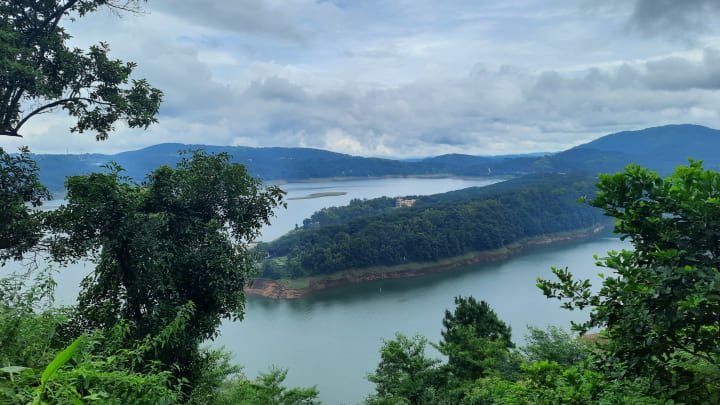
I have worked in Guwahati for three years and cherished every moment I spent there. The people are humble, the weather is delightful, and the sense of community is heartwarming. My visits to Shillong left me amazed by the level of road discipline, exceptional cleanliness, and the profound respect for nature evident in its surroundings. The warm hospitality of the people I encountered was truly unforgettable. These experiences have shown me the beauty of the Northeast, a beauty that deserves to be acknowledged and embraced by every Indian. Let us strive to create a nation where every citizen, regardless of their region, feels valued and included.
References:
Alienation and Insurgencies in the North-East India
Alienation of India's Northeast: Reaping the Fruit of Nehruvian Blunders
About the Creator
Adarsh Kumar Singh
Project Analyst with military training and startup experience. Avid reader, content writer, and passionate about leadership and strategic planning.
Keep reading
More stories from Adarsh Kumar Singh and writers in Critique and other communities.
A Personal Reflection on Forrest Gump
“Life is Like a Box of Chocolates” The movie starts with Forrest (played by Tom Hanks) sitting on a bench, holding a box of chocolates, and telling a stranger, “My mama always said, life was like a box of chocolates. You never know what you’re gonna get.” This line is so simple, yet it says so much about life. Forrest’s story, from his childhood struggles with leg braces to becoming a war hero, shrimp boat captain, and even a running sensation, is proof of this.
By Adarsh Kumar Singhabout a year ago in Critique
Standing While Falling
Quotation from Friedrich Nietzsche "He who wrestles long with monsters should beware lest he himself become a monster. And if you gaze long into an abyss, the abyss also gazes into you. Man is not destroyed by suffering, but by the meaning he makes of it."
By LUCCIAN LAYTH27 days ago in Critique




Comments
There are no comments for this story
Be the first to respond and start the conversation.