
Forecasters Warn of Major Travel Disruption and Dangerous Conditions Across Multiple States
Forecasters Warn of Major Travel Disruption and Dangerous Conditions Across Multiple States

Introduction
A major winter storm is forecast to impact the US Northeast, with meteorologists warning of what could become a historic blizzard. Snowfall totals in some areas may reach up to two feet, accompanied by strong winds and dangerous travel conditions.
Weather agencies are advising residents to prepare for widespread disruption. The storm is expected to affect major cities, suburban communities, and rural areas across several states. Schools, businesses, airports, and public transit systems are already reviewing contingency plans.
As the system approaches, officials are urging people to stay informed and limit unnecessary travel.
What Makes This Storm Significant
Blizzards are defined not only by snowfall but also by wind strength and visibility. For a storm to meet blizzard criteria, winds must reach at least 35 miles per hour, with visibility reduced to a quarter mile or less for several hours.
Forecast models suggest that this storm could meet or exceed those standards in multiple states. Heavy snowfall combined with sustained winds may create whiteout conditions, making travel extremely dangerous.
Meteorologists are describing the system as historic because of the projected snowfall totals and its wide geographic reach. However, final totals will depend on the storm’s exact track and intensity.
Areas Expected to Be Most Affected
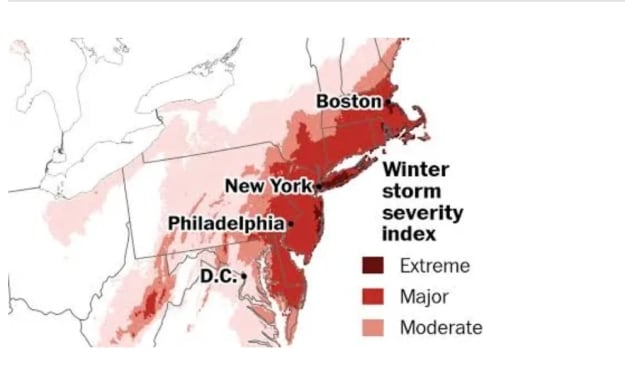
The storm is projected to move along the East Coast before intensifying over the Northeast. Coastal regions may experience both heavy snow and strong winds. Inland areas could see prolonged periods of steady snowfall.
Major metropolitan areas are within the projected impact zone. Urban centers typically face added challenges during heavy snow events due to dense populations and high traffic volume.
Rural communities may experience isolation if roads become impassable. Snowdrifts caused by high winds can block highways and secondary roads.
Snowfall Projections and Timing
Current forecasts indicate that some locations may receive 12 to 24 inches of snow over a 24- to 36-hour period. In certain bands of heavy precipitation, snowfall rates could exceed one to two inches per hour.
The storm is expected to begin with lighter snow before intensifying overnight. The heaviest accumulation is likely to occur during a concentrated window when cold air and moisture align.
Meteorologists caution that small shifts in the storm’s path could increase or decrease totals in specific areas. Residents are encouraged to monitor updates from local weather authorities.
Travel Disruption Across the Region
Air travel is expected to be heavily impacted. Airlines often cancel flights in advance of major snow events to reduce passenger risk and logistical complications. Airports in the Northeast may operate at reduced capacity due to runway clearing and de-icing operations.
Highways and major roadways could become snow-covered quickly during peak snowfall. State transportation departments are preparing plow trucks and salt crews, but sustained snowfall can limit effectiveness.
Public transportation systems may suspend above-ground rail service if winds and snow accumulation reach unsafe levels.
Impact on Schools and Businesses
School districts across the Northeast are already considering closures or remote learning options. Decisions are typically based on projected snowfall, timing, and road conditions.
Businesses may shift to remote operations where possible. Retail stores and service providers could close temporarily, especially in areas expecting the highest snowfall totals.
Local governments may declare snow emergencies, restricting parking to allow plows to clear streets more efficiently.
Power Outages and Infrastructure Risks
Heavy snow and strong winds can place stress on power lines. If the snow is wet and dense, it can weigh down tree branches, increasing the risk of falling limbs.
Utility companies are staging repair crews in advance of the storm. Restoration efforts may be delayed if high winds persist or roads remain blocked.
Residents are advised to prepare for potential outages by charging devices, having flashlights available, and ensuring access to safe heating sources.
Coastal Concerns and Flooding
In coastal areas, strong winds may coincide with high tides. This combination can lead to minor coastal flooding and beach erosion.
Storm surge risk will depend on the timing of the strongest winds relative to tidal cycles. Officials in coastal communities are monitoring conditions closely.
While snow is the primary concern, coastal flooding adds another layer of complexity to emergency planning.
Public Safety Recommendations
Authorities recommend that residents avoid travel during peak storm conditions. Even experienced drivers can face challenges when visibility drops sharply.
Households should stock essential supplies, including food, water, medications, and batteries. Having enough supplies for at least several days is advisable in case roads remain closed.
Carbon monoxide safety is also critical. Portable generators and heating devices must be used according to manufacturer instructions to prevent poisoning.
Checking on neighbors, particularly older adults or those with limited mobility, can help reduce risk during prolonged storms.
Emergency Response and Preparedness
State and local emergency management agencies are coordinating responses. Snow removal operations, emergency shelters, and medical services are being prepared.
Hospitals are reviewing staffing plans to ensure adequate coverage during the storm. Emergency responders may face slower travel times due to road conditions.
Preparation before the storm arrives can reduce strain on emergency systems.
Economic and Community Impact
Major winter storms can have economic consequences. Travel cancellations affect airlines, hotels, and local businesses. Supply chains may experience short-term delays.
However, some industries, such as grocery stores and hardware retailers, often see increased demand before a storm.
Community cooperation plays a key role in recovery. Clearing sidewalks, assisting neighbors, and following official guidance can help speed up a return to normal activity.
Climate Context and Winter Variability
Winter storms are a common feature of the Northeast climate. However, each storm differs in strength and path.
Weather forecasting has improved significantly over recent decades. Advanced satellite data and computer modeling allow meteorologists to predict storms with greater accuracy.
Even so, forecasts are updated frequently as new information becomes available. Residents should treat projected snowfall totals as estimates rather than exact figures.
What to Expect After the Snow Stops
Once the storm moves out, attention will shift to cleanup. Snow removal operations may take several days, especially in areas receiving higher totals.
Cold temperatures following the storm could prevent rapid melting. This may lead to icy conditions, particularly overnight.
Municipal crews typically prioritize main roads first, followed by residential streets.
Residents are advised to shovel in stages rather than waiting until snowfall ends. This can reduce physical strain and make the task more manageable.
Looking Ahead
Long-range forecasts suggest that cold air will remain in place across much of the Northeast. Additional weather systems could move through in the coming weeks, though none currently appear as strong as this projected blizzard.
Weather experts will continue to monitor atmospheric conditions and update forecasts as needed.
Preparation remains the most effective way to reduce disruption.
Conclusion
The approaching winter storm has the potential to bring up to two feet of snow to parts of the US Northeast, along with strong winds and significant travel disruption. Described by forecasters as a possible historic blizzard, the system could impact millions of people.
While snowfall totals may shift as the storm develops, the message from officials is clear: prepare early, avoid unnecessary travel, and stay informed.
Winter storms are a part of life in the Northeast, but careful planning and community awareness can help reduce risks. As the region braces for heavy snow and challenging conditions, safety and preparation remain the top priorities.
About the Creator
Saad
I’m Saad. I’m a passionate writer who loves exploring trending news topics, sharing insights, and keeping readers updated on what’s happening around the world.
The Emerald Jewel in the Cosmic Tapestry
Earth, our vibrant home, is far more than just a planet; it is a meticulously crafted masterpiece, an emerald jewel suspended in the cold, vast expanse of the cosmos. It’s a place where the improbable coalesces into the miraculous, where every element, from its celestial dance to its intricate internal rhythms, conspires to foster and sustain an astonishing diversity of life. The designation "miracle planet" isn't hyperbole; it's an understatement of a cosmic ballet performed with breathtaking precision.
By Being Inquisitivea day ago in Earth



Comments
There are no comments for this story
Be the first to respond and start the conversation.