
Human life expectancy is determined at birth? Research shows that basic life expectancy depends on genetics
Human lifespan is determined at birth

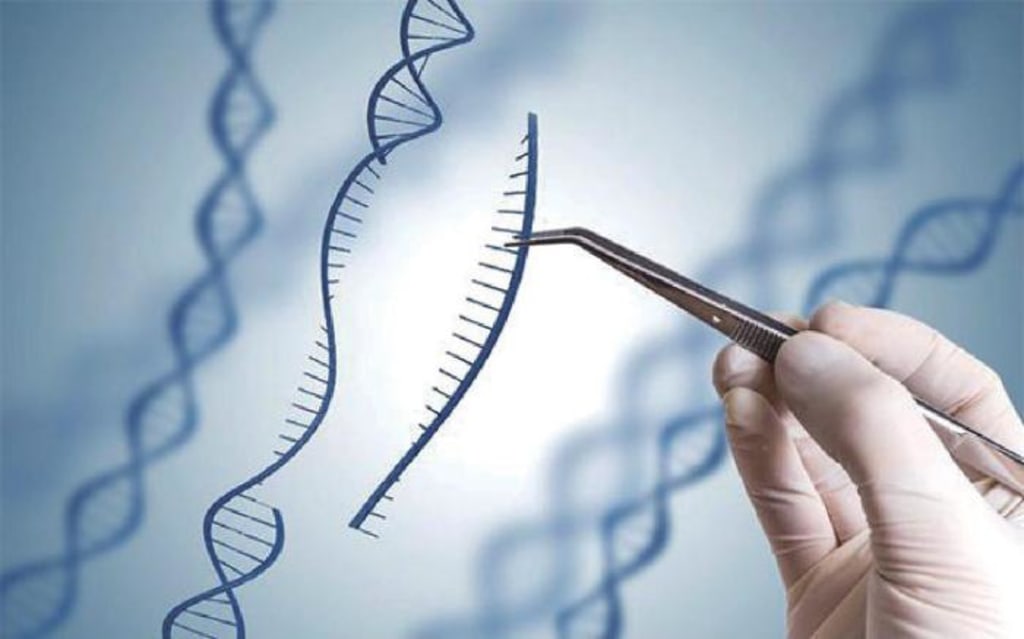
The topic of life expectancy, from ancient times to the present is a common concern of all people, although, with the continuous progress of medical level, the average life expectancy of human beings has been extended to a certain extent, in the natural state, the length of life of different people n there is still a great difference. It is for this reason, to completely uncover the hidden secrets of human life span, scientists are also constantly working on research.
The first time I saw this, I was able to find the key to unlocking the secret, and the research was published in the Journal of the National Academy of Sciences, the leading scientific journal in the United States. In this issue, let's talk about what scientists have found in the end. What are the factors that determine the length of human life?
In this issue, we must be clear that, in nature, humans are not a special existence, humans, like most animals, are a kind of mammals, to be more specific, humans are mammals, a kind of vertebrates. Even if we have evolved over millions of years, far beyond the intelligence of other vertebrates, we can not deny that, from the bones, we humans and those animals like cattle and sheep there are many similarities.
It is for this reason that scientists will use animals to experiment, hoping to get some, and human-related "answers". The foreign scientists mentioned at the beginning of our video, that it is through 20 years of research on wild sheep, finally discovered the secret of human longevity.
According to the scientists' research, the real decision of human life expectancy is, in fact, human genes. We all know that the human genes are "burned" in the chromosomes, and according to scientists, each person, and even each vertebrate, their chromosome terminal length is not the same, and determine the life span of living creatures, is the length of the chromosome terminal.
Scientists can determine the risk of death of a creature based on the length of chromosome terminals, the longer the length of chromosome terminals, the healthier the creature, the longer life, while the shorter the length of chromosome terminals, the less healthy the creature, the shorter life. This was discovered by scientists through a 20-year-long study of wild sheep.
The reason for such a result is not as complicated as we think, it is mainly because at the end of the chromosomes, there is a "substance" called telomeres, every time the human cell division once, telomeres will be followed by a shortening part until the telomeres can no longer be shortened, human life will come to an end. Therefore, the longer the terminals of the chromosomes, the longer the telomeres, the longer the telomeres, the more times the human cell will divide, and the longer the life of people.
It may seem that the results of such studies are not very relevant to us ordinary people, after all, although everyone has genes, it is something invisible and untouchable. But the fact is just the opposite, seemingly with our ordinary people, there is not much relationship between the results of the study we have an inseparable relationship, because it reflects a conclusion, that is, a person's basic life expectancy is determined by genetic genes, in other words, the life expectancy of people as early as at birth, has been decided.
Even if the subsequent living environment is better or worse, as long as the length of chromosomes is relatively stable, the length of human life will not be greatly affected.
Of course, the results of such a study would be a good explanation for such an interesting phenomenon, that is, the emergence of long-lived villages and long-lived families. In these villages and families, although the majority of long-lived people, there are still some people who do not live long, the reason for such a phenomenon, fundamental reason lies in the random inheritance of genes, some people inherited the "longevity gene", his life expectancy, but those who did not inherit the " Longevity gene" people, life expectancy will be relatively short.
In this way, and foreigners want to go to the longevity village, longevity family, looking for the so-called secret of longevity, they will only end up with some, about healthy diet, regular work and rest health advice, although such advice, really helps our health, but can not sing our life expectancy. After all, what determines the length of life is the genes in our bodies.
The fact is that a person's aging is determined by the various cells in the body, after all, cells have their life cycle, but in the human body, there are also terrible "immortal cells", that is, cancer cells, although they are a huge threat to human health, can divide and proliferate infinitely.
The first time I saw a cancer cell, I thought it was a good idea to take a look at it.
About the Creator
Keep reading
More stories from Mark Rovich and writers in Earth and other communities.
230 pilot whales stranded, half are dead, or produce whale explosion! How scary is the whale explosion scene?
About 230 pilot whales were stranded on the beach near the entrance to Port Macquarie, Australia, and the relevant departments rushed to the scene to work together to rescue them, but the local government department introduced that half of the stranded pilot whales have died.
By Mark Rovich3 years ago in Earth




Comments
There are no comments for this story
Be the first to respond and start the conversation.