
Landslides and avalanches
Landslides and Avalanches: Causes, Effects, and Mitigation

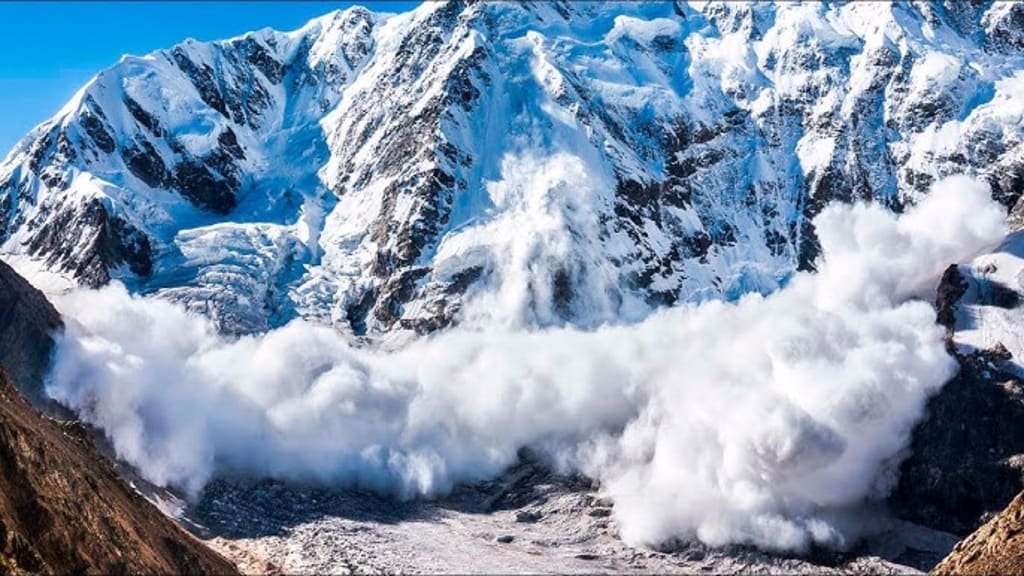
Landslides and avalanches are natural disasters that occur when masses of rock, soil, or snow rapidly move down a slope due to gravitational forces. Both phenomena can be highly destructive, causing loss of life, damage to infrastructure, and significant environmental changes. While landslides primarily involve soil and rock, avalanches consist of snow and ice. Understanding their causes, effects, and methods of mitigation is crucial for disaster prevention and risk management.
(I)Landslides
Definition and Types
A landslide is the downward movement of rock, soil, or debris due to gravity. Landslides can be classified into several types based on how the materials move:
Rockfalls – Large rocks break off cliffs or steep slopes and fall freely.
Debris Flows – A fast-moving mixture of soil, rock, and water, often triggered by heavy rainfall.
Slumps – A slow, rotational movement of soil and rock along a curved surface.
Creep – A gradual, almost imperceptible downward movement of soil and rock over time.
(II)Causes of Landslides
Landslides occur due to a combination of natural and human-induced factors:
Heavy Rainfall and Flooding – Water saturation reduces soil cohesion, making slopes unstable.
Earthquakes – Seismic activity can shake loose soil and rocks, triggering landslides.
Deforestation – Removing vegetation weakens soil stability as tree roots no longer hold the ground together.
Construction and Mining – Excavation and land modification can disturb natural slopes.
Volcanic Eruptions – Lava flows and ash deposits can destabilize slopes, leading to landslides.
(III)Effects of Landslides
Landslides can have devastating consequences:
Loss of life – Rapid landslides can bury entire villages and cause fatalities.
Infrastructure damage – Roads, bridges, and buildings can be destroyed.
Environmental destruction – Landslides can alter landscapes, block rivers, and lead to ecosystem disruptions.
(IV)Mitigation and Prevention
Landslide risk can be minimized through several measures:
Vegetation Planting – Trees and plants stabilize soil and reduce erosion.
Retaining Walls – Concrete or stone barriers prevent soil movement.
Drainage Systems – Redirecting water flow reduces soil saturation.
Early Warning Systems – Monitoring rainfall and slope movement can help issue timely warnings.
(V)Avalanches
Definition and Types
An avalanche is the sudden and rapid movement of snow and ice down a slope. Avalanches can be classified into:
Loose Snow Avalanches – Small surface-layer slides triggered by new snowfall.
Slab Avalanches – A large, cohesive slab of snow breaks away from an underlying layer.
Powder Snow Avalanches – Fast-moving, airborne avalanches that can reach speeds of 300 km/h.
Wet Snow Avalanches – Slow-moving but highly destructive due to the presence of water-soaked snow.
(VI)Causes of Avalanches
Several factors contribute to avalanche formation:
Snow Accumulation and Weather Conditions – Heavy snowfall, rapid temperature changes, and strong winds can create unstable snow layers.
Slope Angle and Terrain – Avalanches most commonly occur on slopes between 30° and 45°.
Human Activity – Skiing, snowboarding, and mountaineering can trigger avalanches.
Vibrations and Disturbances – Earthquakes, loud noises, or even movement of wildlife can initiate avalanches.
(VII)Effects of Avalanches
Avalanches can be extremely dangerous, leading to:
Loss of life – People caught in avalanches often get buried under tons of snow, leading to suffocation.
Damage to property – Avalanches can destroy ski resorts, villages, and power lines.
Disruption of transportation – Snow-covered roads and railways can be blocked for days.
(VIII)Mitigation and Prevention
To reduce the risks associated with avalanches:
Controlled Explosions – Artificially triggering small avalanches prevents larger ones.
Snow Fences and Barriers – Structures slow down or redirect avalanche flow.
Education and Awareness – Skiers and hikers are trained to recognize avalanche-prone areas.
Avalanche Forecasting – Monitoring snow conditions helps issue early warnings.
IN THE END
Landslides and avalanches are powerful natural disasters that pose serious risks to human life and infrastructure. While they are driven by natural forces, human activities can influence their occurrence. Through proper planning, monitoring, and early warning systems, the impact of these disasters can be reduced. As climate change affects weather patterns, understanding and mitigating landslides and avalanches will become increasingly important in the future.
About the Creator
Badhan Sen
Myself Badhan, I am a professional writer.I like to share some stories with my friends.
Keep reading
More stories from Badhan Sen and writers in Earth and other communities.
Donald Trump warned that the world has just ten days to find out whether Iran will accept a new agreement, cautioning that serious consequences could follow if no deal is reached.
US President Donald Trump says that the world will find out over the ten days if the United States will make a deal with Iran or take military action.
By The Academy Awards3 days ago in Earth




Comments (2)
Very good work on this article. I have only seem these two disasters on tv and they are something to watch in only this way.
Great research.