
NASA Tracking Bus-Sized Asteroid Nearing Earth
NASA is closely monitoring a bus sized asteroid as it approaches Earth raising curiosity and concern among scientists and the general public.

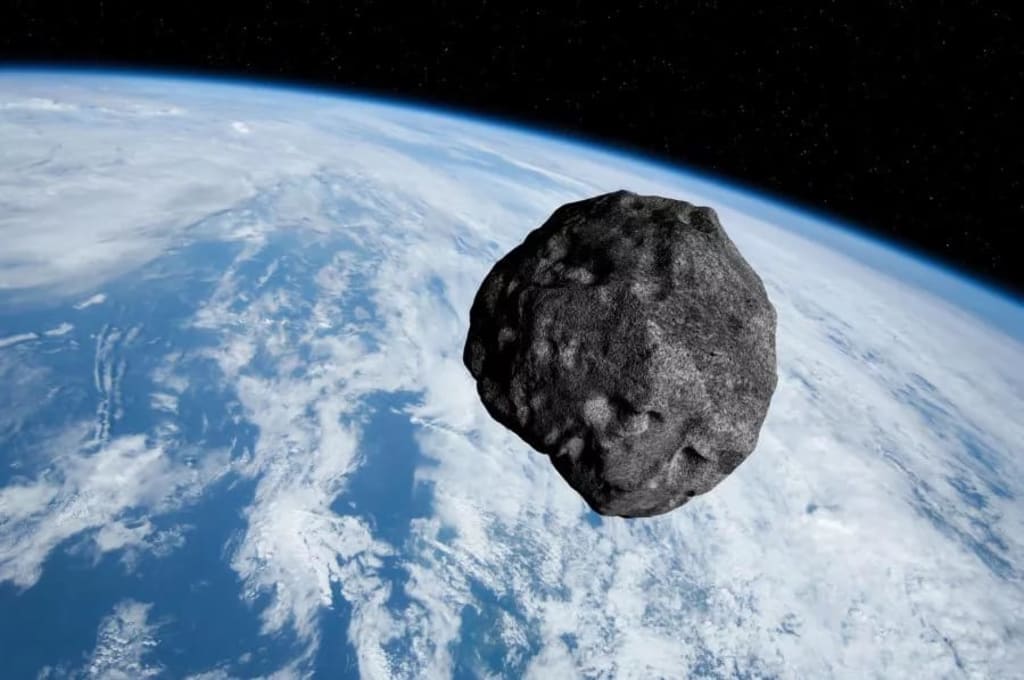
NASA Tracking Bus-Sized Asteroid Nearing Earth
NASA is closely monitoring a bus sized asteroid as it approaches Earth raising curiosity and concern among scientists and the general public. The asteroid, which has been designated with an official name by space agencies is expected to pass by our planet at a relatively close distance. While there is no immediate danger of impact the event serves as a reminder of the continuous movement of celestial bodies and the importance of tracking near Earth objects (NEOs). Asteroids frequently pass by Earth and NASA along with other space agencies keeps a close watch on their trajectories. This particular asteroid is estimated to be roughly the size of a city bus making it large enough to be noticed but not significant enough to cause catastrophic damage even if it were to enter Earth’s atmosphere. However its proximity to Earth has prompted detailed analysis and observations. The asteroid’s trajectory has been carefully calculated using advanced telescopic observations and tracking systems. NASA's Planetary Defense Coordination Office (PDCO) and other global space monitoring agencies utilize sophisticated tracking technologies including ground based telescopes and radar systems to predict the paths of such objects with high accuracy. By analyzing its speed direction and potential gravitational influences from other celestial bodies scientists can determine how close it will get to Earth and whether there is any possibility of future encounters.
Despite its relatively close approach this asteroid is not considered a serious threat. NASA classifies NEOs based on their size distance and potential impact risk. Any asteroid larger than 140 meters in diameter that comes within 7.5 million kilometers of Earth is categorized as a potentially hazardous asteroid (PHA). Since this asteroid is much smaller than that threshold, it does not fall into the hazardous category. However even smaller asteroids can cause localized damage if they enter Earth’s atmosphere, as seen in past incidents like the Chelyabinsk meteor explosion in 2013. That event caused by an object about 20 meters in size released energy equivalent to multiple atomic bombs and caused damage over a wide area in Russia. NASA's ongoing asteroid monitoring efforts are part of a larger planetary defense initiative aimed at detecting and mitigating potential threats from space. Various projects such as the Double Asteroid Redirection Test (DART) mission have been developed to test possible ways of deflecting asteroids that might pose a danger to Earth in the future. The DART mission which successfully altered the orbit of an asteroid in 2022 demonstrated that humanity has the capability to influence the movement of space objects through kinetic impact.
Astronomers continue to refine their methods for predicting asteroid paths with greater accuracy. The use of artificial intelligence improved space telescopes like the upcoming NEO Surveyor and collaborations between international space agencies are all part of the growing effort to ensure planetary safety. By detecting and tracking objects early scientists can provide warnings well in advance allowing for potential mitigation strategies to be developed if necessary. Public interest in asteroid flybys has grown over the years with each event sparking discussions about space threats and humanity’s preparedness for dealing with them. Hollywood movies have often depicted catastrophic asteroid impacts, but in reality large scale collisions with Earth are extremely rare. Scientists emphasize that while monitoring is essential the likelihood of a significant impact in the near future remains low. The majority of NEOs detected so far pose no immediate risk and efforts to enhance detection capabilities continue to improve. One of the key challenges in planetary defense is the discovery of smaller asteroids that may not be detected until they are very close to Earth. Unlike larger asteroids which can be tracked years in advance, small to medium sized objects can be harder to spot especially if they approach from difficult to observe angles such as the direction of the Sun. This is why continuous improvements in detection technology are vital for increasing the safety of our planet. This latest asteroid event highlights the importance of continued investments in space research and monitoring systems. NASA and other organizations are actively working on developing better methods for early detection risk assessment and possible deflection techniques. While this particular asteroid poses no immediate danger each close encounter provides valuable data that can be used to refine our understanding of how to handle potential future threats. For space enthusiasts these events offer an exciting opportunity to observe celestial phenomena. Amateur astronomers with telescopes may even be able to catch a glimpse of the asteroid as it makes its way past Earth. NASA often provides real time tracking information on its official website allowing the public to stay updated on asteroid movements and other space related activities. As this bus sized asteroid continues its journey through space scientists will keep a close eye on its movements ensuring that any potential risks are identified and addressed. Events like this serve as a reminder of the vastness of our universe and the ever present need to explore understand and prepare for whatever the cosmos may bring our way.
About the Creator
Adnan Rasheed
Author & Creator | Writing News , Science Fiction, and Worldwide Update| Digital Product Designer | Sharing life-changing strategies for success.
Reader insights
Outstanding
Excellent work. Looking forward to reading more!
Top insight
Heartfelt and relatable
The story invoked strong personal emotions
Keep reading
More stories from Adnan Rasheed and writers in Earth and other communities.
What happened to all the water on Mars?
What happened to all the water on Mars? Mars our neighboring planet has long fascinated scientists with its potential for past habitability. Evidence overwhelmingly suggests that Mars was once home to abundant water flowing through massive river valleys carving flood channels and depositing minerals that only form in liquid water. The planet's surface bears undeniable marks of a time when lakes rivers and even possible oceans covered it. Yet today Mars is a cold arid desert with only traces of water locked in its polar ice caps and underground. The mystery of what happened to all that water remains a subject of ongoing debate. One of the most widely accepted theories is that Mars lost its water due to atmospheric stripping. Unlike Earth which has a strong magnetic field protecting its atmosphere Mars lost its global magnetic field billions of years ago. This left its atmosphere vulnerable to solar winds charged particles from the Sun that gradually eroded the planet’s once thicker atmosphere. With a thinner atmosphere water on the surface could no longer remain stable and over time it either sublimated into space or retreated underground in frozen form. However some researchers argue that not all of Mars' water was lost to space. A significant portion may still be trapped beneath the surface. Recent studies suggest that underground reservoirs of frozen water exist particularly near the planet’s poles. Scientists have detected large amounts of ice beneath the surface using radar instruments on orbiters like the Mars Reconnaissance Orbiter. If this ice were to melt it could potentially support microbial life or be utilized by future human explorers.
By Adnan Rasheed11 months ago in Earth
The Northern Lights: Nature’s Mesmerizing Nighttime Spectacle
The Northern Lights, or Aurora Borealis, have fascinated humans for centuries. Their mysterious, shimmering waves of green, purple, and pink light dance across the Arctic skies, inspiring myths, legends, and scientific curiosity. But what causes this spectacular display, and why does it keep appearing, year after year, even today?
By Ayesha Lasharia day ago in Earth
Scrapping of Jersey Solar Farm Plans Welcomed
The decision to scrap the proposed solar farm plans in Jersey has been widely welcomed by residents, environmental groups, and agricultural stakeholders, marking a significant moment in the island’s ongoing debate over sustainable development. While renewable energy remains a vital priority in the fight against climate change, the shelving of this particular project has highlighted the importance of balancing green ambitions with land preservation, food security, and community consent.
By Ayesha Lashariabout 18 hours ago in Earth
Writing About Writing: The Rainbow Trap
The good thing about living in modern times is that LGBTQ representation in media is increasing. Not just in niche and Independant media, either, but also in mainstream media. Books, movies, TV shows, comics... they're finally catching on that LGBTQ+ people form a significant part of their audience, and deserve to see themselves on screen and in fiction, not just as victims in documentaries and true crime shows.
By Natasja Rose6 days ago in Writers


Comments (2)
Thank you for sharing this. I found it to be interesting and easy to follow. I hope you’re doing great! 😊
Bus sized asteroid sounds like a big impact. Yikes