
Navigating the Climate Reality of 2050
The Weight of the Horizon
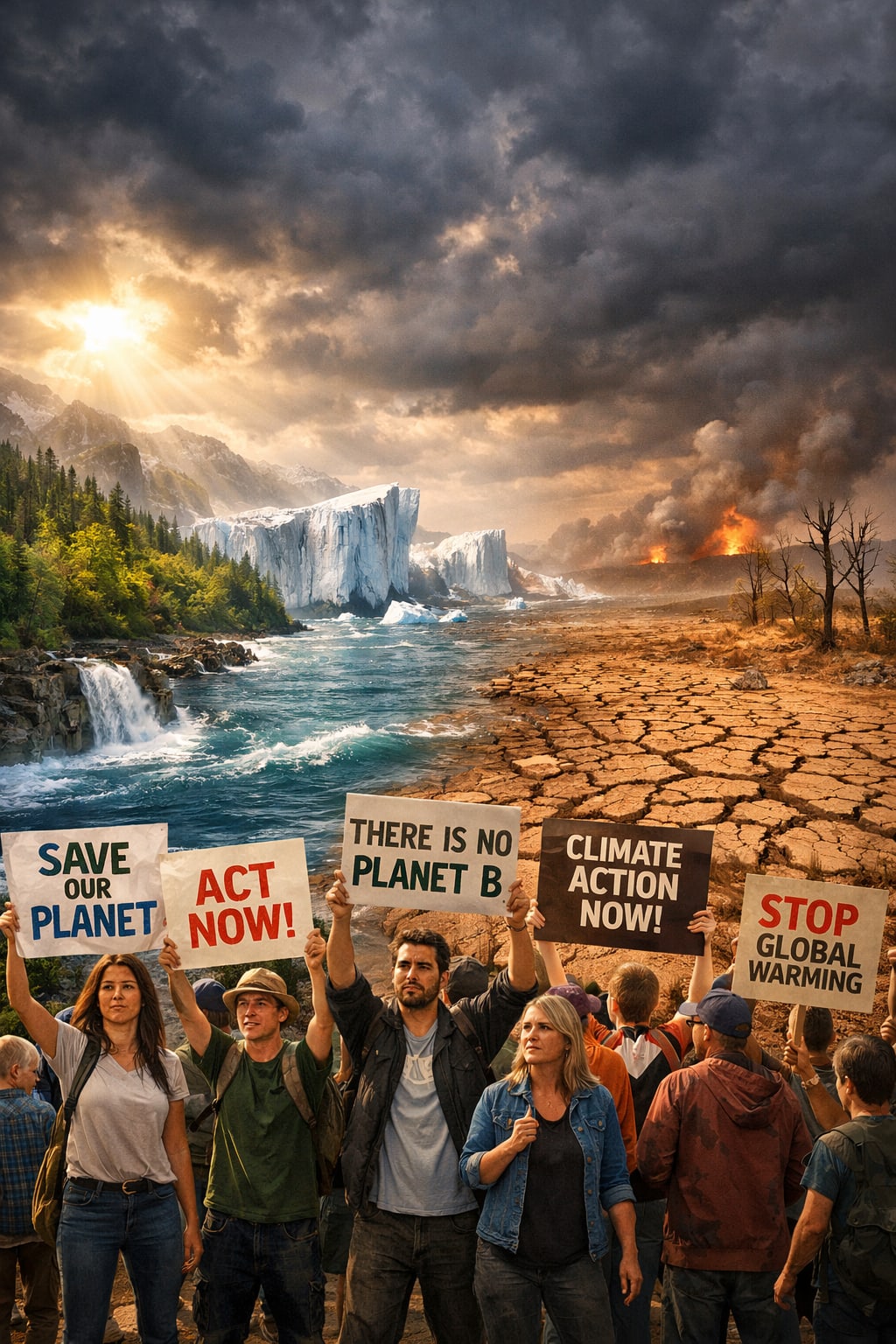
Climate change is no longer a chapter in a science textbook or a distant warning for "future generations." For today’s students, it is the defining backdrop of their lives—an emotional and intellectual challenge that reshapes how we view our careers, our homes, and our security. To understand the planet in 2050 is to understand a world where the margins of error have vanished, and the need for collective resilience has become our primary survival skill.
1. The Disappearing Coast: The Reality of Rising Seas
By 2050, the "coastline" will be a shifting concept. Rising sea levels, driven by the thermal expansion of seawater and the melting of polar ice, are predicted to displace millions.
- The Impact: It isn't just about a few inches of water on a beach; it’s about "nuisance flooding" becoming a daily occurrence and saltwater infiltrating the freshwater tables we rely on for drinking and agriculture.
- Deep Thought: We are losing more than land; we are losing history. Many of our greatest cultural hubs—New York, Bangkok, Venice—are coastal. When the sea rises, it doesn't just swallow soil; it swallows the heritage built upon it.
2. The New Normal: Extreme Weather Patterns
The climate of 2050 will be characterized by "Atmospheric Volatility." We are moving out of a period of predictable seasons into an era of extremes.
- The Pattern: Expect "Flash Droughts" followed by "Atmospheric Rivers." The heatwaves of 2050 will likely push the limits of human survivability in certain tropical regions, making air conditioning a matter of life or death rather than luxury.
- Why it matters: Extreme weather breaks the systems we take for granted—the power grid, the food supply chain, and the insurance markets.
3. The Student’s Burden: Why This Is Your Fight
Students today are the first generation to feel the acute psychological weight of Eco-Anxiety. The uncertainty of the 2050 climate affects your long-term planning, from where you choose to live to what industries you choose to work in.
- Educational Shift: Every field of study is now a "climate field." An architect must design for floods; a lawyer must understand climate litigation; a doctor must treat new heat-related pathologies.
- Emotional Connection: There is a unique grief in watching the natural world change so rapidly. However, this shared experience is also a powerful catalyst for global solidarity.
Q&A: Understanding the Greenhouse Era
Q1: Is it too late to stop the predictions for 2050?
A1: Much of the warming for 2050 is already "baked in" due to past emissions. However, our actions today determine the severity. We are choosing between a world that is "challenging but manageable" and one that is "unstable and catastrophic." Every fraction of a degree matters.
Q2: How will climate change affect my future job market?
A2: It will create a "Green Economy" explosion. Sustainability, renewable energy engineering, and climate adaptation strategies will be the highest-growth sectors. Conversely, traditional industries that fail to decarbonize will face immense regulatory and social pressure.
Q3: Why does a 2-degree Celsius increase matter so much? It sounds small.
A3: On a human scale, $2$ degrees is the difference between a sweater and a t-shirt. On a planetary scale, it is the difference between a healthy coral reef and a dead ecosystem. It is the tipping point where self-reinforcing feedback loops (like the melting of permafrost releasing methane) begin to take over.
Q4: What is "Climate Justice" and why should students care?
A4: Climate change is not a "great equalizer." It disproportionately affects those who contributed the least to global emissions—developing nations and marginalized communities. Students are the moral voice pushing for a transition that doesn't leave the vulnerable behind.
Q5: What can one student actually do to make a difference?
A5: Individual lifestyle changes are great for personal integrity, but systemic change is the goal. Use your voice to demand policy shifts, join climate-focused organizations, and vote for leaders who prioritize science. Your greatest power is your collective influence on institutions.
About the Creator
Being Inquisitive
Blogging can provide a creative outlet for expressing your thoughts, feelings, and ideas. It can be a way to share your passion and interests with others and to engage with like-minded individuals.
Keep reading
More stories from Being Inquisitive and writers in Earth and other communities.
Navigating the Economy of Your Inner World
Core Concept: We are applying the "Niche Earth" philosophy to Personal Finance. This piece explores how to manage the "climate" of your bank account, avoid the "tectonic shifts" of impulse spending, and build a "solid core" of financial security through evidence-based habits.
By Being Inquisitiveabout 9 hours ago in Earth
'Till Death We Do Art
There would be nothing divine in this world without art. Nature may surpass the divine to all intents and purposes, but like everything it absorbs and is absorbed by, it remains here, stuck on the surface of this world, ever-present, physically bound to the universe.
By Avocado Nunzella BSc (Psych) -- M.A.P 7 days ago in Art



Comments
There are no comments for this story
Be the first to respond and start the conversation.