Climate
“Meat the Future” Takes Viewers to the Meat-Growing Lab
According to the USDA, the average American consumed an estimated 144 pounds of meat in 2017. Although plant-based products have soared in popularity since hitting mainstream markets, it seems Americans are far from willing to give up meat entirely. Which is why a team of scientists at Upside Foods (formerly known as Memphis Meats) have set out to make cultivated meat the new norm.
By lupu alexandra3 years ago in Earth
5 Simple Steps to Birdscape Your Yard
magine 3 billion more birds flitting and flying around North American skies than there are today. The visual wouldn’t be fiction—it’d be 1970. As cities have expanded and native habitats have shrunk and degraded, bird populations have tumbled in tandem. But gardeners and homeowners have the chance to shift the stats: Instead of DIY-ing that new patio, why not DIY a new wildlife reserve?
By lupu alexandra3 years ago in Earth
Keeping Fruit Time
Gardening is an exercise in stubborn, fragrant faith: that these sticks you hold in a feathery root ball will somehow turn pliant and shoot wild into the sunshine, offering fruit when you least expect it. But that's just what happened when my husband and I planted our first blackberry bush in late February on an unusually warm weekend here in Oxford, Mississippi, just before the pandemic.
By lupu alexandra3 years ago in Earth
On the Moral Hazards of Carbon Dioxide Removal
Climate change science involves a lot of math. There's a great deal of calculus, plus all those formulas and models to understand how planetary physics works. But some of the most important climate math is no more complicated than basic arithmetic. Take the remaining "carbon budget" we have to avoid catastrophic environmental changes, divide that by the volume of carbon pollution industrial society pumps into the atmosphere daily, and you get the amount of time we have left. It's not a big number. Seven years and change.
By lupu alexandra3 years ago in Earth
How Best to Protect the Night Sky?
Bill Wren fell in love with the stars in the inky-black skies of central Missouri. In his childhood backyard, he tinkered with his binoculars, gazing at the craters and mountains of the moon. Then, at age 15, Wren moved with his family to Houston. It was a jarring experience—when he looked up at night, he could no longer see the stars. Though he didn't yet have a name for it, this was his introduction to the growing problem of light pollution. Today, one-third of humanity—including 80 percent of Americans—can no longer see the Milky Way.To avoid the bright city lights, Wren would flee whenever he could, driving nearly an hour and a half northwest of Houston, astronomy books and telescope in tow. He began to understand the value of observing a truly dark sky. "It's almost a mystical experience, that sense of being connected, the sense of unity and oneness," Wren says. His early obsession would grow into a lifelong effort to preserve dark skies and one day earn him the moniker the Angel of Darkness.
By lupu alexandra3 years ago in Earth
Do You Know Where Your Water Comes From?
It wasn’t until she was 26 and had one degree in environmental science and another in water recycling that Nina Gordon-Kirsch learned where the water in her faucet came from. The Mokelumne River, which carries snowmelt from the Sierra through the Central Valley and out to the San Francisco Bay delta, is surprisingly little-known considering how many lives depend on it.
By lupu alexandra3 years ago in Earth
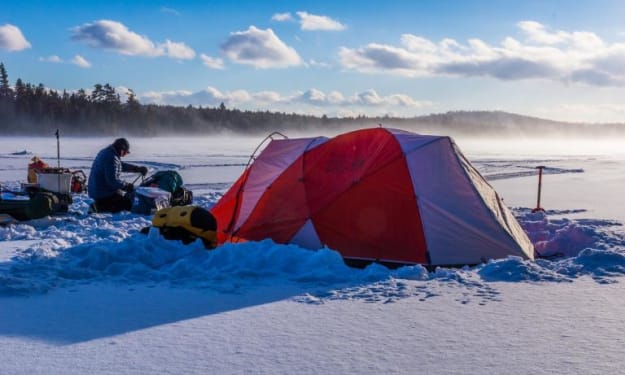
10 Tips for Your First Time Camping in Winter
What good is the warmth of summer, without the cold of winter to give it sweetness?” wrote John Steinbeck. Point taken, but there’s also a certain sweetness to the cold of winter. Cold-weather camping is a great way to savor those tranquil moments and settings only winter can provide—untouched snow-covered landscapes, early nights and early mornings, a warm fire—yet even some experienced campers balk at the prospect.
By lupu alexandra3 years ago in Earth
Climate activists make their presence known at COP26
The international COP26 climate conference, seen by many as the last chance to establish a climate agenda that will curb global temperature rise, is more than halfway over. Only a few days remain for the world’s most prominent political, economic, and environmental leaders to commit to transitioning the world away from fossil fuels.
By lupu alexandra3 years ago in Earth
This Is the Decade to Reduce Emissions
As the sun rose in Glasgow, over 20,000 people—delegates from individual nations, representatives of nongovernmental organizations, and activists—gathered in Scotland for the start of the United Nations’ two-week climate conference. Known as the Conference of the Parties, or COP26, it runs from Monday, November 1, to Friday, November 12, 2021.
By lupu alexandra3 years ago in Earth
Plastic Is the New Coal, Says New Report
Your plastic water bottle will likely spend its golden years floating around the Great Pacific Garbage Patch, but its life began thousands of feet underground. How it got from there to you—and why it was made in the first place—has big implications for global climate goals.
By lupu alexandra3 years ago in Earth
COP26: Voices From the Global South Talk Money
Aside from reducing greenhouse gas emissions, funding is a key issue at the annual United Nations climate negotiations. Money from developed nations given to developing nations is vital to fund mitigation and adaptation efforts; that is, to lessen the impacts of climate change and to protect against its future effects.
By lupu alexandra3 years ago in Earth
Facing Intransigence From Manchin, Environmentalists Look for Ways to Slash Carbon Pollution
Last week, Senator Joe Manchin, the Democrat from West Virginia who has made a personal fortune from his fossil fuel investments, pulled the rug out from underneath Democrats’ climate agenda. The senator said he would not vote for the Clean Energy Performance Program, or CEPP, the flagship climate policy of the Build Back Better legislation that would require power companies to rapidly replace fossil fuels with renewables such as solar and wind.
By lupu alexandra3 years ago in Earth