Climate
Global Warming
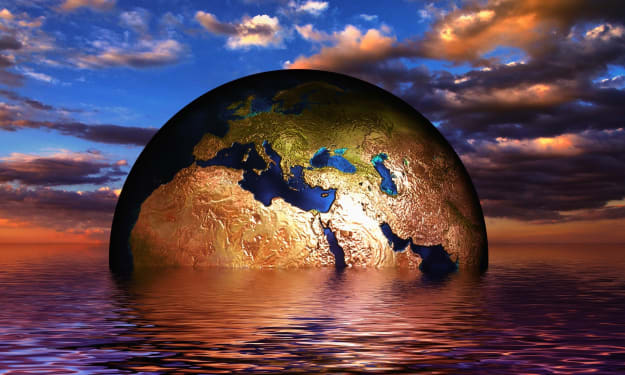
The worldwide environment is changing quickly contrasted with pre-modern occasions, and there is plentiful proof that these progressions are influencing biological systems, biological systems, and human frameworks (more noteworthy confidence). The expansion in an unnatural weather change (GMT) contrasted with 1850 and 1900, 0, was accomplished somewhere in the range of 2006 and 2015; the increment in recurrence and force of these impacts are extremely reassuring; this shows that an increment in GMT of 1.5 ° C or higher will affect regular or human frameworks, regardless of whether this the increment is 1.6 ° C to 2 ° C.
By Rosan Pandey5 years ago in Earth
Global Warming
The worldwide environment is changing quickly contrasted with pre-modern occasions, and there is plentiful proof that these progressions are influencing biological systems, biological systems, and human frameworks (more noteworthy confidence). The expansion in an unnatural weather change (GMT) contrasted with 1850 and 1900, 0, was accomplished somewhere in the range of 2006 and 2015; the increment in recurrence and force of these impacts are extremely reassuring; this shows that an increment in GMT of 1.5 ° C or higher will affect regular or human frameworks, regardless of whether this the increment is 1.6 ° C to 2 ° C.
By Rosan Pandey5 years ago in Earth
A Shark Under the Tree
Visiting a predominantly Catholic country when you're trying to skip Christmas altogether isn't the best strategy. Unfortunately, that fact didn't hit Shelley until the resort's concierge escorted her to an ocean view room. A temporary holiday-themed sign on the door read: "Habitacion Grande del Noche de Paz." Translation: The Silent Night Suite.
By CK Wetherill 5 years ago in Earth
Global warming
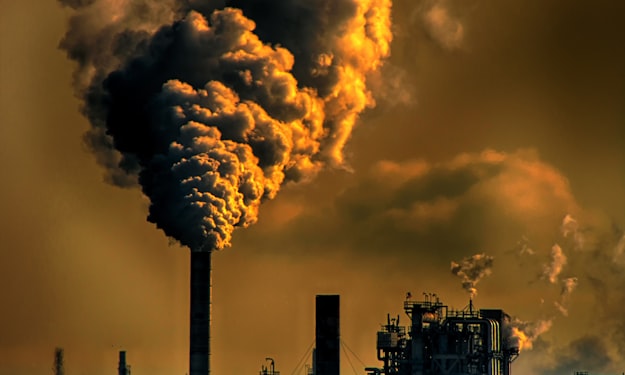
A worldwide temperature alteration is a wonder of a dangerous atmospheric deviation that has been normal on the world's surface for as far back as a hundred or two years. An investigation of the impacts of expanded carbon dioxide focuses on vegetation on Earth's air takes a gander at the job of ozone harming substances in environmental change.
By Sita Dahal5 years ago in Earth
How does acid rain occur
The corrosive downpour was first distinguished by Hubbard Stream during the 1960s in North America and was the aftereffect of delayed openness to sulfur dioxide and nitrogen oxides from energy plants. His exploration has impacted public and worldwide corrosive downpour strategy, including a correction to the Spotless Air Demonstration of 1990. Acidic downpour pools in lakes in regions, for example, the Adirondack Mountains in New York transformed them into shallow springs, killed fish, and brought many flying predators, like the projection, to the edge of destruction.
By Radha Karki5 years ago in Earth
What factor causes Environmental pollution
The most basic solution to air pollution comes from fossil fuels and replaces them with renewable energy, clean energy such as solar, geothermal, and wind. Switching to environmentally friendly modes of transport such as electric and hydrogen vehicles, promoting shared mobility, traffic congestion and public transport will also reduce air pollution. The world is working to reduce emissions of hazardous gas vehicles that in various ways cause air pollution such as emissions control, electric vehicles, and hybrid and public transport systems so that we can manage and reduce pollution in the future.
By Radha Karki5 years ago in Earth
Can Large-Scale Telecommuting Save The Environment?
It feels like 2020 was a year of unmitigated disaster, filled with nothing but doom and gloom. However, while the pandemic was terrible (and is far from over at time of writing), some of our efforts to mitigate it had further-reaching effects than we expected. All you had to do was scroll through social media some time in the past year to see posts of people marveling at clear-running waters usually choked with detritus, or posting pictures of clear skies in places like Los Angeles, to get a sense of the visible effects that everyone staying home for a while had on the environment.
By Neal Litherland5 years ago in Earth
Touched by an Angel
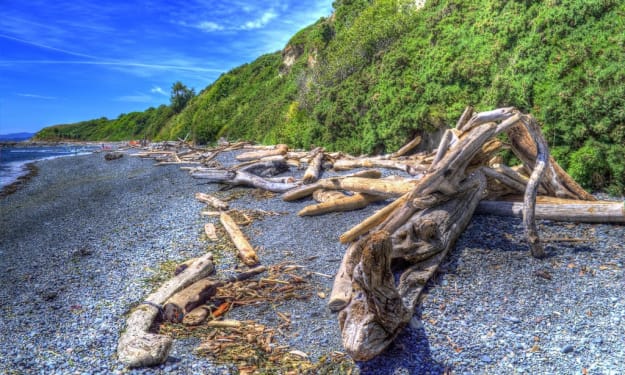
Victoria gets hotter each year. I am pretty sure its climate change. The ocean, also getting hotter, is still refreshing on hot days. On this day, a super hot day in June, I take the spiral staircase down from the grassy bluffs of Clover Point Park. The dark pebbled beach is just radiating heat. I can feel it through the rubber soles of my water-shoes. The seaweed adds a miso soup smell to the salty air. I pull my cotton dress over my head and tangle it around a handy piece of driftwood and head to the waters edge. Its a calm day. Light waves lap against the stones. There are no suffers. No recreational fishermen standing on the edge of the wall at Angler's Point. Further down the beach two people tight rope walk along the wet side of the squiggly seaweed line. I walk into the sea. It feels so cool. I shiver as my shoulders get wet. It is a good shiver. I float easily on the waters surface for a bit. The blue of the sky punctured by the odd seagull. The water feels warm to me now. The initial refreshment blazed over by the sun. I adjust my swimming googles over my eyes and swim down to the ocean bed - its ridges capturing the complicated wave patterns above in an incomprehensible interpretation of wind and moon-pull. Delicate sea plants wave, small fish rush by, beach rocks break up the sand's wavy work. In a short distance the land below drops off to a cold looking green-black space. I come up. The sun attacks. I swim out a little further to the underwater cliff. I dive back down. The cliff is really just the backside of the sand dune, and the ocean bottom is not much lower on the other side. I pretend to bully surf own the dune's side. I feel the water getting colder by the inch. I come back up for air, I dive and ride down the side of the bar, enjoying the quick change in temperature. Back up top I float a bit. One more dive. As I reach with bottom of the lower bed something catches my eye. As my movement disturbs the sand a form - and outline of a large fish. I pull back up to the surface. My heart pounding. My toes and feet feeling very vulnerable wiggling far beneath me . Did I image the shape? I swim down - careful not to disturb the sand. The pattern is gone. I turn and swim back, this time up the slope of a sandbar. A large fish flat fish dislodges itself from the sand, turns and swims swiftly past me. We bump. I feel its rough skin brush my calf on the way past. Wait, fish have scales. Most fish have smooth slipper scales, not rough sandpapery skin! Now I am kicking quickly up - towards the sun. I swim clumsily to shore, and all but throw myself onto the beach. I sit on the edge letting the back-an-forth of the waves slow down my heart beat. But back of my mind is repeating the scary mantra of: shark, shark, shark. Not the scary Great White made famous on film, but still a fish with skin is a shark. It was fish like none I had ever seen - flat, almost like a ray, except for the tail with its two vertical fins. Strange almond shaped eyes. Later, google will clarify - a Pacific Angel Shark - very far north of its usual range, hiding as it does in the sand waiting for a meal. I was of course far too big to be considered for diner. The danger was conjured up by a phobia-like fear based on the power of a word capable of clearing beaches. I smile. Still, I was lucky to be touched by an angel.
By Debra Rohac5 years ago in Earth
5 Simple Ways To Go Green At Home
More people than ever are trying to help the environment. Whether at home or at work, as a business or an individual, the environment is a major concern. As a popular green slogan says, 'There is no Planet B!' — meaning that if we do irreversible damage to our planet, there is no alternative way forward.
By Alexander Belsey5 years ago in Earth
Geopolitics of Climate Change
Twenty of the hottest years ever recorded have happened in the past twenty-one years. Wildfire seasons, droughts, floods, hurricanes are already breaching their records year after year. These extreme weather events are also getting more and more difficult to predict, both, spatially as well as in terms of their time-frames. They cause huge damages to life and property and have proven to be very expensive for countries. These extreme weather events, however, are only a glimpse into an ominous future. What's bothering governments more are the rapidly changing climatic conditions that in turn affect agriculture, resources, trade, and infrastructure projects. All of these concerns are driving climate action plans and this is where geopolitics comes in. As climate change and climate action gain more and more traction, the world is set to witness significant changes in conventional geopolitics. For instance, as countries are reducing their oil and gas dependence, petrostates are scrambling to diversify their economies and brace for a new normal.
By Rishi Rathi5 years ago in Earth