Science
The timing of Earth's ice ages may be influenced by Mars.
According to recent calculations, Mars may influence the date of ice ages by helping to establish a 2.4 million-year rhythm in Earth's orbit. Recently, researchers investigated the possibility of a tiny planet leaving a discernible imprint in long-term climate records.
By Francis Dami24 days ago in Earth
1600 People Reported Dead and 12 Homes Collapsed After a 4.7 Earthquake Struck Israe
**1600 People Reported Dead and 12 Homes Collapsed After a 4.2 Earthquake Struck Israel** Reports circulating after a 4.2-magnitude earthquake struck parts of Israel have caused widespread confusion and alarm, particularly claims stating that 1600 people were killed and 12 homes collapsed as a result of the tremor. The earthquake itself was felt across several regions, especially in the south near the Dead Sea and the Negev, prompting emergency alerts and heightened public concern. However, the scale of the reported casualties has raised serious questions, given the relatively moderate magnitude of the quake.
By America today 24 days ago in Earth
Honey, I Shrunk the Datacentres: Is Small the New Big?. AI-Generated.
When most people think of datacentres, they picture sprawling warehouses full of servers, humming fans, and mountains of cabling. These massive facilities power everything from Netflix streams to artificial intelligence, but they also consume enormous amounts of energy and space. Now, a new trend is emerging: micro-datacentres. Tiny, modular, and often portable, these “datacentre in a box” solutions are challenging the old assumption that bigger is always better. Could small really be the new big in the world of computing? What Are Micro-Datacentres? Micro-datacentres are compact computing hubs designed to perform the same essential functions as traditional datacentres but in a fraction of the space. Think of them as miniaturized cloud factories — smaller, energy-efficient, and often placed closer to the users they serve. Key characteristics include: Compact size: Often no larger than a shipping container or even a cabinet. Energy efficiency: Use less power by focusing on localized computing needs. Modularity: Can be scaled horizontally by adding more units rather than expanding a single huge facility. Edge computing readiness: Positioned closer to where data is generated, reducing latency for IoT devices, AI applications, and streaming services. In short, micro-datacentres take the power of traditional computing and shrink it to fit modern, flexible infrastructure demands. Why Companies Are Embracing Smaller Datacentres There are several reasons the tech world is warming up to smaller datacentres: Energy and Cost Savings – Traditional datacentres consume massive amounts of electricity, sometimes as much as a small town. Micro-datacentres use less power and generate less heat, reducing both energy bills and cooling costs. Local Speed and Low Latency – For applications like AI, gaming, and streaming, milliseconds matter. By placing computing resources closer to users, micro-datacentres reduce latency and improve performance. Flexibility and Rapid Deployment – Big datacentres take years to build. Micro-datacentres can be deployed in weeks, allowing companies to respond quickly to spikes in demand or to expand into new regions. Resilience and Redundancy – Smaller, distributed units reduce the risk of a single point of failure. If one micro-datacentre goes down, others can pick up the load. Sustainability Goals – With energy efficiency at their core, micro-datacentres are often paired with renewable energy, making them an attractive option for companies seeking greener operations. From Data Warehouses to Data Cabinets Historically, the datacentre arms race has been about size. Companies like Amazon, Google, and Microsoft built massive facilities housing hundreds of thousands of servers. These centers achieved economies of scale but came with high energy use, long construction timelines, and heavy regulatory scrutiny. Micro-datacentres, on the other hand, flip the script: instead of one mega-facility, you deploy many smaller units closer to users. This is sometimes called edge computing, and it’s particularly useful for AI applications, smart cities, and the Internet of Things (IoT). Imagine self-driving cars, smart traffic lights, or factory robots. These devices generate enormous amounts of data that can’t be efficiently sent to a distant datacentre for processing. A nearby micro-datacentre solves the problem in real-time, enabling faster decisions and smoother operations. Real-World Examples Several companies are already experimenting with smaller datacentres: Google’s Edge Nodes: Google has deployed compact datacentres in regional locations to speed up cloud services. Microsoft Azure Stack Edge: A modular datacentre solution that brings cloud computing capabilities closer to businesses. Amazon Web Services (AWS) Snowcone: A portable computing and storage unit that can operate in remote or temporary locations. Even municipalities and hospitals are exploring micro-datacentres for localized applications like traffic management, healthcare data storage, and emergency services. Challenges of Going Small While micro-datacentres have many advantages, they’re not without challenges: Limited capacity: They can’t match the raw scale of traditional datacentres, so some large-scale AI training tasks still require mega-facilities. Security concerns: Smaller units distributed across many locations require robust cybersecurity protocols. Maintenance and monitoring: Managing multiple small units can be more complex than running a centralized datacentre. Energy trade-offs: If not designed efficiently, multiple micro-datacentres can sometimes use more energy than a single optimized large facility. Despite these challenges, many experts argue that the benefits — speed, flexibility, and reduced environmental impact — outweigh the downsides for many applications. Why “Small” Could Be the Future The rise of micro-datacentres signals a broader shift in how we think about computing infrastructure. Instead of centralized, monolithic powerhouses, the future may look like a network of small, smart, and sustainable units. This trend aligns with several larger tech movements: Edge computing – Computing closer to the user or device. Green technology – Reducing energy consumption and carbon footprints. AI proliferation – Handling massive data loads locally to enable faster processing. For companies, governments, and communities, the message is clear: smaller doesn’t mean weaker — it can mean smarter, faster, and more adaptable. Conclusion: Small but Mighty Micro-datacentres may not replace all mega-facilities, but they are carving out an essential niche in the computing ecosystem. They offer speed, flexibility, and sustainability that large datacentres can’t always provide, particularly for localized applications and edge computing. As technology evolves and energy concerns intensify, these “datacentres in a box” could become a core component of how we process, store, and access data in the 21st century. So the next time someone asks if small is the new big, the answer might just be yes — at least when it comes to datacentres.
By Muhammad Hassan25 days ago in Earth
Antibiotic resistance is released into rivers and other essential water supplies by melting glaciers.
Sea level rise and the disappearance of landscapes are not the only effects of glaciers melting quickly. Melt water may also contain buried genetic material that aids in bacterial resistance to drugs, scientists are now cautioning.
By Francis Dami26 days ago in Earth
Day Will Turn to Night: Astronomers Officially Confirm the Date of the Longest Solar Eclipse of the Century. AI-Generated.
For stargazers, astronomers, and casual skywatchers alike, 2026 promises an astronomical event that will be remembered for a lifetime. Scientists have officially confirmed the date of the longest solar eclipse of the 21st century, a celestial phenomenon that will turn day into night for several minutes across parts of the globe. The announcement has sent excitement rippling through the scientific community and among enthusiasts who have long awaited a solar spectacle of this magnitude. The Science Behind the Eclipse A solar eclipse occurs when the Moon passes between the Earth and the Sun, casting a shadow on our planet and temporarily blocking the Sun’s light. While solar eclipses happen somewhere on Earth approximately every 18 months, total eclipses—where the Sun is completely obscured by the Moon—are far less common. What sets the 2026 eclipse apart is its duration. Astronomers predict that the eclipse will last for over six minutes in its longest phase, making it the longest total solar eclipse of the century. The phenomenon is a result of the precise alignment of the Sun, Moon, and Earth, as well as the Moon’s elliptical orbit, which causes slight variations in apparent size. Dr. Elena Morales, an astrophysicist at the European Southern Observatory, explains: "This eclipse is remarkable not just for its length but for its visibility. For several regions, the Sun will disappear completely, creating a surreal twilight in the middle of the day. It's an excellent opportunity to study the Sun’s corona, which is usually obscured by its brightness." Where and When to Watch The path of totality—the narrow band where the eclipse will be fully visible—stretches across several countries, including parts of the Arctic, Greenland, Iceland, and Spain. Millions of people living along this corridor will experience the full majesty of the eclipse, while a partial eclipse will be visible across much of Europe, northern Africa, and North America. Astronomers recommend planning travel in advance, as areas within the path of totality are expected to see a significant influx of visitors. Hotels, camping grounds, and viewing points are already reporting high demand, as enthusiasts from around the world seek to witness the once-in-a-lifetime event. Safety First: Protecting Your Eyes Viewing a solar eclipse can be dangerous if proper precautions are not taken. Staring directly at the Sun without specialized glasses can cause permanent eye damage. Experts emphasize the use of ISO-certified eclipse glasses or solar viewers for safe observation. Pinhole projectors, telescopes equipped with solar filters, and projection methods can also provide safe and magnified views of the eclipse. Many educational institutions and astronomical societies are planning public viewing events, combining safety with expert commentary to enhance the experience for attendees. Cultural and Scientific Significance Throughout history, solar eclipses have held deep cultural significance. Ancient civilizations often interpreted eclipses as omens or messages from the gods. Today, eclipses continue to captivate human imagination, blending scientific intrigue with awe-inspiring natural beauty. From a scientific perspective, total solar eclipses offer rare opportunities to study the Sun’s outer atmosphere, the corona, which is invisible during regular daylight. Researchers can observe solar flares, prominences, and other phenomena, gaining insights that contribute to our understanding of solar physics, space weather, and even the impact of solar activity on Earth’s climate and satellite communications. Preparing for the Experience For those planning to witness the eclipse, preparation is key. Many enthusiasts are setting up travel plans, packing eclipse glasses, cameras, and telescopes, and coordinating with local astronomy clubs for guided viewing. Timing is crucial—the totality phase, though extended in 2026, still lasts just a few minutes, making precise observation essential for both enjoyment and scientific study. Communities along the path of totality are also preparing for the influx of visitors. Local authorities are coordinating traffic management, accommodation, and public safety measures to ensure that the event remains enjoyable and safe for everyone involved. A Rare and Awe-Inspiring Event The 2026 solar eclipse is more than just a scientific event; it is a once-in-a-generation experience that reminds humanity of the vastness and beauty of the cosmos. For a brief moment, day will turn to night, and millions of people across the globe will share in the wonder of the universe’s intricate dance. Whether you are a professional astronomer or a curious skywatcher, this eclipse offers an unforgettable spectacle. It’s a moment to pause, look up, and marvel at the universe—a reminder that even in our modern, digital age, the natural world continues to inspire awe and wonder. Prepare your glasses, mark your calendars, and get ready for the longest solar eclipse of the century. For those lucky enough to witness it, it will be a memory etched in time, a celestial marvel that will be talked about for decades to come.
By Fiaz Ahmed Brohi28 days ago in Earth
Tea of Silence. AI-Generated.
The snow had covered the hills for days, turning the land into a quiet white world where sound seemed afraid to exist. On the highest of these hills, beneath a dry, leafless tree, a young man sat alone. The tree had long ago lost its strength, its branches thin and broken, but it still stood, as if refusing to disappear. The young man chose this place often, not because it was comfortable, but because it was honest.
By Bilal Mohammadi28 days ago in Earth
Tensions in the Sky: North Korea Calls on South Korea to Probe Drone Incidents. AI-Generated.
Tensions between North and South Korea have once again made international headlines after North Korea accused its southern neighbor of sending drones into its airspace. At the center of the issue is Kim Yo Jong, the influential sister of North Korean leader Kim Jong Un, who has urged South Korea to investigate the alleged drone incidents and provide a clear explanation. While drones may seem small, the political impact of this dispute is anything but minor.
By dua fatima28 days ago in Earth
Judge Trump: Courtroom Battles and Public Questions Surrounding Donald Trump
Judge Trump: Courtroom Battles and Public Questions Surrounding Donald Trump Donald Trump’s name has been repeatedly linked with judges, courts, and major legal decisions over the past several years. As a former president and a high-profile political figure, Trump has faced intense legal scrutiny, making judges central figures in news coverage and public debate. The phrase “Judge Trump” has come to reflect public curiosity about the judges who oversee Trump-related cases, their rulings, and how these legal battles may affect his political future. Understanding this topic requires looking at the legal landscape, the role of the judiciary, and the most common questions people ask. Judge Trump: Courtroom Battles and Public Questions Surrounding Donald Trump
By America today 29 days ago in Earth
How Dangerous Is Chernobyl Radiation Today
many people still ask the same question: how dangerous is chernobyl radiation today? The short answer is that the danger still exists, but it is very different from what it was in 1986. Radiation levels have dropped a lot, some areas are safer than others, and strict rules remain in place to protect people and the environment. To understand the real risk today, it is important to look at what happened, what has changed, and what dangers still remain.
By Horizon Dwellers30 days ago in Earth
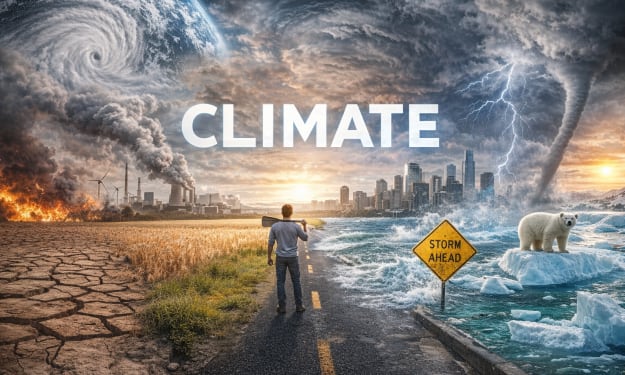
Climate Uncovered: How Earth’s Atmosphere Shapes Our Past, Present, and Future
## Climate Uncovered: How Earth’s Atmosphere Shapes Our Past, Present, and Future Climate is more than just a scientific term or a topic in school textbooks. It is a powerful force that shapes ecosystems, economies, cultures, and daily life across the planet. From the clothes people wear to the food they grow and the cities they build, climate plays a defining role. In recent years, interest in climate has grown rapidly as people seek to understand long-term environmental changes and what they mean for the future of humanity. This article explains climate in a clear and engaging way while answering the most common questions people search for and ask.
By America today 30 days ago in Earth