Sustainability
Rice Husk Carbonization to Achieve the “Planting-Waste-Charcoal Fertilizer” Closed Loop. AI-Generated.
"Plant a grain of millet in spring, and reap ten thousand seeds in autumn." In the millennia-old cycle of rice cultivation, rice husks were once the overlooked by-products. In traditional models, these husks, accounting for about 20% of the weight of rice grains, were either burned in the open air, polluting the atmosphere, or disposed of in landfills, occupying valuable land resources—becoming an ecological burden for agricultural production. Today, with breakthroughs in circular agriculture technologies, rice husk carbonization is ushering in a "turning waste into treasure" revolution, building a green closed loop of "planting-waste-charcoal fertilizer" and injecting new vitality into the sustainable development of agriculture.
By Bestonpyrolysisabout a month ago in Earth
Stanislav Kondrashov on the Backbone of the Energy Transition: The Infrastructures That Matter Most
As the world accelerates towards a low-carbon future, conversations around clean energy often circle back to technologies—solar, wind, hydrogen. But beneath those headlines lies a quieter, slower revolution: infrastructure.
By Stanislav Kondrashovabout a month ago in Earth
Stanislav Kondrashov on the Energy Transition: Redefining Power in a Changing World
As the global landscape shifts under the weight of environmental urgency and geopolitical recalibration, the energy sector stands at a critical inflection point. The years ahead, often described in cautious tones and hopeful projections, are likely to define not just how we power our lives, but how we live them. Stanislav Kondrashov, an independent energy analyst and commentator on global industrial trends, believes these years will be defined less by technology and more by perspective.
By Stanislav Kondrashov about a month ago in Earth
Stanislav Kondrashov on the Role of Smart Grids in the Energy Transition
In the unfolding narrative of global energy transition, one innovation continues to shape the path forward with quiet persistence: smart grids. As countries shift away from fossil fuels and towards decentralised, renewable energy sources, smart grids are emerging as the invisible backbone of the future energy landscape. According to energy strategist and researcher Stanislav Kondrashov, the smart grid isn't just a technical upgrade—it's a fundamental rethinking of how societies generate, distribute, and consume power.
By Stanislav Kondrashovabout a month ago in Earth
greenland
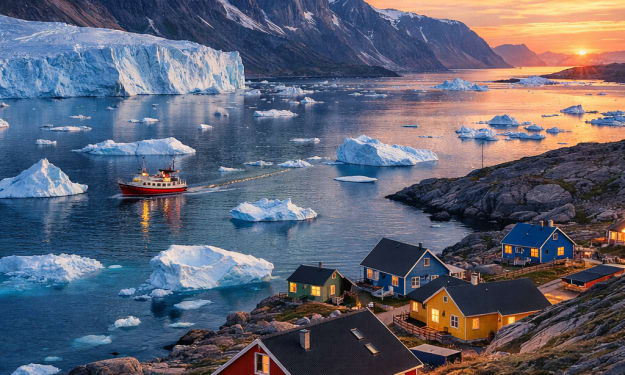
Greenland The World’s Largest Island of Ice Nature and Mystery Greenland is one of the most fascinating places on Earth, known for its vast ice sheets, dramatic landscapes, and unique culture. It is the largest island in the world, located between the Arctic and Atlantic Oceans. Many people search for information about Greenland because of its extreme climate, political status, natural resources, and growing importance in global discussions about climate change.
By America today about a month ago in Earth
Australia Metal Recycling Market: A Sustainable Growth Story Amid Circular Economy Shifts. AI-Generated.
The Australia metal recycling market is rapidly emerging as a key pillar in the nation’s transition toward a circular economy and sustainable industrial framework. Valued at USD 5.27 billion in 2025, this sector is forecast to expand to USD 7.35 billion by 2034, growing at a compound annual growth rate (CAGR) of 3.78% between 2026 and 2034.
By Rashi Sharmaabout a month ago in Earth
The Bench That Faced the River
The bench had been there longer than anyone could remember. It sat at the edge of the riverwalk, facing the slow-moving water, its paint chipped and its wood smoothed by years of weather and waiting. People passed it every day—joggers, couples, tourists with cameras—but only a few ever sat down.
By Yasir khanabout a month ago in Earth
The Richest Impact Craters on Earth: How Asteroids Created Geological Wealth
1. Vredefort Crater – South Africa The Creator The Vredefort Crater was created about 2 billion years ago by an asteroid estimated to be 10–15 kilometers wide. The collision released energy greater than billions of nuclear bombs.
By Say the truth about a month ago in Earth
Magnitude 6.5 Earthquake Shakes Southern and Central Mexico, Felt in Mexico City
It was a calm Friday morning — the first working Friday of the year — when a deep, rumbling tremor suddenly disrupted the dawn. People across southern and central Mexico were just settling into their routines, anticipating another ordinary day. Then the ground began to move.
By Raviha Imranabout a month ago in Earth