
The formation of the Earth.
A journey through cosmic events shaping our planet.

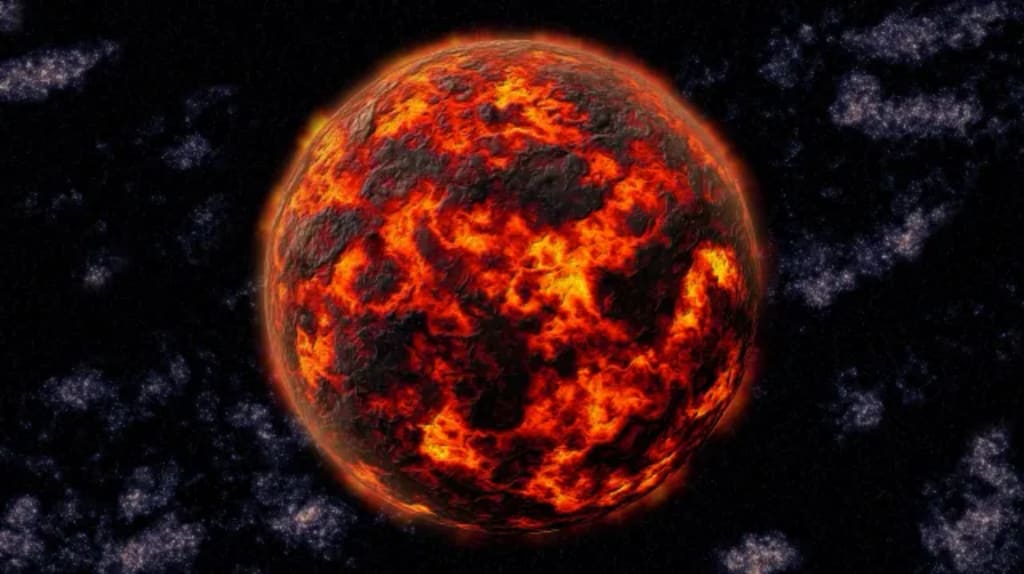
The formation of the Earth is a fascinating story that spans billions of years, beginning with the birth of the solar system about 4.6 billion years ago. Understanding Earth's formation requires us to explore the processes that led to its creation, starting with the conditions in space that gave rise to our planet.
The Birth of the Solar System
The story begins in a vast molecular cloud, composed of gas and dust, known as the solar nebula. This cloud, many light-years across, contained remnants of older stars that had exploded as supernovae, enriching the nebula with heavy elements. These elements, including iron, nickel, and other metals, would eventually become crucial building blocks for the formation of planets, including Earth.
About 4.6 billion years ago, the solar nebula began to collapse under its own gravity. As the cloud contracted, it spun faster, flattening into a disk with the Sun forming at the center. The material in the disk began to cool, and over time, particles of dust and ice began to stick together, forming larger clumps. These clumps grew larger through a process known as accretion.
Accretion and Planetesimals
As the particles collided and stuck together, they formed planetesimals, objects that were a few kilometers across. Some of these planetesimals grew even larger through continued collisions and accretion, forming protoplanets. One of these protoplanets, in particular, would eventually become Earth.
During this time, the growing protoplanets continued to collide with each other, releasing vast amounts of energy. These collisions not only caused the protoplanets to grow but also generated enough heat to melt their interiors. This allowed heavier elements, like iron and nickel, to sink toward the center of these bodies, while lighter elements like silicon, oxygen, and aluminum remained in the outer layers.
The Formation of Earth
Around 4.5 billion years ago, a body about the size of Mars, known as Theia, collided with the early Earth. This catastrophic impact is thought to have been the key event in the formation of Earth's moon. The impact caused a massive amount of debris to be ejected into space, which eventually coalesced to form the Moon. The collision also provided additional heat, further melting the early Earth and causing the planet's outer layers to differentiate.
As the Earth continued to cool, a solid crust began to form. Volcanic activity released gases such as water vapor, carbon dioxide, and nitrogen, contributing to the formation of the early atmosphere. During this period, the planet was bombarded by leftover debris from the formation of the solar system, a time known as the Late Heavy Bombardment, which lasted for hundreds of millions of years. These impacts played a significant role in shaping Earth's surface and in potentially delivering water and other key ingredients for life.
The Formation of Oceans
As the Earth cooled further, the water vapor in the atmosphere condensed, forming clouds. Eventually, the rain that fell created the first oceans. The presence of liquid water on Earth was one of the key factors that allowed life to emerge. While Earth's early oceans were likely acidic and contained dissolved minerals, they provided a stable environment where organic molecules could form.
The Early Atmosphere
The early atmosphere of Earth was quite different from what we have today. Initially, it was composed mainly of carbon dioxide, water vapor, nitrogen, and other gases released by volcanic activity. There was little to no free oxygen, and the atmosphere would have been toxic to modern forms of life. However, over time, the Earth’s atmosphere began to change due to various processes, including volcanic activity, the release of gases from the oceans, and, much later, the development of photosynthetic organisms that began producing oxygen.
The process of photosynthesis, which emerged about 3 billion years ago, was a game-changer. Early forms of life, such as cyanobacteria, began to convert sunlight into chemical energy, releasing oxygen as a byproduct. Over millions of years, this gradually transformed Earth's atmosphere, making it more conducive to the development of complex life.
The Cooling and Crust Formation
As the Earth continued to cool, the planet's outer layers solidified, forming a crust. This crust was initially unstable, with frequent volcanic eruptions and tectonic activity shaping the surface. Over millions of years, the Earth's surface began to stabilize, and the continents slowly emerged as the lithosphere (the rigid outer layer of Earth) broke into large plates that drifted atop the molten mantle beneath.
Earth's Magnetic Field and Plate Tectonics
As the Earth’s core, composed mainly of iron and nickel, continued to cool, it generated a magnetic field. This magnetic field, created by the movement of molten metals in the outer core, protected Earth from harmful solar radiation and cosmic particles. It also played a crucial role in shaping the planet's climate and weather patterns.
Simultaneously, Earth's lithosphere became divided into tectonic plates, which moved and interacted with one another, a process known as plate tectonics. This movement created mountains, ocean basins, and other Geological features and continues to shape Earth's surface to this day.
Conclusion
The formation of the Earth was a complex and dynamic process that spanned billions of years. From the collapse of the solar nebula to the eventual cooling and solidification of the planet, each phase played a crucial role in shaping the Earth we know today. The collision with Theia and the formation of the Moon, the differentiation of the Earth’s layers, the creation of oceans, and the development of an oxygen-rich atmosphere all contributed to making Earth a habitable planet. This long and eventful history set the stage for the emergence of life and the diverse ecosystems that continue to evolve on our planet.
About the Creator
Badhan Sen
Myself Badhan, I am a professional writer.I like to share some stories with my friends.
Keep reading
More stories from Badhan Sen and writers in Earth and other communities.
Making Major Decisions Based on Shared Spiritual Beliefs
Shared spiritual beliefs play a vital role in shaping the framework for decision-making in relationships, families, and communities. They provide a common ground for evaluating options, assessing moral and ethical implications, and aligning goals with a higher purpose. When individuals or groups share spiritual values, these beliefs often influence priorities, guide actions, and foster unity during critical moments. Below is an exploration of how to make major decisions based on shared spiritual beliefs, with practical steps and examples.
By Badhan Senabout a year ago in Earth
A Gathering of Evil Bosses
“I’m the queen of chin jutting while I smooth my hair, attacking, insulting, and deflecting to protect my appointer.” “Oh, please, Blondi, my hair is curled, highlighted, and longer than yours. I feature television commercials telling immigrants that we will give them a free plane ride home, and if they voluntarily turn themselves in, they will be allowed to legally apply for re-entry. It runs everywhere, and I look good in it! You can’t compete because of your blond hair. Mine is nicer, and my lips are prettier than yours.”
By Andrea Corwin 4 days ago in The Swamp




Comments
There are no comments for this story
Be the first to respond and start the conversation.