
The Geology of Your Inner World
Part 3: Fault Lines, Tremors, and Tectonic Self-Care

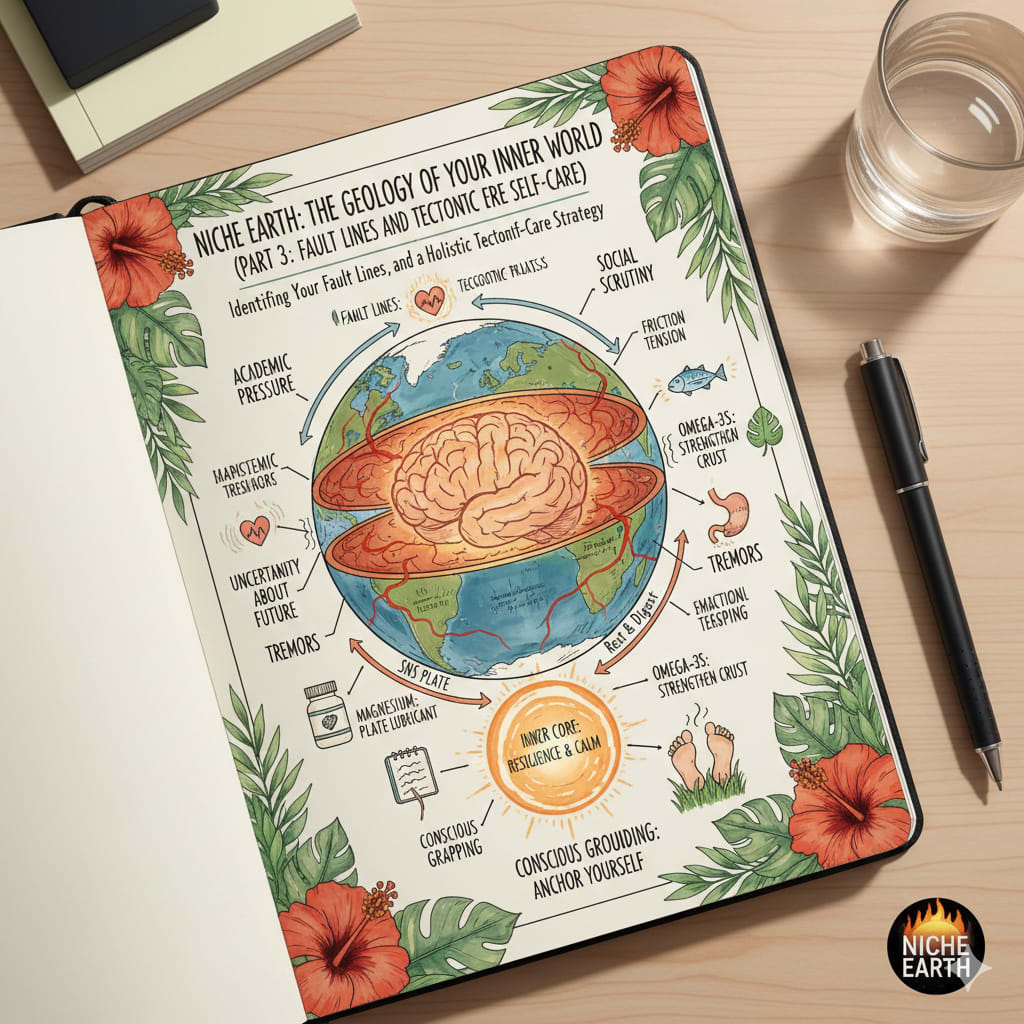
Just like the Earth’s surface is riddled with invisible cracks where tectonic plates meet, our minds have their own deep-seated fault lines. These aren't always obvious; they're the recurring triggers, the sensitive spots, the areas where stress can quickly build up, leading to a mental "tremor" or even a full-blown anxiety "earthquake." As an overthinking girl, my fault lines are often hidden under layers of forced calm and academic ambition. But as a Nutrition student, I'm learning to map them out, not just to avoid collapse, but to understand how to build stronger, more resilient structures.
Mapping Your Personal Fault Lines
What are your fault lines? For me, they include:
- Academic Pressure: The relentless pursuit of perfect grades.
- Social Scrutiny: Overanalyzing every social interaction.
- Uncertainty about the Future: The terrifying vastness of "what's next?"
- Perfectionism: The belief that anything less than flawless is failure.
When these areas get "stressed"—when deadlines loom, social media feeds get overwhelming, or career choices feel unclear—that’s when the tremors start. Physically, this can manifest as a racing heart, shallow breathing, tense shoulders, or that familiar knot in your stomach. These are your body's early warning systems, geological shifts deep within your nervous system.
The Tectonic Plates of Your Nervous System
Our nervous system isn't one solid block; it’s composed of different "plates" constantly interacting. The two main ones for our purposes are:
Sympathetic Nervous System (SNS): The "Fight or Flight" plate. This gets activated when we perceive danger (real or imagined). It’s designed for short bursts of action, not chronic overthinking.
Parasympathetic Nervous System (PNS): The "Rest and Digest" plate. This helps us calm down, heal, and conserve energy.
When you're constantly overthinking, your SNS plate is constantly grinding, building up pressure. This prolonged activation leads to increased cortisol (our stress hormone) and depletion of calming neurotransmitters. It’s like the plates are stuck, causing immense tension beneath the surface.
Tectonic Self-Care: Building Resilience Along the Fault Lines
So, how do we prevent catastrophic mental earthquakes? We practice Tectonic Self-Care. This isn't about ignoring the fault lines, but understanding them and reinforcing the structures around them.
- Emotional Mapping (Seismograph Journaling): Just as geologists use seismographs to record tremors, we can use journaling to "map" our emotional shifts. When do the tremors start? What triggers them? What physical sensations accompany them? This isn't just venting; it's data collection. Recognizing patterns helps us prepare.
- Magnesium (The Lubricant for Your Plates): We've talked about magnesium before, but it's crucial here. Magnesium is like the geological lubricant for your nervous system. It helps calm excited neurons, allowing those SNS and PNS plates to glide more smoothly, reducing friction and tension. Think dark leafy greens, almonds, and even a magnesium supplement before bed if needed.
- Omega-3s (Strengthening the Crust): These healthy fats are essential for the structural integrity of your brain cells. They reduce inflammation and improve communication between neurons, making your mental "crust" more flexible and less brittle under pressure. Flaxseeds, walnuts, and fatty fish are your allies.
- Conscious Grounding (Anchoring Your Core): When a tremor hits, your brain can feel untethered. This is where physical grounding techniques become your anchor.
- Earthing: Literally connecting with the Earth. Walking barefoot on grass can help stabilize electrical charges in your body, reducing feelings of "frizziness."
- Deep Diaphragmatic Breathing: This is your personal P-wave (primary wave) that tells your PNS to activate. It's a direct signal to your nervous system to downshift.
The Bottom Line
Your "Niche Earth" is dynamic, complex, and beautiful. Understanding its fault lines isn't a weakness; it's wisdom. By proactively mapping your triggers, nourishing your nervous system with essential minerals, and practicing conscious grounding, you can transform periods of intense pressure from destructive earthquakes into manageable shifts. Your resilience isn't about never having tremors, but about learning how to move with them, adapting and rebuilding your inner landscape, stronger and more stable than before.
About the Creator
Being Inquisitive
Blogging can provide a creative outlet for expressing your thoughts, feelings, and ideas. It can be a way to share your passion and interests with others and to engage with like-minded individuals.
Keep reading
More stories from Being Inquisitive and writers in Earth and other communities.
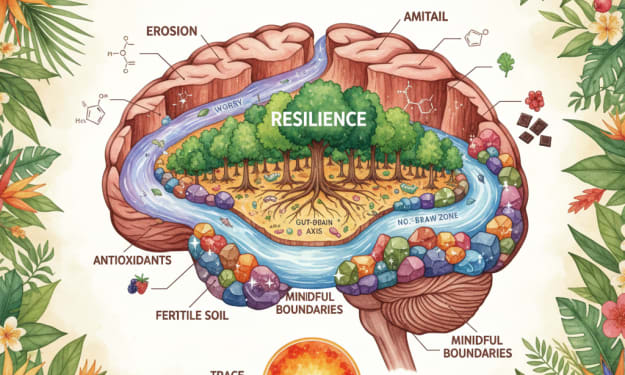
The Grand Canyon of Overthinking
Think about the Grand Canyon. It wasn't formed by one massive event, but by millions of years of water patiently, relentlessly carving through rock. Our overthinking minds can create their own "Grand Canyons" of anxiety. Each repetitive worry, each replayed scenario, each imagined failure, is like a drop of water, slowly eroding our mental energy and sense of peace.
By Being Inquisitiveabout 9 hours ago in Earth
From Loss to Harvest
Today we took down our pigeon pea tree. After the recent freeze, it simply couldn’t hold on. The cold wrapped itself around its branches, and what once stood tall and green slowly surrendered to brittle stems and fading leaves. It’s strange how quickly a shift in weather can change the fate of something that felt so steady. But three weeks before the freeze, I gathered its final harvest. And for that, I am grateful.
By Debbie's Reflection8 days ago in Earth
When Amazon Says You’re a Disappointment
Yesterday, for the first Wednesday in months, I didn’t publish a piece on Vocal. Believe me, I wanted to. I had it all written up and ready to go. I was going to share the news that I had officially become a published author.
By Sandy Gillman4 days ago in Writers


Comments
There are no comments for this story
Be the first to respond and start the conversation.