
Why don't all birds fly?
Birds are often associated with flight but not all birds are capable of flying

Why don't all birds fly?
Birds are often associated with flight but not all birds are capable of flying. While flight is a defining characteristic of most bird species some have evolved in ways that make flying unnecessary or even impossible. This phenomenon is due to a combination of evolutionary adaptations environmental factors and biological limitations. One of the primary reasons some birds do not fly is due to their evolutionary history. Over millions of years certain bird species have adapted to life on the ground where flight is not essential for their survival. These birds have developed other means of mobility such as running or swimming that better suit their needs. Evolutionary pressures such as the absence of natural predators availability of food on the ground or the need for specialized foraging methods have led to the loss of flight in some species. The structure of a bird’s body plays a crucial role in its ability to fly. Flight requires lightweight bones strong wing muscles and aerodynamic feathers. However flightless birds often have heavier denser bones that make them less suited for flight. Their wings are typically smaller relative to their body size reducing their ability to generate enough lift. In contrast they may have strong legs which allow them to run quickly or swim effectively. For example ostriches the largest flightless birds have powerful legs that enable them to run at high speeds to escape predators. Another reason why some birds do not fly is their habitat and lifestyle. Birds that live in environments where flight is not necessary tend to lose this ability over time. For instance birds that inhabit islands with few or no natural predators have no need to fly to escape danger. Instead they conserve energy by staying on the ground. The dodo an extinct flightless bird that lived on the island of Mauritius is a famous example. With no natural predators the dodo gradually lost its ability to fly. However when humans arrived on the island and introduced new predators the dodo was unable to adapt quickly enough and became extinct.
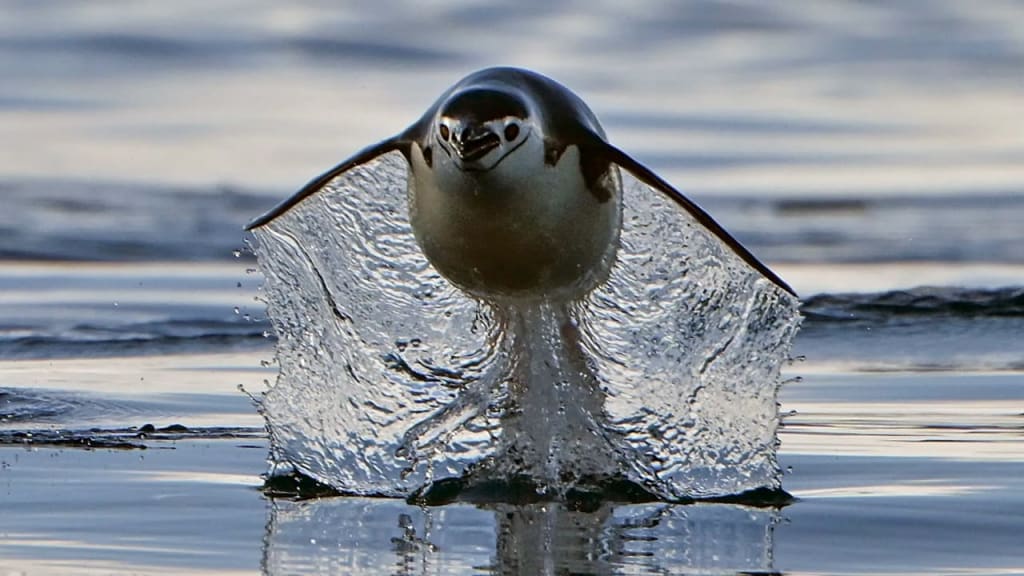
The availability of food also influences whether a bird retains the ability to fly. Birds that rely on food sources found primarily on the ground or in water often evolve to become flightless. Penguins are a well known example of flightless birds that have adapted to an aquatic lifestyle. Instead of flying penguins have evolved strong flipper like wings that allow them to swim with remarkable speed and agility. Their bodies are streamlined for efficient movement through the water making them excellent divers and hunters. Since their food sources such as fish and krill are found in the ocean flight is unnecessary for their survival. Similarly some flightless birds like kiwis have adapted to a nocturnal ground dwelling lifestyle. Kiwis use their long sensitive beaks to forage for insects and worms in the soil. Their small wings are nearly useless for flight but their keen sense of smell and strong legs help them survive in dense forests. Since kiwis are mostly active at night and live in environments where flying is not essential they have lost the ability to fly over time. Another factor contributing to flightlessness in some birds is energy conservation. Flying requires a significant amount of energy and for some birds it is more efficient to remain on the ground or in the water. Large birds such as emus and cassowaries have evolved to use their energy for running rather than flying. Their strong legs help them travel long distances in search of food and escape predators without the need for flight. In such cases natural selection favors birds that expend less energy on flight and instead develop other survival strategies. Human impact has also played a role in the flightlessness of some bird species. Habitat destruction hunting and the introduction of non native species have led to the decline and extinction of many flightless birds. In some cases, human intervention has indirectly influenced birds’ evolutionary paths. Domesticated birds such as chickens and turkeys have been selectively bred for traits like larger body size and meat production reducing their ability to fly. While wild ancestors of these birds could fly short distances domestication has resulted in heavier bodies and weaker wings making flight nearly impossible. Despite being unable to fly many flightless birds have developed remarkable adaptations to survive in their environments. Some have exceptional speed like ostriches which can outrun most predators. Others like penguins have become skilled swimmers allowing them to thrive in harsh conditions. Flightless birds demonstrate the diversity of evolutionary adaptations, proving that flight is not the only way for birds to survive and succeed. Not all birds fly because of evolutionary adaptations environmental influences and biological constraints. Flightless birds have evolved unique traits that allow them to thrive without the need for flight. Factors such as habitat food sources predator presence energy conservation and human influence all play a role in determining whether a bird retains the ability to fly. While flight is a common and remarkable ability in birds the diversity of avian life shows that there are many ways to survive and flourish in the natural world.
About the Creator
Adnan Rasheed
Author & Creator | Writing News , Science Fiction, and Worldwide Update| Digital Product Designer | Sharing life-changing strategies for success.
Keep reading
More stories from Adnan Rasheed and writers in Earth and other communities.
Earth Could Have Billions More People Than We Ever Realized.
Earth Could Have Billions More People Than We Ever Realized. For decades global population estimates have been the foundation of policymaking, infrastructure planning and resource allocation. However a new study suggests that we may have vastly underestimated the world’s rural population by as much as 84 percent in some cases. If true, this revelation could mean that Earth's actual population is billions higher than previously thought. A research team led by environmental engineer Josias Láng Ritter from Aalto University has provided the first concrete evidence that a significant portion of the rural population is missing from global datasets. Their study published in New Scientist highlights a striking discrepancy in population data particularly in less developed rural areas where data collection has historically been inconsistent and inaccurate.
By Adnan Rasheed11 months ago in Earth
Why Fruit Shell Biomass Is Perfect for Charcoal Making: A Property Analysis
When it comes to sustainable charcoal production, not all biomass materials are created equal. Among the various options—from wood chips to agricultural residues—fruit shell biomass (such as walnut shells, coconut shells, peanut shells, and almond shells) stands out as an ideal candidate. Its unique physical and chemical properties not only make the charcoal making process more efficient but also result in high-quality charcoal with versatile applications. In this post, we’ll break down the key properties that make fruit shell biomass a top choice for charcoal production, and touch on how these properties interact with charcoal making equipment to optimize outcomes.
By Bestonpyrolysis5 days ago in Earth
Handful of Sick and Wounded Palestinians Allowed Through Rafah Crossing on First Day
The partial reopening of the Rafah border crossing has allowed a small number of sick and wounded Palestinians to leave Gaza for medical treatment, marking a significant yet limited humanitarian development. While only a handful of individuals were permitted to cross on the first day, the move has sparked cautious optimism among humanitarian organizations, families awaiting medical care, and international observers.
By Aarif Lashari7 days ago in Earth
Our Song
Evening has given way to night. Gently, I settle next to you on the comfortable, old love seat and reach for your hand. You snatch it away, again. It cuts me to the quick, but I hide the pain, understanding that the reaction is but part of your demented state. Since the accident, your presence here in our cozy home has been clouded by a haze I can't see. Nevertheless, I feel the frigidity of your expressions and it serves as an excruciating reminder of the immeasurable distance between us.
By Dana Crandell5 days ago in Fiction



Comments
There are no comments for this story
Be the first to respond and start the conversation.