
How GRCP Supports Organizational Compliance
GRCP Guide

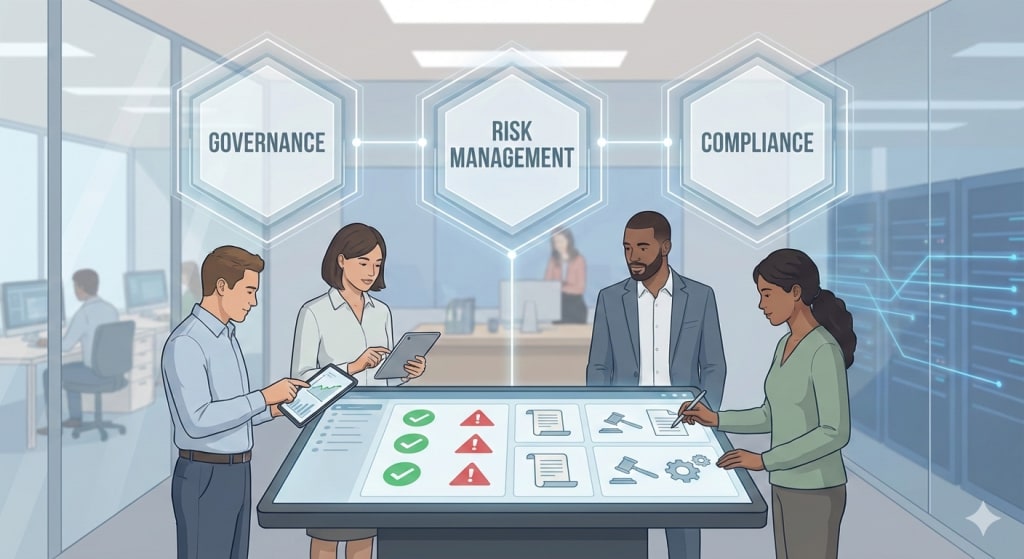
Organizational compliance is no longer a simple checklist activity. It has become a critical responsibility for businesses of all sizes. Companies must follow laws, industry standards, internal rules and ethical expectations while managing daily operations. Failure to comply can lead to legal penalties, financial losses and serious damage to reputation.
In this complex environment, organizations need a reliable system to manage compliance effectively. GRCP plays a vital role by offering a clear and organized approach. It helps businesses stay aligned with regulations while reducing confusion and manual effort. GRCP brings structure, visibility, and consistency to compliance activities, making them easier to manage and sustain over time.
Understanding GRCP in a Business Context
GRCP refers to the integrated management of governance, risk and compliance within an organization. Instead of treating these areas as separate functions, GRCP connects them into a single framework. This integration allows compliance efforts to align with business goals and risk priorities.
From a business perspective, GRCP acts as a central system where policies, risks, controls, and compliance requirements are managed together. It helps leadership understand how compliance impacts overall performance. By using GRCP, organizations move away from reactive compliance and adopt a more proactive and strategic approach.
Importance of Compliance for Modern Organizations
Compliance is essential for building trust and maintaining operational stability. Regulators, customers, investors and partners expect organizations to follow rules and act responsibly. Non compliance can quickly erode confidence and lead to long term consequences.
Modern organizations operate across multiple regions and industries, each with its own regulations. Managing these requirements manually increases the risk of errors. GRCP supports compliance by organizing obligations and ensuring they are addressed consistently. This structured approach allows organizations to meet expectations while focusing on growth and innovation.
GRCP Creates a Structured Compliance Framework
One of the strongest ways the GRCP exam certification supports organizational compliance is by creating a structured framework. This framework defines roles, responsibilities, processes and controls in a clear manner. Everyone understands what needs to be done and who is accountable.
GRCP replaces scattered documents and disconnected systems with a centralized view. Compliance tasks are tracked, deadlines are visible and progress can be measured. This structure reduces gaps and overlaps in compliance efforts. As a result, organizations achieve better control and fewer compliance failures.
Policy Management Through GRCP
Policies are the foundation of compliance. They explain rules, expectations, and acceptable behaviour within the organization. However, managing policies can become difficult when they are outdated or poorly communicated.
GRCP supports effective policy management by centralizing policy creation, approval and distribution. Employees can easily access the latest versions of policies. Updates are tracked and acknowledgments can be recorded. This ensures that policies remain current and understood which is essential for maintaining compliance across all levels of the organization.
Risk Identification & Control Alignment
Compliance risks often arise when controls are weak or misaligned with regulations. GRCP helps organizations identify compliance related risks early and connect them with appropriate controls.
Through GRCP, risks are assessed based on their impact and likelihood. Controls are then mapped to these risks to reduce exposure. This alignment ensures that compliance efforts focus on the most important areas. By managing risks and controls together, organizations strengthen their ability to prevent violations before they occur.
Monitoring Compliance Activities with GRCP
Ongoing monitoring is essential for effective compliance. Rules and processes may exist, but without proper oversight, issues can go unnoticed. GRCP enables continuous monitoring of compliance activities through clear tracking and reporting.
Compliance tasks, assessments and control testing are documented within the GRCP framework. This visibility allows managers to identify delays or weaknesses quickly. Regular monitoring ensures that compliance is not treated as a one time effort but as an ongoing responsibility embedded in daily operations.
GRCP Role in Audit Preparation & Reporting
Audits are a major concern for many organizations. Preparing for audits can be stressful and time consuming, especially when information is scattered. GRCP simplifies audit preparation by keeping records organized and easily accessible.
Audit evidence such as policies, controls, risk assessments and compliance reports are stored in one place. This reduces last minute effort and improves accuracy. GRCP also supports clear reporting, helping organizations demonstrate compliance confidently to auditors and regulators.
Improving Accountability Across the Organization
Accountability is a key element of strong compliance. When responsibilities are unclear, tasks may be ignored or duplicated. GRCP improves accountability by clearly defining ownership for compliance activities.
Each task, control or policy is assigned to a responsible individual or team. Progress can be tracked and performance can be reviewed. This clarity encourages ownership and responsibility at all levels. Employees understand their role in compliance, which leads to better engagement and stronger results.
Supporting Regulatory Change Management
Regulations change frequently, and keeping up with these changes is challenging. Failure to adapt quickly can result in non compliance. GRCP supports regulatory change management by providing a structured way to track and respond to new requirements.
When a regulation changes, GRCP helps assess its impact on policies, risks and controls. Necessary updates can be implemented systematically. This organized response reduces disruption and ensures that compliance remains up to date. Organizations become more agile and better prepared for regulatory shifts.
Long Term Compliance Benefits with GRCP
The benefits of GRCP extend beyond short term compliance. Over time, it helps organizations build a strong compliance culture. Employees become more aware of rules and ethical expectations. Processes become more efficient and reliable.
GRCP also supports long term business resilience. By reducing compliance risks and improving transparency, organizations protect their reputation and financial stability. Strong compliance practices attract investors and partners who value responsible operations. GRCP becomes a strategic asset rather than just a compliance tool.
Conclusion
The GRCP exam supports organizational compliance by providing structure, visibility and integration across governance, risk and compliance activities. It helps organizations manage policies, identify risks, monitor controls and respond to regulatory changes with confidence.
In an increasingly complex regulatory environment, relying on manual or disconnected systems is no longer enough. GRCP enables organizations to move from reactive compliance to a proactive and sustainable approach. By adopting GRCP, businesses strengthen accountability, reduce risk and build trust. Ultimately, GRCP plays a crucial role in supporting long term compliance and organizational success.
About the Creator
Snow Flake
I am a blooger. I will share good information about these topics like health, travel, gaming, technology & more.
Keep reading
More stories from Snow Flake and writers in Education and other communities.
Why Word Puzzle Games Good for Brain Memory
The human brain is one of the most complex organs in the body. It requires constant stimulation and engagement to maintain optimal performance throughout our lives. Word puzzle games have emerged as one of the most effective and enjoyable ways to challenge our mental faculties. These games are not merely entertainment & represent a scientifically backed approach to cognitive wellness and memory enhancement. Understanding the connection between word puzzles and brain health can transform how we approach our daily mental exercises.
By Snow Flake21 days ago in Gamers
Effective App Site Design: Tips & Best Practices
In today's digital age, an engaging and effective app site design is crucial for capturing and retaining user interest. The right design not only showcases your app but also enhances user experience, making it crucial for converting casual visitors into loyal users. This article explores various aspects of app site design, from UI design ideas to responsive layouts, and provides actionable tips to help your app stand out.
By nandbox support3 days ago in Education
Smart Steps Today for a Comfortable Tomorrow
Planning for retirement might feel overwhelming, but it does not have to be. A little preparation now can make your future feel far less uncertain. The most important thing is to start thinking ahead and taking action while you still have time. Key retirement planning tips for a secure future are easier to follow than many people believe. With steady decisions and a clear goal, you can build a future that is both safe and fulfilling.
By Michael Petruska4 days ago in Education
Writing About Writing: The Rainbow Trap
The good thing about living in modern times is that LGBTQ representation in media is increasing. Not just in niche and Independant media, either, but also in mainstream media. Books, movies, TV shows, comics... they're finally catching on that LGBTQ+ people form a significant part of their audience, and deserve to see themselves on screen and in fiction, not just as victims in documentaries and true crime shows.
By Natasja Rose5 days ago in Writers



Comments