
Understanding the Different Types of Machine Learning Algorithms
Machine Learning Algorithms

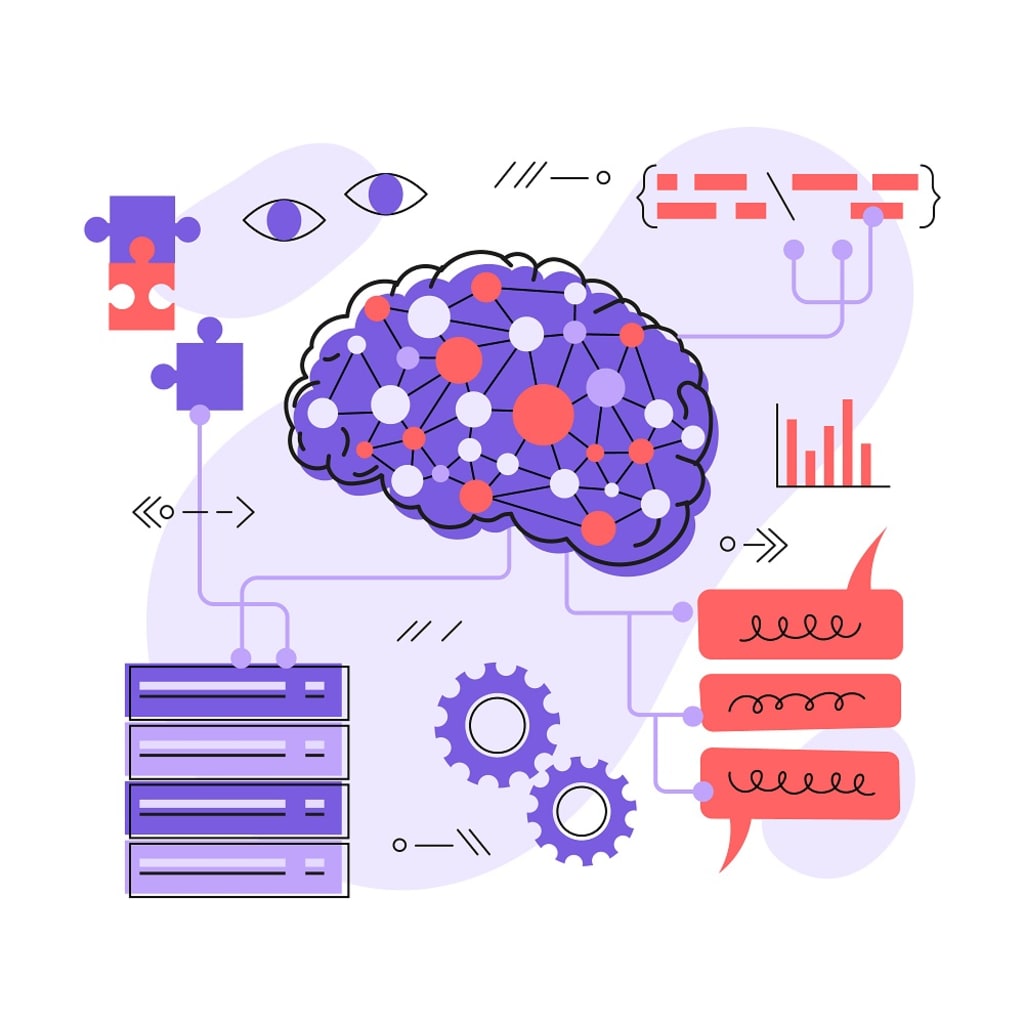
Machine Learning is an advanced technology that enables machines to learn and improve from experience without explicit programming. Machine Learning Algorithms are the heart of Machine Learning that makes it possible to train machines to recognize patterns, classify data, and make decisions. In this article, we will discuss the different types of Machine Learning Algorithms and their applications in real-life scenarios.
Supervised Learning Algorithms
Supervised Learning is a Machine Learning technique where the model learns from labeled data. In other words, the algorithm is trained using a set of input and output data pairs, and the goal is to predict the output for new input data. There are two types of Supervised Learning Algorithms:
Classification Algorithms
Classification algorithms are used when the output variable is categorical. They are designed to identify the category of the input data. Examples of classification algorithms are Decision Trees, Naive Bayes, Random Forest, and Support Vector Machines.
Regression Algorithms
Regression algorithms are used when the output variable is continuous. They are designed to predict the value of the output variable based on the input data. Examples of regression algorithms are Linear Regression, Polynomial Regression, and Logistic Regression.
Unsupervised Learning Algorithms
Unsupervised Learning is a Machine Learning technique where the model learns from unlabeled data. In other words, the algorithm is trained on a dataset without any labels or annotations. There are two types of Unsupervised Learning Algorithms:
Clustering Algorithms
Clustering algorithms are used to group similar data points together. They are designed to identify the underlying structure of the data. Examples of clustering algorithms are K-Means, Hierarchical Clustering, and DBSCAN.
Dimensionality Reduction Algorithms
Dimensionality Reduction algorithms are used to reduce the number of features in a dataset. They are designed to identify the most important features that contribute to the output variable. Examples of dimensionality reduction algorithms are Principal Component Analysis (PCA), Singular Value Decomposition (SVD), and t-SNE.
Semi-Supervised Learning Algorithms
Semi-Supervised Learning is a Machine Learning technique that combines labeled and unlabeled data to improve the performance of the model. The goal is to leverage the unlabeled data to learn a better representation of the data distribution. Semi-Supervised Learning algorithms have several advantages over supervised and unsupervised learning, including better performance and reduced data labeling costs.
Semi-Supervised Learning algorithms can be applied in various fields, including computer vision, natural language processing, and speech recognition.
Deep Learning Algorithms
Deep Learning is a subset of Machine Learning that uses neural networks to learn from data. Deep Learning algorithms are designed to learn hierarchical representations of the input data, which can be used for classification, regression, and other tasks. There are several types of Deep Learning algorithms, including:
Neural Networks
Neural Networks are a class of Deep Learning algorithms that are inspired by the structure of the human brain. They consist of layers of interconnected nodes that process and transform the input data. Examples of neural networks are Feedforward Neural Networks, Convolutional Neural Networks, and Recurrent Neural Networks.
Convolutional Neural Networks
Convolutional Neural Networks are a type of neural network that is specialized for image processing. They use convolutional layers to extract features from the input images, and pooling layers to reduce the dimensionality of the features. Examples of applications of Convolutional Neural Networks are image classification, object detection, and segmentation.
Recurrent Neural Networks
Recurrent Neural Networks are a type of neural network that is specialized for sequential data processing. They use recurrent layers to maintain a memory of the previous inputs and produce output predictions. Examples of applications of Recurrent Neural Networks are speech recognition, language modeling, and machine translation.
Deep Learning algorithms have revolutionized several fields, including computer vision, natural language processing, and speech recognition.
Conclusion
Machine Learning Algorithms are an essential part of Machine Learning that enables machines to learn from data and improve over time. In this article, we discussed the different types of Machine Learning Algorithms, including Supervised Learning, Unsupervised Learning, Reinforcement Learning, Semi-Supervised Learning, and Deep Learning. Each type of algorithm has its strengths and weaknesses, and the choice of algorithm depends on the specific problem and dataset.
Machine Learning Algorithms have a wide range of applications in various fields, including robotics, game playing, recommendation systems, computer vision, natural language processing, and speech recognition.
About the Creator
Rehana Atar
SEO Expert and content writer
Keep reading
More stories from Rehana Atar and writers in Education and other communities.
Image and Video Recognition with Machine Learning
Machine learning has revolutionized the way computers process and analyze visual information, allowing for image and video recognition to become more accurate and efficient. In this article, we will explore the various techniques and applications of image and video recognition with machine learning.
By Rehana Atar3 years ago in Education
Why Theatre Still Matters in a Digital World: The Enduring Magic of Live Performance
The world today runs on WiFi and touchscreens. Movies stream in seconds. Social media updates never stop. News travels fast and fades even faster. In the middle of all this speed, the stage still stands. The question of why theatre still matters in a digital world deserves real attention.
By Therese Marie Thompsona day ago in Education
Why the Flexible Packaging Market Is Transforming Modern Product Delivery?
Packaging plays a critical role in protecting products, extending shelf life, and influencing purchasing decisions. As industries strive for efficiency, sustainability, and convenience, the flexible packaging market has gained significant importance. From food and beverages to pharmaceuticals and personal care products, flexible packaging has become an essential component of modern supply chains.
By Akshay Kumar6 days ago in Education


Comments
There are no comments for this story
Be the first to respond and start the conversation.