
Should’ve, Could’ve, Would’ve:
Lessons from the Cage
Should’ve, Could’ve, Would’ve: Lessons from the Cage
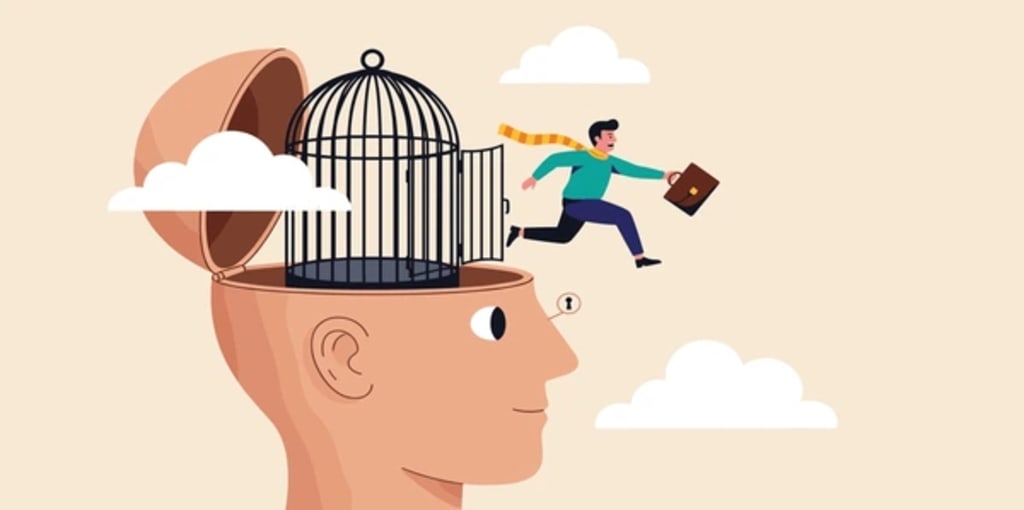
There’s a stage in life I call the “should’ve, could’ve, would’ve” stage. It’s not a place you visit once—it’s a recurring room in the mind, a cage of hindsight and reflection. I’ve spent years pacing that cage, looking back at choices I made and the ones I didn’t. It’s the mental space where regret meets realization, where you ask yourself: “What if I had done things differently?” It’s the place where I should have been thinking, “I should, I could, I would.” But I wasn’t.
Instead, during the years I worked different jobs—some hard, some humbling—my mind wasn’t focused on growth or ambition. It wasn’t tuned into the rhythm of responsibility or the beat of opportunity. My thoughts were elsewhere. They were wrapped around a woman, tangled in fantasies, drifting into distractions. I wasn’t thinking about building a future or carving out a path. I was lost in longing, in daydreams, in everything but the present moment.
And that’s the thing about the “should’ve, could’ve, would’ve” stage—it sneaks up on you. You don’t realize you’re in it until you’re older, until you’ve lived enough life to look back and see the patterns. It took me years—grown-up years—to understand that I had been living in that stage all along. I had been circling the same thoughts, repeating the same mistakes, and postponing the same decisions.
When I was younger, I thought time was endless. I thought I could always catch up, always make it right later. But later has a way of arriving quietly, without fanfare, and suddenly you’re standing in the middle of your life wondering where all the time went. You start to see the jobs you took not as stepping stones, but as missed chances. You remember the conversations you avoided, the risks you didn’t take, the dreams you shelved. And you ask yourself, “Why didn’t I think differently back then?”
The truth is, I wasn’t ready. I didn’t have the tools, the mindset, or the maturity to see beyond the moment. I was chasing feelings, not futures. I was reacting, not planning. And while I don’t blame myself entirely—because we all grow at our own pace—I do recognize that I stayed in that cage longer than I needed to. I let the “should’ve, could’ve, would’ve” stage define too many chapters of my life.
But here’s what I’ve learned: regret isn’t useless. It’s a teacher. It’s a mirror that shows you who you were so you can decide who you want to be. It’s not about beating yourself up—it’s about waking up. And once I started to understand that, I began to shift. I started asking better questions. Instead of “What if?” I asked “What now?” Instead of dwelling on missed chances, I looked for new ones.
I began to see that every job I had, even the ones I didn’t love, taught me something. They gave me skills, stories, and strength. They showed me how to work with people, how to handle pressure, how to keep going when things got tough. And even though my mind was often elsewhere, those experiences were shaping me. They were preparing me for the day I’d finally step out of the cage.
And I did step out. Slowly, awkwardly, but surely. I started to live with intention. I began to focus on what I could do, not just what I wished I had done. I made peace with the past and started building a future. I stopped chasing distractions and started chasing purpose. And while I still visit that cage sometimes—because old habits die hard—I don’t live there anymore.
Now, when I look back, I don’t just see regret. I see growth. I see a journey that was messy but meaningful. I see a man who learned the hard way but learned nonetheless. And I remind myself that it’s never too late to think differently, to act boldly, to choose wisely.
So if you find yourself in that stage—in that cage—know this: you’re not alone. We all go there. But you don’t have to stay. You can turn “should’ve, could’ve, would’ve” into “I did, I tried, I became.” You can rewrite your story, one decision at a time. And maybe, just maybe, you’ll look back one day and smile—not because it was perfect, but because it was yours..
About the Creator
Ceaser Greer Jr
I didn’t choose the fire. It found me—through heartbreak, addiction, rejection, and the weight of generational curses. But I learned to walk through it, not just to survive, but to understand. Every scar became a sentence.
.
Keep reading
More stories from Ceaser Greer Jr and writers in Families and other communities.
Why the devil uses fear to keep you out of God's purpose for your life.
Chapter Title: Fear Tried to Rewrite Me, But God Had the Final Word Fear is the devil’s favorite tool. Not just to scare you—but to shape you. To twist your identity, block your destiny, and keep you from the purpose God placed inside you.
By Ceaser Greer Jr4 months ago in Families
Guiding Families Toward Emotional Strength with Professor Carlton Jama Adams
Parenting in the modern era can feel overwhelming. Families are raising children amid constant digital engagement, heightened academic pressure, and growing conversations around emotional health and identity. These influences shape daily life and often leave parents questioning whether they are doing enough or doing it right. In the midst of this uncertainty, the family centered perspective shared by Professor Carlton Jama Adams offers clarity. His approach emphasizes emotional awareness, steady structure, and respectful guidance as the foundation for raising confident and resilient children.
By Carlton Adams5 days ago in Families
~ Fired ~
— Ai Intrusion ~ Are you Next ~ Is Ai Evolution after your job? — Few workplaces haven't been affected. Ai is in supermarkets, at doctors' offices, and even monitoring farms. I just can't think of anything this machine is not getting into, can you? For instance: Education ~ Law and Tech jobs will one day have a major influence or be taken over by these inanimate machines, with accuracy and vigor. From mechanics' diagnoses to a wide variety of everyday jobs, including fast food workers, with this input having the ability to cut their unnecessary work hours. I'm certain all of us have been touched by this with our short stories and colorful headings, have you? Even comments are very questionable 'Non-Robot' insertions.
By Jay Kantor7 days ago in Journal




Comments
There are no comments for this story
Be the first to respond and start the conversation.