extended family
All about how to stay connected, strengthen ties and talk politics with your big, happy extended family.
Family Struggles
Growing up in a household filled with constant tension, I often found myself grappling with family struggles that deeply affected my emotional well-being. My parents’ arguments, whether over trivial matters or deeper issues, created an environment where peace felt out of reach. As a child, I didn’t understand why love and conflict were so closely tied and why tranquility was always interrupted by discord.
By Gowhar ali Khanabout 9 hours ago in Families
Wait, is it okay not to go home for the Holidays?
Kids these days are choosing to stay home rather than see their parents or their other family members for the holidays. I found it a bit absurd and tried to explain that it is important to bond with family, because you don’t know when you'll see them again, until someone called me out for not having visited my family in over 20 years.
By stephanie borgesabout 15 hours ago in Families
How Positive Discipline Transformed My Child’s Emotional World. AI-Generated.
Parenting is often described as a journey of love, patience, and learning. For me, however, it felt more like a constant emotional test. I remember days filled with tension, misunderstandings, and moments where I questioned whether I was truly helping my child grow emotionally—or unintentionally causing harm. Like many parents, I once believed that discipline meant control. I relied on firm rules, consequences, and raised voices when things went wrong. My intention was never to hurt, but to teach. Yet the more I tried to “correct” my child’s behavior, the more distant and reactive they became. Something was clearly missing. That missing piece turned out to be positive discipline. Understanding Behavior as Communication One of the most important lessons I learned is that children don’t misbehave without reason. Behavior is often a form of communication, especially when children lack the language to express complex emotions. Instead of asking, “How do I stop this behavior?” I began asking, “What is my child trying to tell me?” This shift completely changed my parenting approach. I started observing patterns rather than reacting emotionally. I noticed that outbursts often followed moments of overwhelm, tiredness, or frustration. My child wasn’t being difficult—they were struggling. Replacing Punishment with Connection Positive discipline does not mean the absence of rules. It means enforcing boundaries with empathy instead of fear. Here are some changes I implemented: I acknowledged emotions before correcting behavior I spoke calmly, even during emotional moments I explained expectations instead of assuming understanding I focused on problem-solving rather than blame For example, instead of saying, “Stop crying right now,” I learned to say, “I see that you’re upset. Let’s talk about what happened.” This small change had a powerful effect. My child felt seen instead of judged. The Impact on Mental Health Before positive discipline, our home environment felt tense. Emotional reactions escalated quickly, and both of us carried stress long after conflicts ended. Over time, I noticed signs of emotional strain—not just in my child, but in myself. Positive discipline created emotional safety. When children feel safe, their nervous systems can relax. This allowed my child to: express emotions more clearly calm down faster after frustration build confidence in handling challenges For me, it reduced anxiety and parental guilt. I stopped feeling like every mistake was a failure and started viewing them as learning opportunities. Teaching Emotional Regulation, Not Fear Traditional discipline often relies on fear-based compliance. Positive discipline focuses on skill-building. Through everyday interactions, my child learned: how to name emotions how to pause before reacting how to repair mistakes through communication Instead of avoiding punishment, my child began developing genuine self-awareness. This was a major emotional breakthrough. Strengthening the Parent–Child Bond One of the most unexpected outcomes was how much our relationship improved. Trust replaced tension. Conversations became easier. Even difficult moments felt manageable because they no longer threatened our emotional connection. Positive discipline taught me that authority and compassion can coexist. Respect doesn’t come from control—it grows from consistency, empathy, and presence. What I Wish I Had Known Earlier If I could speak to my past self, I would say this: Parenting is not about perfection Children need guidance, not domination Emotional intelligence is just as important as obedience Positive discipline didn’t just change my child’s behavior—it changed how we relate to each other on a deeper emotional level. Final Thoughts for Parents Every child deserves to feel understood. Every parent deserves tools that support both discipline and emotional well-being. Positive discipline offered us a path where growth replaced guilt, and connection replaced conflict. The transformation wasn’t instant, but it was real—and it continues to shape our emotional world every day.
By Zia Djamel2 days ago in Families
What Fathers Uniquely Provide
The Error of Treating Parenting Roles as Functionally Identical Modern parenting theory often begins with the assumption that mothers and fathers are largely interchangeable, differing only in style or temperament. From this view, any deficits in one parent can be compensated for by the other through increased emotional effort, sensitivity, or presence. Parenting becomes a question of intention and quantity rather than function and role. This assumption is appealing because it aligns with cultural preferences for symmetry and fairness, but it collapses under closer examination of developmental outcomes.
By Peter Thwing - Host of the FST Podcast3 days ago in Families
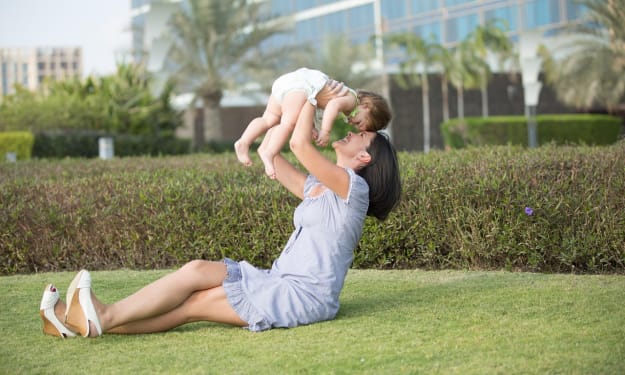
5 Concepts of Consent To Teach Your Toddlers
My name is Mom - and I am a sexual assault survivor. My first experience with sexual assault happened when I was young enough to have trouble remembering exactly what happened. I remember being under the blankets. I remember the hand. I remember trying to wriggle free, only for that hand to squeeze my leg so hard that it felt like it would break.
By Hope Martin5 days ago in Families
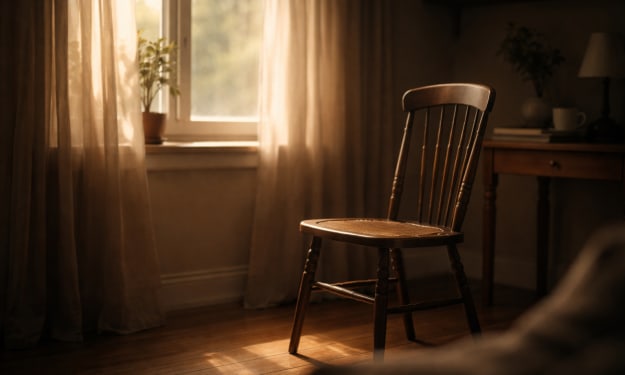
The Chair That Stayed Empty
story There was always one chair in the house that no one sat in. It was near the window, at a small slant, and it caught the afternoon light. The cushion had sunk in the middle since it had been used for so long. Ammi would straighten it every night, even though no one sat there anymore.
By abualyaanart12 days ago in Families
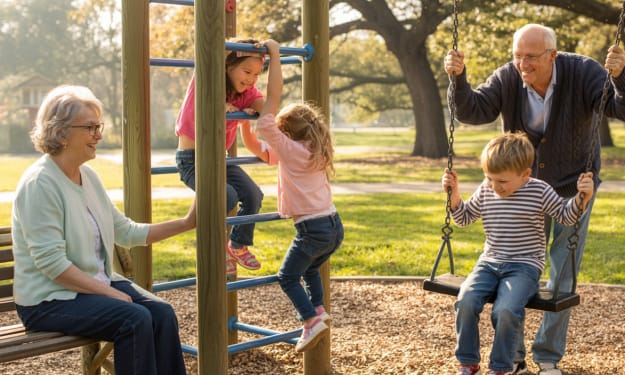
When We Lost Our Grandchildren
I'll never forget the day Emma stopped answering our calls. My wife Florence and I had just returned from our usual Tuesday morning coffee when I noticed three missed calls from our son, James. "Dad, I need to talk to you," his voicemail said. His voice sounded hollow, defeated. "Emma and I are done. She's asked me to move out."
By Jess Knauf16 days ago in Families