divorced
Sometimes a good divorce is better than a bad marriage.
The Last Day of 2025. Content Warning.
2025 was an objectively hard year for me. I would be lying if I said that I wasn't extremely thrilled to be done with whatever this last year has been! It is fitting that I want to use Wednesdays to write wacky things... and the end of 2025 is on a Wednesday - as it has been one wacky year!
By The Schizophrenic Mom29 days ago in Families
The Space Between Noticing
The city woke up loudly, but Jonah always noticed the silence first. It lived in the early hours, tucked between the hum of traffic and the clatter of metal gates opening for business. It lingered in the spaces most people rushed through without a second thought. Jonah didn’t rush. He never had.
By Yasir khanabout a month ago in Families
How Childhood Attachment Shapes Adult Heartbreak
I was twenty-eight years old, sitting in my therapist's office for the fifth time that month, crying over yet another failed relationship. This time it was Marcus—kind, stable, emotionally available Marcus—who I'd pushed away for reasons I couldn't explain. "Tell me about your parents," my therapist said gently, sliding the tissue box closer. I rolled my eyes. "Really? We're doing the whole 'blame the parents' thing?" She smiled softly. "I'm not asking you to blame anyone. I'm asking you to understand yourself." What followed was the most uncomfortable, enlightening conversation of my life. Because as I started talking about my childhood, patterns emerged that I'd never seen before. Patterns that explained every heartbreak, every self-sabotage, every time I'd chosen someone emotionally unavailable or run from someone who truly cared. My therapist was right. The blueprint for heartbreak had been drawn long before I ever fell in love. The First Language We Learn Attachment theory sounds complicated, but it's actually quite simple: the way our caregivers respond to us as children teaches us what to expect from relationships as adults. It's our first lesson in love, trust, and worthiness. My mother loved me—I never doubted that. But her love came with conditions. It appeared when I was good, obedient, successful. It vanished when I was needy, emotional, or imperfect. I learned early that love was something I had to earn, not something I inherently deserved. My father? He was there but absent, physically present but emotionally distant. He worked late, hid behind newspapers, and responded to my excitement or sadness with the same uncomfortable silence. I learned that expressing needs pushed people away. So I stopped expressing them. I didn't know it then, but I was learning a language—the language of anxious attachment. And I would speak it fluently in every romantic relationship I'd ever have. The Dance We Can't Stop Repeating My first serious relationship was with Jake. He was charming, unpredictable, and emotionally unavailable. Our relationship was a rollercoaster—intensely passionate one week, ice-cold the next. I never knew where I stood, and that uncertainty drove me crazy. But here's the twisted part: it also felt familiar. The push and pull, the constant need to prove myself, the anxiety of wondering if today would be a good day or a bad day—it all echoed my childhood. I was trying to earn Jake's consistent love the same way I'd tried to earn my mother's approval. When he'd pull away, I'd chase harder. When he'd show affection, I'd melt with relief. I was addicted to the cycle because somewhere deep inside, I believed this was what love looked like. After Jake came David, then Ryan, then Christopher. Different faces, same pattern. I was attracted to men who made me work for their attention, who kept me guessing, who made me feel like I had to be perfect to be loved. The Good Guy Problem Then I met Marcus. Sweet, consistent, emotionally intelligent Marcus. He called when he said he would. He communicated clearly. He didn't play games. He made me feel safe. And I couldn't stand it. Within three months, I was picking fights over nothing. I felt suffocated by his reliability. I started noticing flaws that weren't really flaws—he texted too much, he was too eager, his kindness felt boring. The anxiety I'd felt with the others was missing, and without it, I didn't recognize the feeling as love. I broke up with him on a Tuesday night, citing some vague excuse about "not being ready." He took it gracefully, which only made me feel worse. That's when I ended up in therapy, finally asking the question I should have asked years earlier: Why do I keep destroying the good things in my life? Unpacking the Invisible Suitcase My therapist explained that I had an anxious attachment style, likely formed by my inconsistent childhood experiences with love and attention. Children with anxious attachment grow into adults who:
By Ameer Moaviaabout a month ago in Families
Binational Couples
Being in a binational couple is often described as exciting, enriching, and deeply transformative. And it is. But behind the romantic idea of two cultures meeting, there is a daily reality that few people truly talk about: communicating, loving, and building a life together when you do not share the same language, the same cultural reflexes, or the same emotional codes. In binational couples, love is rarely the problem. Communication is. Not because people do not want to understand each other, but because language and culture shape the way we think, argue, joke, express emotions, and even show affection. What feels obvious to one partner can feel confusing, cold, or excessive to the other. The good news is that none of this is a dead end. With the right mindset, binational couples can become not only stable, but deeply fulfilled, because they learn a form of emotional intelligence that many couples never have to develop.
By Bubble Chill Media about a month ago in Families
Three Pizzerias Worth Traveling For (and How to Order Without Looking Lost)
I’m not interested in declaring “the best pizza in the world.” Italy doesn’t really think that way. Italian’s Substack is a reader-supported publication. To receive new posts and support my work, consider becoming a free or paid subscriber.
By Andrea Zanon2 months ago in Families
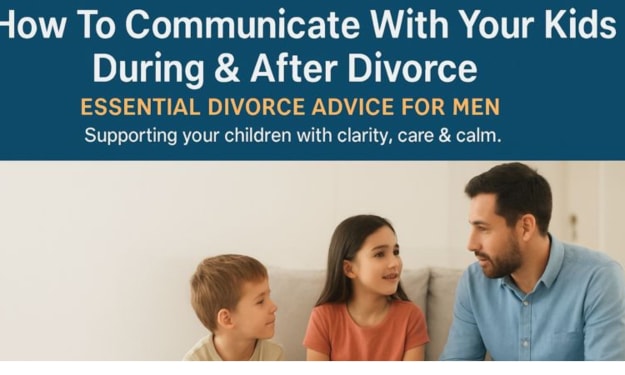
How To Communicate With Your Kids During And After Divorce: Divorce Advice For Men
Divorce is not kind to dads, it is like being pushed over when you already have the burden of all the weight of everything falling on your head. You may be in the middle of making family vacation arrangements one minute. The next minute, you are gawking at court documents, whether your children are going to continue to look at you as their hero or if they will merely see you as another man who comes on weekends. You are already heavily burnt, and you do not even need the heart-wrenching fear of them revoking it. This Divorce Advice For Men is simple talk of men who have been in the fray, friends, clients that I have heard, and real life stories that struck a chord. No fluff, just plain, no-fuss, battle-tested methods of continuing to talk to your children to make them feel that you are still their rock no matter how untidy things may get.
By Augusto Law2 months ago in Families