
When Freedom Learns Responsibility: A Father’s Journey from Single Life to Sacred Duty.
Is a life with no ties really the fullest kind of life.

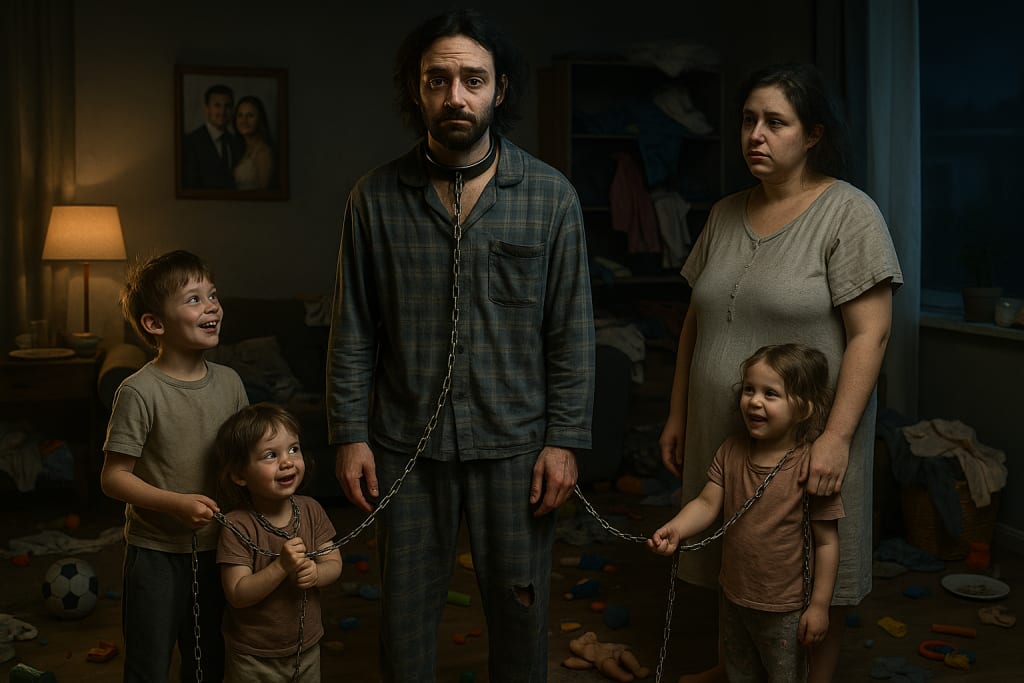
When Freedom Learns Responsibility: A Father’s Journey from Single Life to Sacred Duty
The single life often feels like an open road with no traffic lights. You choose your destination, your speed, and even when to stop and start. Your time is yours, your money is yours, and your thoughts belong entirely to you. You can change your plans in an instant, sleep whenever you like, and travel whenever you wish, without anyone asking why you are late or where you are going. It feels like freedom in its purest form. But is freedom simply the ability to do whatever you want, or is it understanding what truly matters?
Is a life without constraints really the highest form of living?
When marriage enters the picture, the map changes. Suddenly, “I” becomes “we,” and “my plan” becomes “our plan.” Decisions are no longer made inside your head alone; they are shared between you and your partner. Love stops being just a feeling and becomes a choice — showing up when you are tired, listening when silence feels easier, and giving when your instinct is to hold back. Marriage does not take away your freedom; it gives that freedom direction. But do you truly lose anything when you begin to embrace another person so completely?
Then comes the news of a first pregnancy, and the world quietly shifts once again. The idea of a child turns responsibility from a passing thought into a tangible reality. You start thinking about nappies, hospital bills, future education, and suddenly “later” has a deadline. For the mother, her body changes; for the father, his mind changes. Here, his role becomes more than financial. His duty is to stand beside her fears, not behind them. Kind words, small acts of care, and a calm presence in moments of anxiety are not luxuries — they are necessities.
If love does not appear in times of fear and pain, when will it ever appear?
When the baby finally arrives, life divides into “before” and “after.” Nights become fragments of broken sleep, and days blur into a mixture of work, tears, bottles, and an endless list of tasks. Home feels different, your routine is different, and even your reflection seems unfamiliar. Your old life — midnight coffee with friends, spontaneous outings, long gaming sessions, or quiet evenings alone — feels distant, almost unreal. Yet, in the midst of the chaos, there is a tiny face looking at you as if you are their entire world. A child is both a burden and a blessing, a weight and a wing.
How can something so overwhelming also feel like the most meaningful thing you have ever done?
The first child often brings the greatest shock. Neither parent has done this before; everyone learns as they go. The mother may feel pain, fear, or even sadness after giving birth, especially when the weight of responsibility settles heavily on her shoulders. This is where the father’s role becomes vital. His voice becomes the lifeline she holds when she feels she is falling apart. Encouraging her, reminding her that she is enough, sharing nightly duties, changing nappies, helping with feeding, or simply holding the baby while she rests — these are not acts of helping; they are essential parts of being a father.
If a father is not a refuge for his family’s hearts, then what is he?
Of course, the story is not made of light alone. Responsibility carries its shadows. There are financial pressures, less personal time, more arguments, and deeper exhaustion. Sometimes a man longs for the simplicity of his old life and wonders what happened to the freer version of himself. Yet growth is rarely comfortable. A seed must break before it becomes a tree. A man’s ego must soften so his heart can expand. Marriage and fatherhood do not destroy the man he once was; they guide him toward a deeper, more complete version. “The free man enjoys his life; the responsible man builds his.”
Can you truly grow if nothing in your life demands more from you?
Then come the moments that cut even deeper — the birth of a child with a physical deformity or congenital condition. In those moments, the room feels heavier. A storm of silent questions fills the minds of both parents. Why us? Did we do something wrong? What will people think? What kind of future awaits this child? The pain is real, the shock is real, and so is the fear. In such moments, the family needs more than medical explanations; they need emotional and spiritual strength. They remind themselves, “Every life is a gift, even when the wrapping is not what we expected.”
Is a child’s worth measured by the perfection of their body, or by the depth of our love?
In these difficult circumstances, the father must carry more than bags and bills — he must carry hope. The mother may feel guilt, shame, or deep sorrow. She may blame herself or feel that life has treated her unfairly. The father’s actions can either heal or deepen the wound. He can remind her that they are a team, that their child is not a punishment but a test of love and patience, and that their worth as parents is not in raising a “perfect” child, but in offering perfect effort and sincere care. A strong spiritual foundation — a belief in a wise Creator and the trust that everything has purpose — can give the heart a place to rest when reason fails.
If we reject life’s challenges, how will we ever discover the strength we never knew we possessed?
The danger lies in allowing the child’s condition to become a silent wall within the home. Some parents, in their pain, withdraw emotionally. They look at their child with sadness instead of affection, with doubt instead of acceptance. This becomes a hidden wound for both parent and child. Love must be louder than fear. A child should feel wanted, not merely tolerated. Psychological support, honest conversations, community involvement, and at times professional counselling help build a healthier way forward. The goal is not to erase the pain, but to prevent it from becoming a permanent scar.
Is it fair to let one chapter define the value of the entire book?
Ultimately, the journey from single life to marriage and parenthood is not a straight path; it is a series of twists, pauses, surprises, and lessons. You lose some things — easy freedom, quiet nights, and unplanned days — but you gain others: a sense of purpose, a small hand holding your finger, a partner walking beside you, and a reason to become a better man. Responsibility is not a prison; it is the forge where character is shaped. Single life teaches you who you are; family life teaches you who you can become for others.
So is the real question “What have I lost?” or “What am I becoming?”
About the Creator
Sayed Zewayed
writer with a background in engineering. I specialize in creating insightful, practical content on tools. With over 15 years of hands-on experience in construction and a growing passion for online, I blend technical accuracy with a smooth.
Keep reading
More stories from Sayed Zewayed and writers in Families and other communities.
Silent Exit: When They Stay in the Marriage But Leave the Love.
Not all relationships end with a scream. Some end in silence, slow, suffocating, calculated silence. Sometimes, the person you're with doesn't hate you. They don’t even dislike you. They just don’t love you… and perhaps never truly did.
By Sayed Zewayed9 months ago in Families


Comments
There are no comments for this story
Be the first to respond and start the conversation.