
A Hidden World Beneath the Salt: The Remarkable Discovery of a New Roundworm in Utah’s Great Salt Lake
Utah’s Great Salt Lake is one of the harshest environments on Earth. Its waters are several times saltier than the ocean, creating conditions that would kill most living creatures almost instantly.

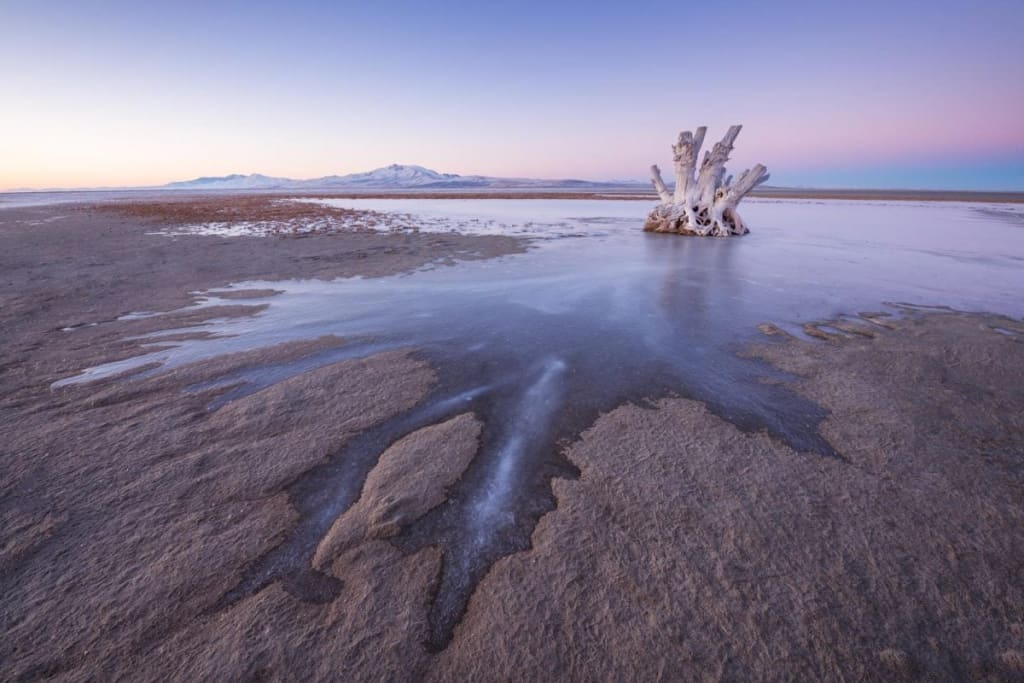
Utah’s Great Salt Lake is one of the harshest environments on Earth. Its waters are several times saltier than the ocean, creating conditions that would kill most living creatures almost instantly. For years, scientists believed only a handful of hardy species—like brine shrimp and brine flies—could survive in its open waters. But in a groundbreaking find announced in early 2026, researchers uncovered something extraordinary: a tiny roundworm, a species entirely new to science, thriving in this extreme saltwater world.
This microscopic marvel, officially named Diplolaimelloides woaabi, marks a major expansion of what we know about life in one of America’s most iconic—and threatened—natural wonders.8bb5e5,58c983
Why the Great Salt Lake Is So Extreme
The Great Salt Lake isn’t just salty—it’s hypersaline. Depending on water levels, its salinity can reach up to 28%, far exceeding the ocean’s average of about 3.5%. This high salt concentration pulls water out of cells through osmosis, dehydrating and destroying most organisms. Yet, beneath the surface, unique structures called microbialites—ancient, reef-like formations built by layers of microbes—provide sheltered pockets where life can persist.
These microbialites, often compared to underwater “coral reefs” of the lake, host thin layers of algae and bacteria. It’s in these fragile mats that the new roundworm makes its home.f11636,fa4c40
The Discovery: From Kayak Expeditions to Lab Breakthroughs
The story began in 2022 when researchers from the University of Utah, led by biologist Michael Werner and then-postdoctoral researcher Julie Jung (now at Weber State University), ventured out onto the lake by kayak and bicycle. They collected samples from the microbialites and were stunned to find tiny worms wriggling in the material.
At first, they suspected these were nematodes—commonly known as roundworms—but confirming a new species took years of careful genetic analysis, morphological study, and taxonomic work. By February 2025, their findings were published in the Journal of Nematology, officially describing Diplolaimelloides woaabi as a unique species.
Under the microscope, these worms are almost invisible to the naked eye, measuring less than a millimeter long. They feed on bacteria in the top layers of the algal mats, staying mostly within the first few centimeters where oxygen and food are plentiful.8c36d0,463993
This discovery makes nematodes only the third group of multicellular animals (metazoans) known to live in the lake’s open waters, joining the famous brine shrimp (the backbone of a massive migratory bird food chain) and swarms of brine flies.022811,db4afb
Even more intriguing? Genetic evidence hints at a possible second undescribed nematode species in the lake, suggesting there’s still much to uncover.
A Name That Honors Indigenous Heritage
The species name “woaabi” isn’t random. Researchers collaborated with the Northwestern Band of the Shoshone Nation, whose ancestral lands encompass the Great Salt Lake. Tribal elders recommended “Wo’aabi,” a Shoshone word meaning “worm,” as a way to recognize Indigenous knowledge and connection to the land. This respectful naming highlights how modern science can blend with cultural heritage.
How Did These Worms End Up in an Inland Lake?
Most close relatives of Diplolaimelloides live in coastal or marine environments, adapted to brackish or salty waters near oceans. So how did this worm end up in a landlocked lake hundreds of miles from the sea?
Two fascinating theories have emerged.
The leading hypothesis comes from paleontologist Byron Adams: millions of years ago, during the Cretaceous period (around 100 million years back), a vast inland sea called the Western Interior Seaway split North America in two. Utah sat along its western shore, and coastal nematodes could have been carried inland by rivers. As the continents shifted and the sea retreated, some populations might have been trapped, evolving in place through massive environmental changes.c2c3c5,f95d6b
Complicating the story, the region was once covered by massive freshwater Lake Bonneville (about 20,000–30,000 years ago), which would have dramatically lowered salinity. If the worms are ancient residents, they’ve survived extreme swings in salt levels multiple times.
The alternative idea? Migratory birds could have transported the worms (or their eggs) from distant saline lakes, perhaps in South America, stuck to feathers or feet. While it sounds far-fetched, bird-mediated dispersal is known for other tiny invertebrates.4fe4ff
Lake Bonneville | JacobBarlow.com
Why This Tiny Worm Matters for the Future
Beyond the thrill of discovery, Diplolaimelloides woaabi could play a crucial role in monitoring the Great Salt Lake’s health. The lake has been shrinking dramatically due to water diversions, drought, and climate change, exposing toxic dust and threatening the entire ecosystem.
Nematodes are excellent bioindicators—their presence, abundance, and diversity reflect environmental conditions like salinity, water quality, and sediment health. Living exclusively on microbialites (which produce much of the lake’s energy), these worms might signal early warnings of ecosystem stress.
In lab cultures, researchers noticed something odd: females vastly outnumber males in wild samples (less than 1% males), but lab populations balance to 50/50. This discrepancy suggests the lake’s conditions influence their biology in ways we don’t yet understand.
As pressures mount on the Great Salt Lake, discoveries like this remind us how much hidden biodiversity remains—even in places we think we know well. Protecting these fragile microbialite habitats isn’t just about preserving strange reefs; it’s about safeguarding an interconnected web of life that includes newly found species like this resilient little worm.
The Great Salt Lake continues to surprise us, proving that even in the planet’s toughest spots, life finds a way. Who knows what other secrets lie waiting in its salty depths?
About the Creator
Mohammad Hamid
Big Dream Work Hard and Achieve 💪
Keep reading
More stories from Mohammad Hamid and writers in Futurism and other communities.
The 10,000-Year Memory: Why Microsoft’s New Glass Storage Changes Everything
We are currently witnessing an unprecedented paradox: a civilization that produces more data than any before it, yet relies on the most ephemeral storage media in history. Our collective wisdom is currently etched onto magnetic tapes and spinning disks with lifespans measured in mere years, threatening a "digital dark age" where our history simply evaporates. We are essentially building our digital cathedral on shifting sands, constantly fighting the relentless tide of digital entropy.
By Mohammad Hamid2 days ago in Futurism
Residential Battery Market Insights: Home Energy Resilience, Cost Declines & Forecast to 2034
Rising electricity costs, an accelerating shift to rooftop solar, and growing anxiety about grid reliability are all pushing homeowners toward energy storage solutions. According to IMARC Group's latest data, The global residential battery market size was valued at USD 17.4 Billion in 2025. Looking forward, IMARC Group estimates the market to reach USD 44.0 Billion by 2034, exhibiting a CAGR of 10.90% from 2026-2034.
By Andrew Sullivan6 days ago in Futurism
If AI Makes Work Obsolete, Who Controls the Food Supply?
What Happened (Facts) A Guardian analysis piece by economist-journalist Eduardo Porter argues that the biggest missing debate in today’s AI panic is not “Will AI take our jobs?” but a more basic question: if human labor becomes economically irrelevant, how will people afford to live — and who decides what they get?
By Behind the Techa day ago in Futurism




Comments
There are no comments for this story
Be the first to respond and start the conversation.