
Australia Housing Market: Demand Dynamics, Affordability Challenges & Construction Activity
How shifting demand dynamics, ongoing affordability challenges and fluctuating construction activity are shaping Australia’s housing market
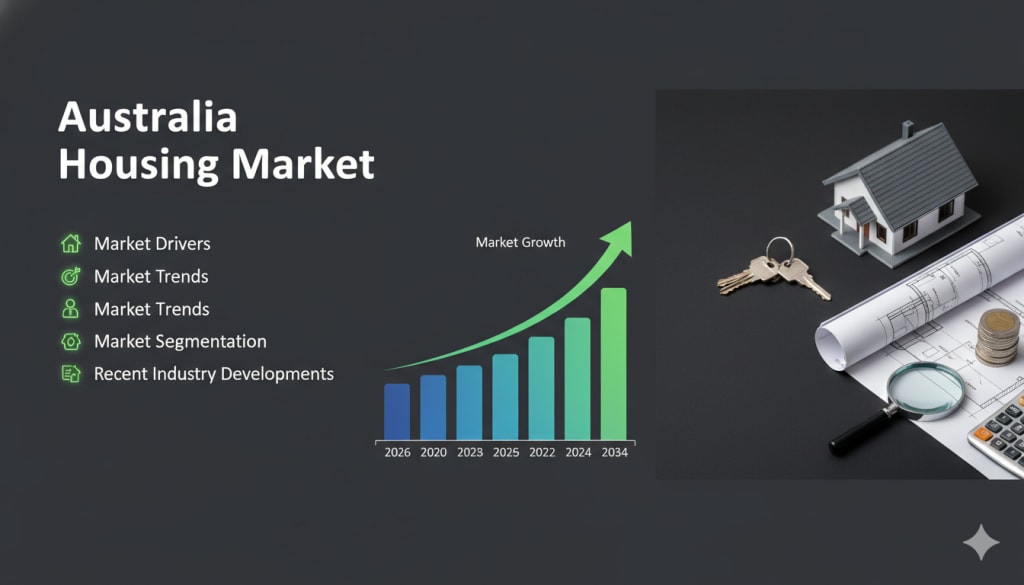
According to IMARC Group, the Australia housing market was valued at USD 150.95 Billion in 2025 and is projected to reach USD 182.34 Billion by 2034, growing at a compound annual growth rate (CAGR) of 2.04% during 2026–2034. While the growth rate reflects moderate expansion, the housing sector remains one of the most economically and socially significant industries across Australia. Housing demand, affordability pressures and construction cycles are deeply interconnected with population growth, migration patterns, interest rate movements and government policy frameworks. As Australia navigates supply constraints, urban expansion and evolving lifestyle preferences, the housing market continues to serve as both a cornerstone of household wealth and a central driver of construction activity.
Why Should Smart Buyers and Investors Know About the Australia Housing Market?
Stable Long-Term Demand Fundamentals
Population growth and urbanization provide a consistent foundation for residential demand.
Asset Value Preservation and Wealth Creation
Housing remains a primary wealth-building asset class for households and institutional investors.
Moderate but Predictable Growth Outlook
With a projected CAGR of 2.04%, the market offers steady expansion supported by structural demographic drivers.
Policy and Infrastructure Influence
Government initiatives and infrastructure investments can significantly impact regional property values.
Integration With Broader Economic Cycles
Housing activity influences construction, finance, retail and materials industries, making it central to overall economic performance.
Recent Trends & Developments in the Australia Housing Market
July 2025:
Construction approvals increased in key metropolitan regions to address housing supply shortages.
March 2025:
Government initiatives aimed at improving first-home buyer accessibility gained momentum.
October 2024:
Developers introduced energy-efficient housing designs to meet evolving building standards and sustainability expectations.
The Australia housing market represents a mature yet strategically vital sector underpinning economic stability and household wealth. Supported by IMARC’s steady growth projections, the market continues to evolve amid affordability challenges, construction fluctuations and shifting demand preferences. While growth remains moderate, long-term demographic trends, infrastructure expansion and policy reforms are shaping the sector’s trajectory. As sustainability standards rise and digital technologies transform property transactions, Australia’s housing market will continue to balance economic opportunity with social responsibility. For developers, investors and policymakers, the housing sector remains not only a critical economic engine but also a forward-looking platform where urban planning, financial systems and community development intersect to define the future of residential living.
Australia Housing Market Vision 2050
1. Increased Urban Density and Smart City Integration
By 2050, urban housing is expected to integrate more closely with smart city technologies, efficient public transport networks and sustainable infrastructure planning.
2. Greater Focus on Affordable Housing Solutions
Policy reforms and public-private partnerships may prioritize affordable housing development to address ongoing accessibility challenges.
3. Sustainable and Energy-Efficient Housing
Green building standards, energy-efficient materials and renewable integration will become standard features in new residential developments.
4. Digital Real Estate Transactions
Blockchain-based property transactions, AI-driven valuation models and digital mortgage processing may streamline real estate operations.
5. Regional Development and Decentralization
Infrastructure expansion and remote work trends could support continued growth in regional housing markets.
What Are the Key Growth Drivers in the Australia Housing Market?
Population Growth and Urban Concentration
Australia’s population growth—supported by both natural increase and immigration—continues to drive structural housing demand. Major metropolitan areas are experiencing ongoing demand for apartments, townhouses and suburban housing developments, reinforcing long-term market resilience.
Shifting Demand Dynamics
Lifestyle changes, remote work trends and changing household compositions are influencing property preferences. Demand for larger living spaces, flexible layouts and regional housing options has gained traction, particularly following the normalization of hybrid work arrangements.
Construction Activity and Supply Constraints
Construction levels remain a critical determinant of market balance. While new housing developments aim to address supply shortages, fluctuations in labor availability, material costs and regulatory approvals affect project timelines and delivery rates.
Interest Rate Movements and Financing Conditions
Housing affordability and buyer sentiment are strongly influenced by mortgage rates and lending conditions. Changes in monetary policy directly impact purchasing power and investment activity in residential real estate.
Government Policies and Incentives
Federal and state-level housing programs, first-home buyer incentives and infrastructure development projects shape housing supply and demand dynamics. Policy interventions aim to address affordability concerns while supporting sustainable urban growth.
About the Creator
Keep reading
More stories from Shrestha Roy and writers in Futurism and other communities.
Australia Meat Market: Production Dynamics, Consumer Preferences & Export Demand
According to IMARC Group, the Australia meat market was valued at USD 29.15 Billion in 2025 and is projected to reach USD 34.39 Billion by 2034, growing at a compound annual growth rate (CAGR) of 1.85% during 2026–2034. While growth remains moderate, the sector holds strategic importance within the national economy of Australia. Meat production—spanning beef, lamb, pork and poultry—continues to serve both domestic consumption and strong international export markets. The industry is navigating evolving consumer preferences, sustainability pressures and productivity challenges while maintaining its position as a key contributor to rural employment and global food supply chains.
By Shrestha Royabout 6 hours ago in Futurism
Rising Demand for High-Purity Solvents Driving the Global Isoparaffin Solvents Market
According to IMARC Group's latest research publication, The global isoparaffin solvents market size reached USD 875.3 Million in 2024. Looking forward, IMARC Group expects the market to reach USD 1,161.2 Million by 2033, exhibiting a growth rate (CAGR) of 3.03% during 2025-2033.
By James Whitman4 days ago in Futurism



Comments
There are no comments for this story
Be the first to respond and start the conversation.