astronomy
Celestial objects and the phenomena that surrounds them. What lies above the earth forever out of reach. From moons, to stars, galaxies, and beyond.
Why AI still needs human intelligence
Ask ChatGPT, Gemini or another chatbot a question and you'll get an answer that sounds convincing, balanced, and complete. Ask it the same question three or four times and you might get different answers, each one delivered immediately with strong conviction. This is AI's fluency gap: it has been trained to sound right without learning to be right. Behind every polished paragraph there is a deeper question: does the model actually understand, or does it simply agree?
By Andrea Zanon3 months ago in Futurism
Laika: The Stray Dog Who Became the First Space Explorer
A Little Dog, a Giant Leap for Science On November 3, 1957, a small stray dog from the streets of Moscow made history. Her name was Laika, and she became the first living creature to orbit the Earth. While humans had long dreamed of touching the stars, it was this humble dog who first crossed the boundary between our planet and the vast unknown.
By Holianyk Ihor3 months ago in Futurism
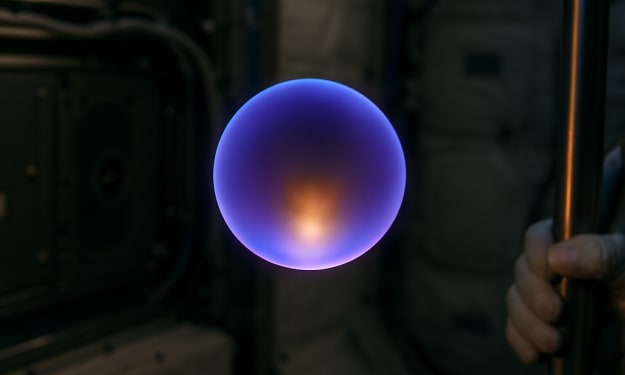
The Curious Case of Space Fire: Why Flames Turn Spherical in Zero Gravity
When you picture a flame, you probably imagine a flickering teardrop stretching upward — the warm glow of a candle or the orange tongues of a campfire dancing toward the sky. But take that same flame into space, and something extraordinary happens: it stops stretching. Instead of a flickering tongue, it becomes a floating, glowing sphere, calm and ghostly blue.
By Holianyk Ihor3 months ago in Futurism
The Ancient Astronaut Theory: Unearthing Celestial Visitors in Mythology and Gnostic Texts
For millennia, humanity has gazed at the stars, pondering our place in the cosmos and the origins of our existence. Across diverse cultures and civilizations, ancient myths speak of powerful beings descending from the heavens, imparting knowledge, shaping human destiny, and even interbreeding with mortals. These narratives, often dismissed as mere folklore, have gained renewed scrutiny in the modern era, forming the bedrock of the Ancient Astronaut Theory.
By The Secret History Of The World3 months ago in Futurism
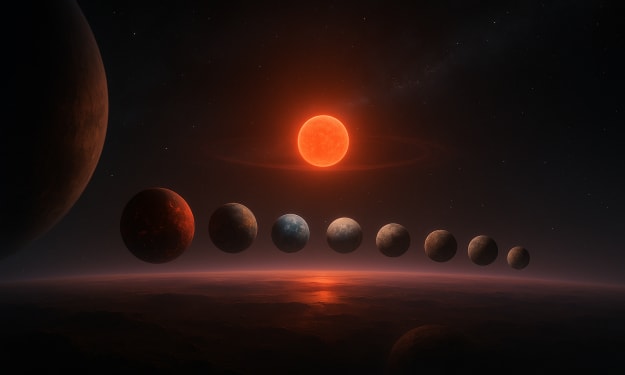
TRAPPIST-1: Seven Worlds Around a Tiny Star — and Three Could Be Alive
When astronomers announced in 2017 that a faint red star just 40 light-years away hosts seven Earth-sized planets, the news shook the world of science. For the first time, we had discovered an entire system of rocky worlds that might resemble our own. The name of that modest little star — TRAPPIST-1 — soon became synonymous with the search for life beyond Earth.
By Holianyk Ihor3 months ago in Futurism
The Largest Known Structure in the Universe: The Hercules–Corona Borealis Great Wall
A Cosmic Giant Beyond Imagination When we think of the vastness of space, our minds tend to drift toward galaxies — those shimmering islands of billions of stars. Yet even galaxies are mere grains of dust in the cosmic desert. In 2013, astronomers stumbled upon something so massive, so mind-bendingly vast, that it stretches the limits of our understanding:
By Holianyk Ihor3 months ago in Futurism
The New Universe: When Humans Create Their Own Worlds
The New Universe: When Humans Create Their Own Worlds The Birth of Artificial Worlds By the 24th century, humanity had mastered the Solar System. The Moon, Mars, and distant colonies on Europa and Titan were thriving under the guidance of the Galactic Network. Yet even with all these achievements, a question remained. Why stop at exploring the universe when humans could begin to create their own?
By Wings of Time 3 months ago in Futurism
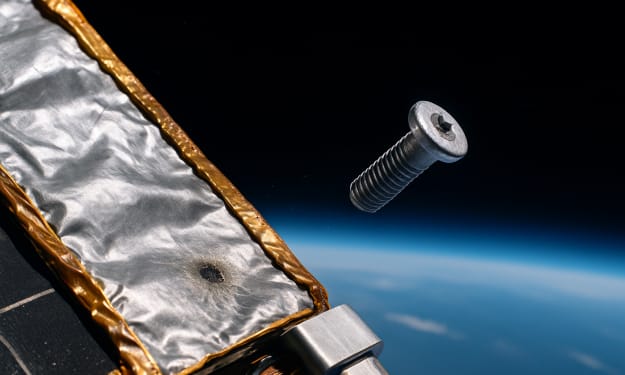
Space Junk: How a Tiny Screw Can Shatter a Satellite
High above our planet, thousands of satellites orbit Earth — connecting phones, tracking storms, and streaming your favorite shows. But along with this incredible network of technology comes a growing hazard that few of us think about: space junk.
By Holianyk Ihor3 months ago in Futurism
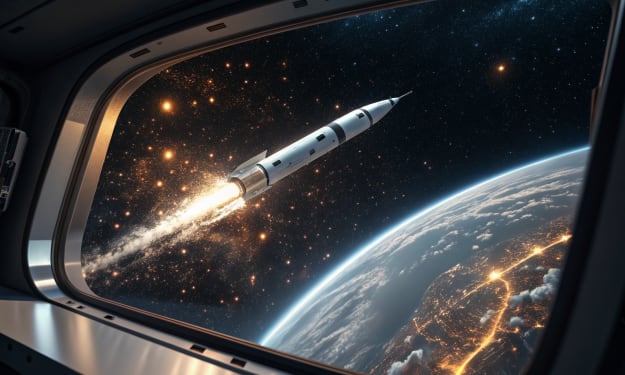
The Age of Exploration 2.0: How Modern Space Exploration is Constructing Our Future
Introduction: From the Oceans of Earth to the Final Frontier In the 15th and 16th centuries, the Age of Exploration transformed human society. Motivated by curiosity, greed, and the promise of riches, explorers set sail across uncharted seas, giving rise to new continents, routes of trade, and civilizations. This era changed the geopolitics of the world and encouraged development in science, navigation, and technology. Fast forward to today, and human beings stand at the cusp of a new era of exploration—this time, however, beyond Earth, into the vastness of space.
By The Chaos Cabinet3 months ago in Futurism
Mars 2.0: Pioneering Technology to Build the Red Planet
Mars 2.0: Pioneering Technology to Build the Red Planet For centuries, Mars has captured the imagination of scientists, writers, and dreamers. Its red surface, dust storms, and thin atmosphere made it a symbol of mystery and challenge. But in the 21st century, Mars is no longer just a distant planet — it is humanity’s next frontier.
By Wings of Time 4 months ago in Futurism
Moon 2.0 – The New Technology Revolution Beyond Earth
Moon 2.0 – The New Technology Revolution Beyond Earth For centuries, the Moon was a distant symbol of mystery, poetry, and dreams. It guided sailors, inspired lovers, and lit up our night skies. But in the 21st century, the Moon is no longer just something to gaze at; it is a destination.
By Wings of Time 4 months ago in Futurism