astronomy
Celestial objects and the phenomena that surrounds them. What lies above the earth forever out of reach. From moons, to stars, galaxies, and beyond.
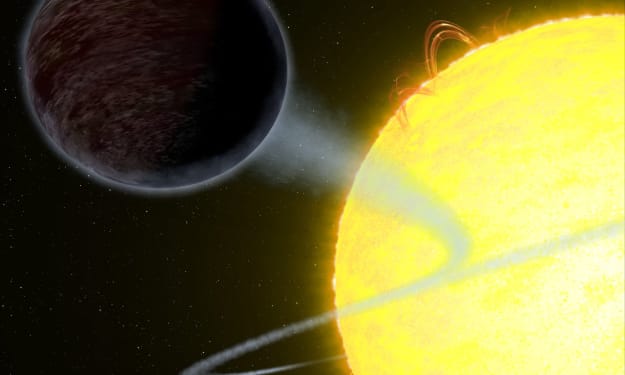
'Pitch Black World': Astronomers Observe a Really Dark Exoplanet
Exoplanets, planets orbiting other stars, are now being discovered by the thousands, and in a wide variety of sizes, colours, and compositions. Now, new studies of one of these worlds show that it reflects almost no light, making it appear nearly pitch black.
By Paul Scott Anderson8 years ago in Futurism
Cosmic Rain: NASA Launches New Experiment
NASA's Cosmic Ray Energetics And Mass for the International Space Station, aka ISS-CREAM, got underway August 14, 2017 by hitching a ride to the ISS with the SpaceX Dragon rocket in a successful launch. CREAM will be installed in Kibo, the Japanese Experiment Module Exposed Facility. The experiment is designed to probe the mysteries of cosmic rays, or cosmic rain.
By Anya Wassenberg8 years ago in Futurism
Potentially Hazardous Asteroids
The term potentially hazardous objects (PHOs) means near-Earth objects (NEOs) like meteoroids, asteroids, and comets whose orbits will come very close to the orbit of the Earth. Meteoroids are composed of minerals and rock and have a diameter of less than one meter. Comets are composed of dust and ice. Meteoroids with a diameter of greater than one meter are called asteroids.
By Danny Fleming9 years ago in Futurism
Sephro: The Connection
PROLOGUE Sephro is a magical planet, resplendent in beauty and guided by powerful Goddesses and Gods. Earth is broken yet beautiful, enduring, trying to survive. Two different planets which forge a connection so powerful it could strengthen not only Sephro and Earth but every planet, every solar system, every galaxy. And yet they are similar in many ways.
By Kate Quinn9 years ago in Futurism
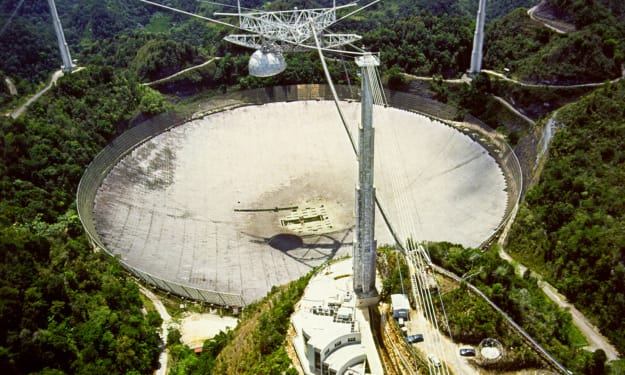
What Are These Weird Radio Signals From a Nearby Red Dwarf Star?
Astronomers are continuing to monitor a nearby red dwarf star after detecting unusual radio signals apparently coming from the star. It is hoped that additional observations will help to determine the source of the signals, which so far haven't been explained.
By Paul Scott Anderson9 years ago in Futurism
NASA: Jupiter's Great Red Spot Up Close
NASA's Juno mission has begun to release the very latest images from its JunoCam, taken July 10, 2017 during its close flyby near Jupiter's famous Great Red Spot. It was Juno's sixth flyby near the gas giant in our Solar System.
By Anya Wassenberg9 years ago in Futurism
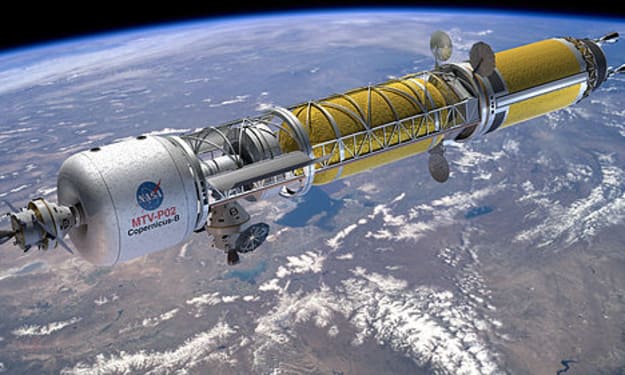
Nuclear Propulsion
“Now I am become Death, destroyer of worlds.” Robert Oppenheimer spoke these words in July of 1945 when asked about his feelings after the Trinity test, the first successful detonation of a nuclear weapon. Oppenheimer’s prophecy rang true on August 6th and August 9th of that same year, after the dropping of those same weapons on Hiroshima and Nagasaki.
By Anthony Pullano9 years ago in Futurism
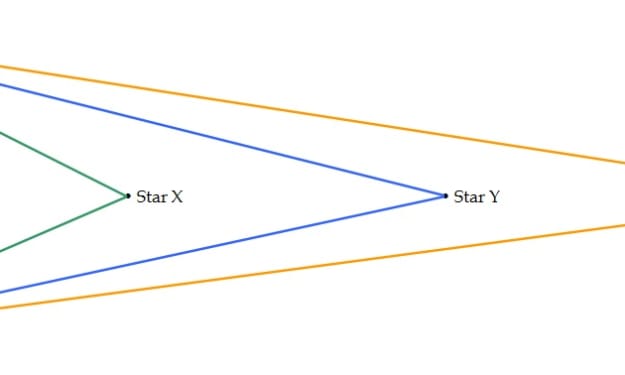
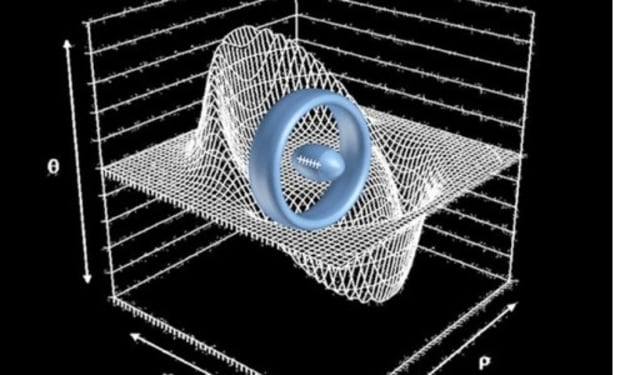
The Warp Drive: A Crash Course In Relativity. Top Story - July 2017.
The estimates from the Hubble Telescope suggest that there are upwards of 100 billion galaxies in the universe. Each with millions upon millions of stars (the Milky Way is a smaller galaxy with around 100 billion stars), each with at least some prospective habitable planets.
By Anthony Pullano9 years ago in Futurism
Astronomers Take New Highest-Resolution Image of Giant Star Betelgeuse
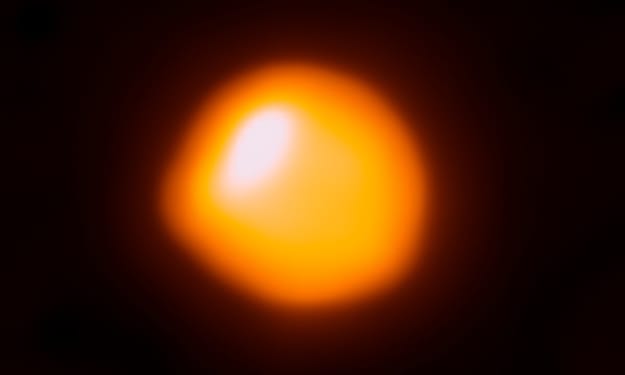
Betelgeuse is one of the largest stars known in our galaxy, a red supergiant, and now astronomers have taken the highest-resolution image ever so far. They used the Atacama Large Millimeter/submillimeter Array (ALMA) in Chile for their observations, and not only was it the first time that ALMA had observed this star, but it succeeded in producing the highest-resolution of Betelgeuse currently available.
By Paul Scott Anderson9 years ago in Futurism
A History of Gravitational Waves
14th September 2015. A 4 kilometer long arm forming part of the Laser Interferometer Gravitational-Wave Observatory (LIGO) changed its length by one ten-thousandth the width of a proton, due to a distortion in spacetime, disturbing a laser beam housed inside. Computers immediately detected the mind bendingly miniscule change, sending an automatically generated email containing the observed data to a postdoctoral researcher by the name of Marco Drago working in the Max Planck Institute for Gravitational Physics in Hannover, Germany. Marco’s job was to monitor LIGO readings examined the data to rule out any error or “dummy signal” used for testing purposes. Within a few days news of the detection had been leaked to the world astrophysics community and after the observation had been definitively confirmed an official press conference on the 11th of February 2016 revealed to the world the first observation of a gravitational wave on earth by LIGO.
By Devon Keogh9 years ago in Futurism
What is Astrology?
If you type "What is astrology?" into google you'll get an answer something like this: Astrology is the study of the movements and relative positions of celestial bodies interpreted as having an influence on human affairs and the natural world.
By Jude Goodwin9 years ago in Futurism