evolution
The evolution of science, science fiction, and mankind throughout the years.
Le Cirque De La Vie
Artist's biography A chrysalis wandering through the abyss of the universe, I borrowed a monsoon to descend to the planet and compose a diverse parable. Exposed and observant, I revised Concrete Building Construction and decided to paint it my way.
By Shahram Farshadfar 9 years ago in Futurism
The Philosophy of Westworld
Michael Crichton wrote and directed Westworld for the big screen in 1973. That same decade, in 1976, an adjunct professor named Julian Jaynes made the bestseller list with a surprising title: The Origins of Consciousness in the Breakdown of the Bicameral Mind. You wouldn’t think that a book with a name like that would become such a popular success. Yet, there it was. In 2016, when Westworld came to the small screen in the re-imagined HBO series, you wouldn’t imagine Jaynes getting heard from again. Especially since bicameralism wasn’t even mentioned in the Michael Crichton’s original film. Yet, there he was. Early on in Westworld’s first season Dr. Ford, one of the creators of the park, explains how he and his co-founder Arnold used a “debunked” theory about the origins of consciousness to bootstrap A.I. The scientific community didn’t recognize bicameralism as an explanation for the origins of the human mind, but, as Dr. Ford suggests, it could be useful for building an artificial one. Thousands of people—perhaps more—started Googling for “bicameral mind.” Bloggers and YouTube channels capitalized on the sudden interest by writing articles and introductory videos about this weird, arguably psychedelic theory of consciousness. Suddenly everyone was interested.
By Jeremy Johnson9 years ago in Futurism
Telepathy and Quantum Physics
Telepathy is one of the ten magical gifts I have been told by several medicine men and women that we will soon be capable of receiving. Since we are all at different stages in our evolutionary process, I believe we will each be able to receive telepathy only after we have evolved to the point we are capable of practicing it with love and benevolence. Even so, every gift can also become a curse. Our gifts can be double-edged swords we can either use to advance our species or to destroy it. Life is far more precarious than most of us are aware and we must be vigilant to defend its dignity and sanctity.
By Hyapatia Lee9 years ago in Futurism
Our Stellar Family
I was taught by my elders that there are twelve members of our ancestral family in the stars and three are directly involved in our planetary family. To be clear, all these Star People are living sentient beings in a physical form. These are not gods or angels, although many people throughout the past have confused them as such. When we are able to communicate with these beings, we will still be in physical form, just as our human ancestors were centuries ago. If we learn these gifts through the help of others, it will in all likelihood be with the direct help of the Star People. There are many legends that tell of Star People bringing us the gift of fire.
By Hyapatia Lee9 years ago in Futurism
The Science of Smell
Straddling the disciplines of art and science, Sissel Tolaas has travelled the globe collecting over 7,000 different smells, which she stores in her Berlin research laboratory. Along the way she has made cheese from the bacteria in David Beckham’s football boots, simulated the sweaty smell of fear, and recreated the scent of space as a training aid for NASA astronauts. Having avoided deodorant her entire life, Tolaas is on a quest to educate “the smell-blinded” by separating odours from visual stimulus. She has made scents that help people learn biology and has mapped out molecular smellscapes from Amman to Calcutta. When the wind blows, her nose becomes filled with a “symphony of music”, and she dreams of everyone being able to experience the same sensation. Tolaas believes that once we retrain our noses, we will be able to overcome society’s pre-conceptions of what smells good and bad. And if that happens, we’ll all be able to see everything from a new perspective… without even having to open our eyes.
By Tim Noakes9 years ago in Futurism
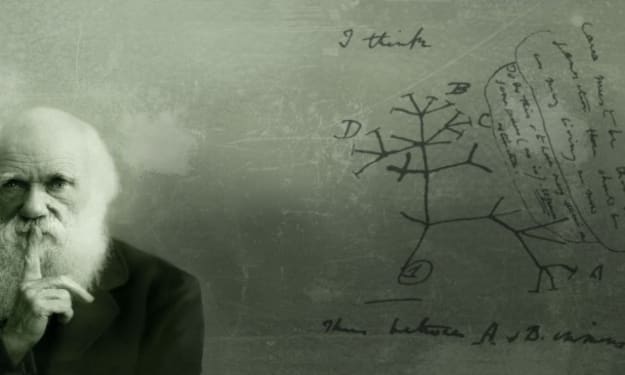
Terence McKenna Unraveled Consciousness
An adamant critic of culture, Terence McKenna was a 20th century shaman that pioneered an in-depth analysis of one's consciousness and the lives we live. He birthed radical hypotheses about the development of the mind, posited "the stoned ape" hypothesis, and declared he had deciphered the nature of time using the I Ching. Mckenna held that individuality and social constructs were detrimental illusions to living a fulfilling life. He was called the "Timothy Leary of the 1990s," inspiring millions of people to question their reality.
By Stephanie Gladwell9 years ago in Futurism
Ceratoid Anglerfish Spermatozoa
A man generates billions or so spermatozoa during his "active" lifetime. In the same time, a female ovary releases a strictly limited number of eggs (around 400). Despite the contrast in productivity each sex contributes exactly the same amount of genetic material to the next generation. It is an uncomfortable truth that the main biological role of males is to manufacture vast quantities of sperm to fulfill a genetic function that the other gender accomplishes much more efficiently
By Caesar Finkle9 years ago in Futurism
What is Space?
The general idea of 19th century Empty Space was that as soon as one ventured beyond Earth's atmosphere, a few tens of miles over our heads, there was absolutely nothing there. It was a total vacuum, not an atom within range. A complete void was thought to exist above our heads.
By Conrad Morningstar9 years ago in Futurism
Biological History of the Vampire Legend
Bram Stoker, through his novel Dracula, and the motion-picture industry with its many portrayals, have led us to consider Count Dracula, a fifteenth-century Romanian nobleman, as the vampire. The Count, who was known as Vlad the Impaler, was a seemingly unpleasant person who was known to feast in the presence of impaled enemies. Once, during such a feast, an ambassadorial guest complained that the sights and sounds interfered with his appetite. Count Dracula ordered one more stake (pun intended), on which he had his guest impaled. He then continued dining, alone.
By George Gott9 years ago in Futurism
Gender, an Alternate Reality
I sat on the cheap plastic chair and tried to stop shaking. I felt like I was going to vomit. I couldn’t get my head around what the woman was saying, although she’d been saying it for some time now. I’d managed to grasp she was a scientist though, the ill-fitting lab coat and science fiction t-shirt were a bit of a giveaway.
By Dan Swindlehurst9 years ago in Futurism