habitat
The natural home and environment for all things sci fi, including future homes and territories.
The Paris Accord
Most Republicans, I’m sure, love 45’s having left the Paris Agreement. But no, we liberals are not happy with this, which cramps their style. The agreement reflects on different countries joining together to find solutions to climate change. Leaving this agreement threw supporters into a tailspin. Pamela Hill states that the World Health Organization has uncovered that “7 million premature deaths are linked to air pollution” (77), (World Health Organization). The air pollution problem is a growing problem on a long list of problems.
By Iria Vasquez-Paez8 years ago in Futurism
How to Resolve the Plastic Crisis
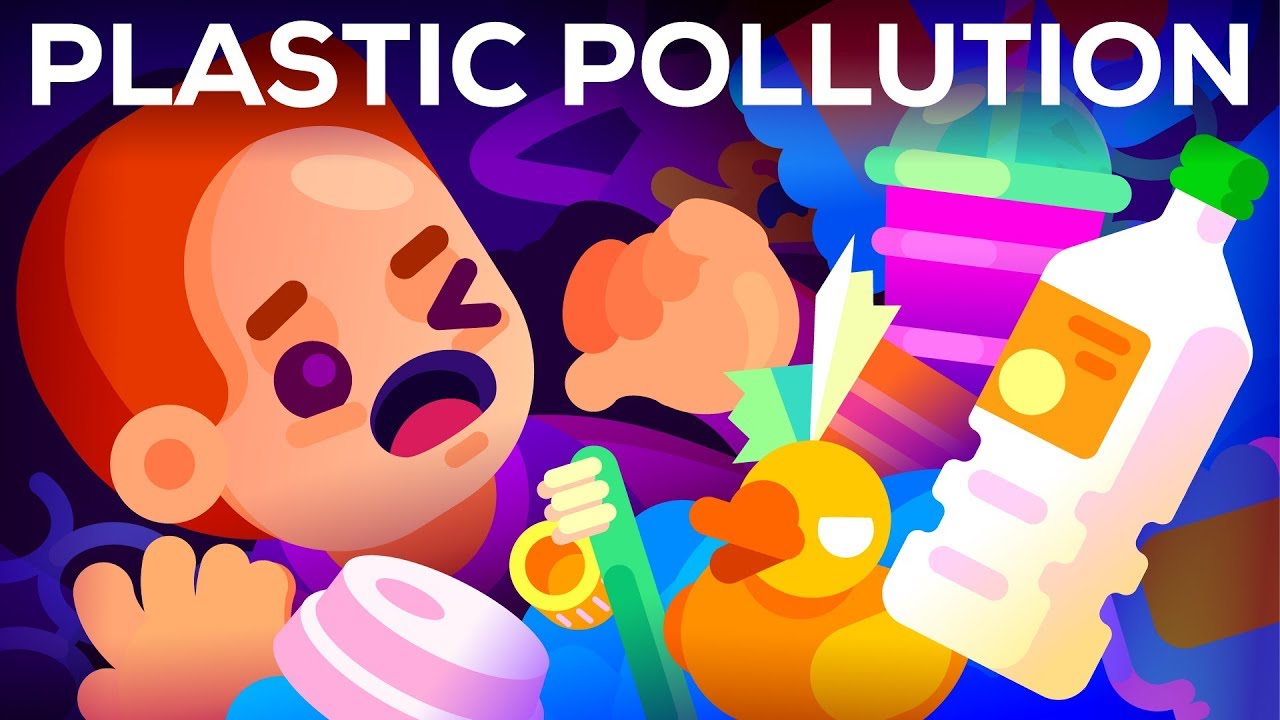
Resolving the plastic crisis is something more think tanks need to be thinking about but also actually doing something about it, not just talking about it and doing nothing. Survival on this planet is rather harsh despite all modern conveniences that we can afford to use. The plastic crisis is reaching epic proportions here. We need to get civilians out there by having a company build a fleet of ships as well as submarines for civilian use so that we can clean up the garbage. We are digging ourselves into a premature grave daily.
By Iria Vasquez-Paez8 years ago in Futurism
The Great Plastic Gyre Patch
Plastic pollution is a huge global crisis that nobody is paying attention to right now except those of us who bother to read about it. Plastic finds its way onto beaches, according to Environmental Protection: What Everybody Needs To Know, since there is “4.8 to 12.7 metric tons” (56), of plastic in the ocean, increasing by the day or by the year. However we measure it, many politicians put climate change on 'ignore', in particular, Republicans. The North Pacific Gyre or the Great Pacific Garbage Patch is twice the size of France.
By Iria Vasquez-Paez8 years ago in Futurism
Groundwater Pollution
Groundwater pollution is brought on when acid rain, boats, factories, a septic system, and other manmade products such as gasoline seep into the soil. The soil then becomes unfit for us humans to use it. Pesticides, as well as fertilizers, can get into the soil eventually. It is amazing humans can grow crops in this environment. (Groundwater Contamination). Contaminated groundwater can cause hepatitis or dysentery. Other sources of contamination include storage tanks that release gasoline, oil, chemicals, or other sorts of liquids. Some have estimated there are ten million storage tanks in the United States.
By Iria Vasquez-Paez8 years ago in Futurism
Indigenous Sustainability
Indigenous Sustainability is a soulcentric and earth based practice founded by The Rusty Anvil. This practice calls on the human species to reevaluate our place on the planet. This is a calling to shift our mentality from a world full of commodities to a world full of gifts. This gift based mindset creates a relationship of reciprocity among all life on earth. One way we can begin to understand this reciprocal relationship is by practicing ancestral skills and learning indigenous wisdom. The gift of learning how to thrive with the land instills an awareness of interconnectedness and interdependence. When we become aware of the many gifts that the Earth provides, we want to nurture, protect, and honor her rather than destroy and take advantage of her. In an indigenous world, reciprocity is in constant motion. Now more than ever, we need to shift away from an industrial growth mindset and closer to an intimate and reciprocal relationship with all life. Indigenous sustainability is a practice of ecocentric beliefs, ancestral skills, and reciprocity.
By The Rusty Anvil8 years ago in Futurism
Why You Need to Care
If I could, I would sit on this laptop all day and preach to the human race how important it is to care. To care about the resources we use, to care about the effects we have on our planet, to care about the consequences of our convenience mindset actions but I would get nowhere. I would get nowhere because you don’t know why you need to care. You need to care because the amount of plastic we have produced in the first 10 years of the century is already surpassing the amount of plastic humankind made in the last century. In these past 8 years, that number has almost tripled. We are producing and using plastic at an alarming rate, with no regards to how this is affecting our present and our future.
By Liz Galante8 years ago in Futurism
Environmental Equality: Water's Worth
Water is pure liquid hydrogen and oxygen and makes up more than half of the human body. In the article, “Six Natural Resources Most Drained by our 7 Billion People,” Camila Ruz argues, “Fresh water only makes up 2.5 percent of the total volume of the world’s water… 70 percent of that freshwater is in the form of ice… so by 2025, people could be living in countries with absolute water scarcity.” (Ruz) Since the Earth already has minimal freshwater resources and overpopulation, water will be considered endangered by 2025. Water is a necessity, and without it, it will be impossible for flora (plants) and fauna (animals) to survive. Here is more information on how our water is filtered, how the chemicals affect us, and how to preserve it.
By Kayli Martin8 years ago in Futurism
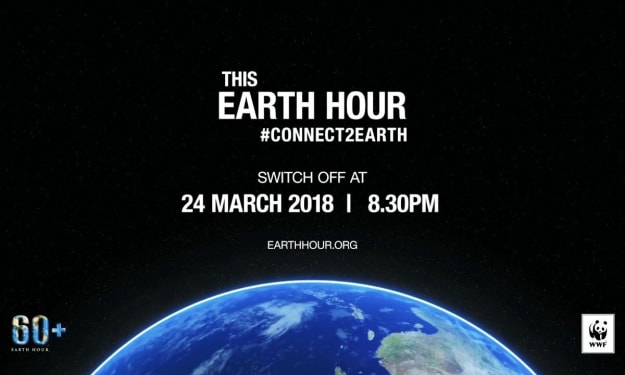
Earth Hour Was a Success?
The WWF and their supporters do so much not just for the animals but for climate change. Over 55,000 promised this last week on World Earth Hour to stop their use of things that they know are hurting the environment. Their promises included: use reusable bottles, no more plastic straws among other things. So many people did their promise.
By Tara Watts8 years ago in Futurism
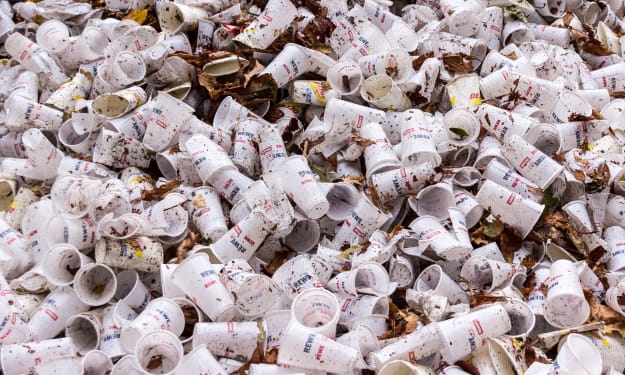
The Problem with the Problem with Plastic. Top Story - March 2018.
An admirable cause has found its way into the public consciousness helped in no small part by national treasure David Attenborough and his latest docu-series, 'Blue Planet 2.' The scourge of single-use plastics and their impact on the environment and wildlife has moved from the fringes, once valiantly espoused by environmentalists and neo-hippies of the Zero Waste movement, to become an urgent and pressing issue of our time (or perhaps just 2018).
By Joe Clarke8 years ago in Futurism
Let's Save the Bees
Honeybees. Yes, they are those pesky little critters who you do not want on your bad side, but they are doing so much good underneath their moody exterior. They are necessary for nearly 80 percent of all crops that are used directly for food worldwide—and they are becoming endangered!
By Allison Barker8 years ago in Futurism