science
Topics and developments in science and medicine, presented by Futurism.
Huawei Pura 80 Ultra vs Honor Magic 7 Pro — Complete comparison (design, cameras, performance, battery, software, verdict
Short version: both are top-tier 2025 flagships: Huawei’s Pura 80 Ultra focuses on camera innovation and battery/charging tech, while Honor’s Magic 7 Pro emphasizes raw performance, wide software/ecosystem support, and strong zoom optics. Which one suits you depends on whether you prioritise camera hardware and Huawei’s proprietary stack, or Google-friendly Android performance and broader regional availability. Below is a full, walk-through comparison to help you decide.
By NextGen Mobile Tech4 months ago in Futurism
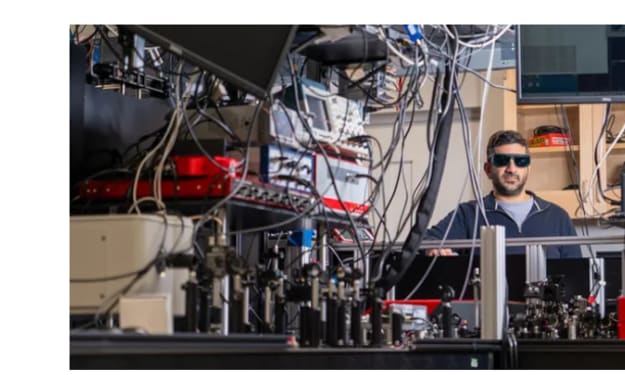
Researchers use light and crystals to create new materials on demand.
One day, it may be possible to "draw" rather than "grow" crystals for use in a wide range of applications, including lasers, LEDs, and the semiconductors used in sensors in astronomical instruments, which would result in improved performance and reduced prices.
By Francis Dami4 months ago in Futurism
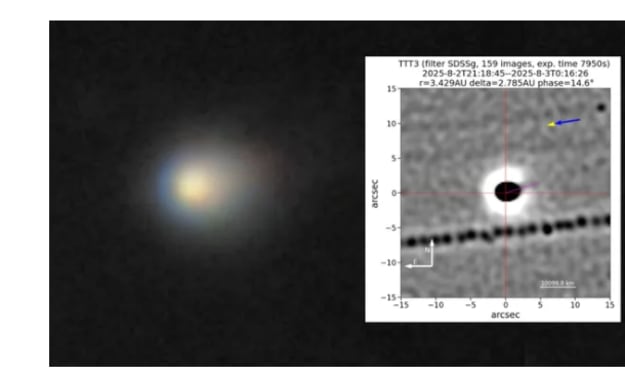
A new telescope photograph shows the interstellar comet 3I/ATLAS blasting a jet towards the sun.
As our nearest star warms up a portion of the comet's surface, 3I/ATLAS is launching a jet of material in the direction of the sun. The composite image displays a white light, which is the comet's atmosphere or coma, and the nucleus, or frozen, rocky centre core, of 3I/ATLAS as a big, black dot. The purple-marked jet is blazing out in the direction of the sun, which is also how comets in the solar system often behave.
By Francis Dami4 months ago in Futurism
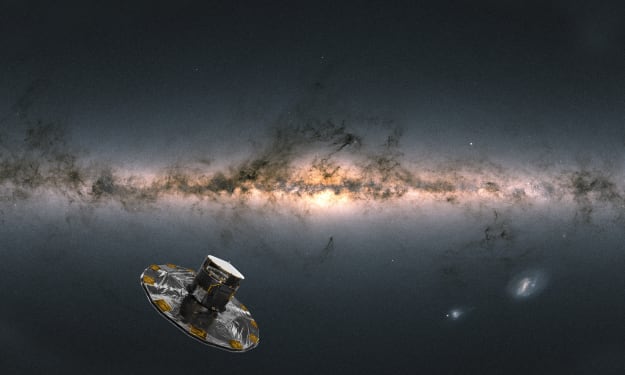
The End of an Era: Gaia’s Mission Comes to a Close — and Its Legacy Is Just Beginning
In early 2025, the European Space Agency’s Gaia spacecraft officially ended its operational life after more than a decade of mapping the Milky Way with breathtaking precision. It’s a bittersweet milestone for astronomers worldwide: while Gaia has stopped collecting new data, the treasure trove it leaves behind will keep fueling discoveries for decades.
By Holianyk Ihor4 months ago in Futurism
Washing Moon Dust for Helium-3: The New Space Gold Rush
The Promise of a Lunar Treasure For decades, the Moon has been more than a symbol of human curiosity — it’s been a promise. A promise of knowledge, exploration, and now, perhaps, limitless clean energy. Among all the minerals and exotic materials believed to lie within its dusty surface, one element stands out as a true cosmic prize: helium-3.
By Holianyk Ihor4 months ago in Futurism
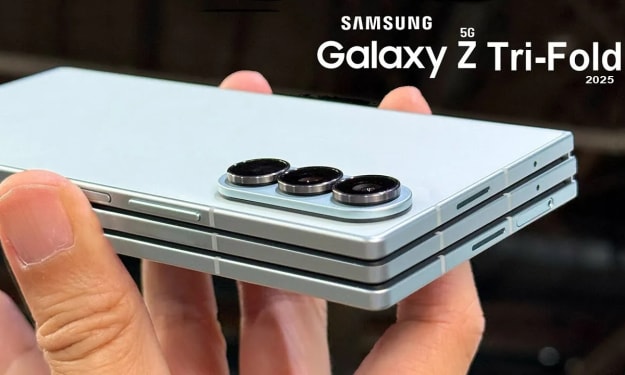
Samsung Galaxy Z Tri-Fold: The Future of Foldable Phones Is Here
Samsung is once again pushing the boundaries of smartphone innovation with its upcoming Galaxy Z Tri-Fold — a revolutionary device that redefines what a foldable phone can be. Combining futuristic design, premium engineering, and cutting-edge features, the Tri-Fold is shaping up to be one of the most talked-about tech releases of 2025.
By NextGen Mobile Tech4 months ago in Futurism
M4 MacBook Air vs. M5 MacBook Pro: Which Apple Laptop Is Worth Your Money in 2025?
Apple’s MacBook lineup has never looked sharper—or more confusing. With the launch of the M4 MacBook Air and M5 MacBook Pro, buyers in 2025 are faced with a classic Apple dilemma: should you choose the ultra-portable Air or invest in the powerhouse Pro? Both are cutting-edge machines with Apple Silicon chips, remarkable efficiency, and elegant design, but they serve very different audiences.
By NextGen Mobile Tech4 months ago in Futurism
Xiaomi 17 Pro Max vs Samsung Galaxy S25 Ultra — Which flagship wins in 2025?
The flagship battle in late-2025 is a heavyweight match: Xiaomi’s 17 Pro Max arrives as a bold, battery-centric, dual-screen challenger while Samsung’s Galaxy S25 Ultra refines an already dominant formula with advanced AI, a pro-grade camera system, and a sleeker, titanium build. If you’re choosing between the two, here’s a complete, SEO-friendly comparison that covers displays, cameras, performance, battery, software, real-world use, pros & cons, and FAQs to help you pick the right phone.
By NextGen Mobile Tech4 months ago in Futurism
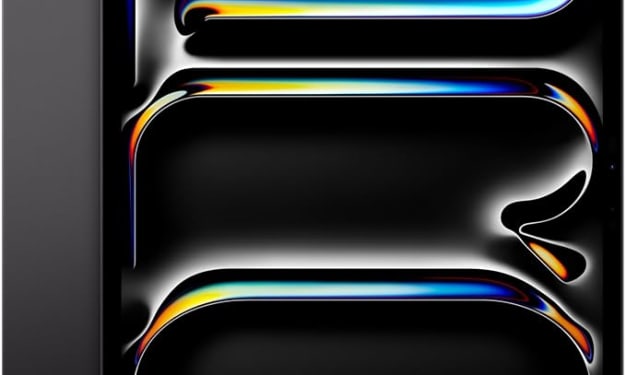
Apple iPad Pro 13-inch (M5) Review — Redefining the Future of Tablets
When Apple first launched the iPad Pro, it was clear that the company wanted to bridge the gap between tablet and laptop. Over the years, each generation has pushed that line further — but the new Apple iPad Pro 13-inch (M5) completely redraws it. With the blazing-fast M5 chip, Ultra Retina XDR display, Apple Intelligence integration, and iPadOS 26, this model doesn’t just refine the iPad experience — it reinvents it.
By NextGen Mobile Tech4 months ago in Futurism
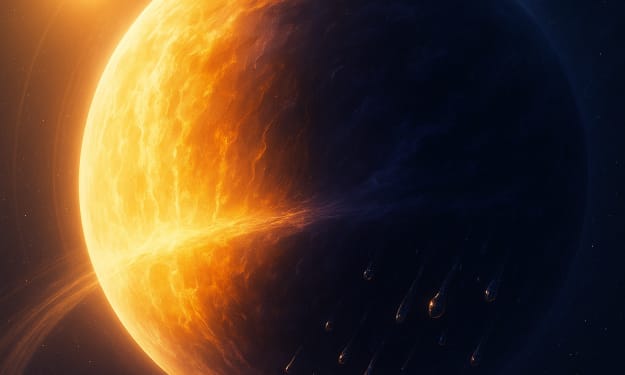
Rebel Worlds: Exoplanets with Reverse Rotation and Bizarre Atmospheres
When astronomers began discovering planets beyond our Solar System in the 1990s, most expected to find familiar worlds — something like a Hot Jupiter here, a cold Neptune there, maybe the occasional rocky Earth-twin. Instead, the universe responded with a cosmic smirk and delivered a catalog of planets so strange that even science fiction writers would hesitate to invent them. Among the most mind-bending of these discoveries are exoplanets with reverse (retrograde) rotation and wildly abnormal atmospheres — worlds that defy planetary logic and challenge our understanding of physics.
By Holianyk Ihor4 months ago in Futurism
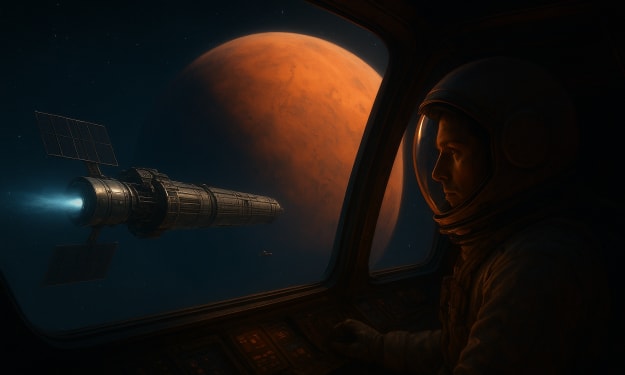
Nuclear Engines for the Journey to Mars: Why NTR and NEP May Change Everything
For decades, Mars has been the big red prize of human space exploration. We’ve landed rovers, taken selfies on its dusty plains, and mapped its canyons and craters in high resolution. And yet, no human has ever set foot there. The biggest obstacle isn’t distance itself — it’s time. With today’s chemical rockets, a crewed flight to Mars would take six to nine long months one way, and the entire mission could stretch to two or even three years. That means more radiation exposure, more psychological pressure, more supplies, and more risk.
By Holianyk Ihor4 months ago in Futurism
How quark-gluon plasma is studied in the laboratory?
Recreating conditions similar to the early universe is extremely difficult. However, physicists have learned how to create tiny volumes of quark-gluon plasma using large particle accelerators, heavy ion colliders. The idea is to accelerate two heavy atomic nuclei to relativistic speeds and collide them head-on. At the same time, the energy of the collision is concentrated in a small volume – a microscopic "fire layer" of ultra-high temperature and density is formed, in which ordinary nuclear matter "melts" for a moment and quark-gluon plasma arises.
By Olaf Podolski4 months ago in Futurism