science
Topics and developments in science and medicine, presented by Futurism.
The Piri Reis Map
Ancient maps have startling similarities to the way the coastlines are shaped for now. Antarctica may have been free of ice three million years ago, a fact gleaned from the Cenozoic unicellular algae in 1983. Earth-crust displacement moved Antarctica further south by two thousand miles, something discovered in 1953 by Professor Charles Hapgood, a teacher at Keene College in New Hampshire. Antarctica was free of ice until 4,000 B.C, a thousand years before Egypt and Sumerian civilization started to explore the sea. The PIri Reis map was drawn with accurate Antarctica contours, since Antarctica was discovered three hundred years after the map was drawn.
By Iria Vasquez-Paez6 years ago in Futurism
Fringe Science: Paul Babcock
Paul Babcock is recognized for his expertise in alternative energy systems and power generation systems for companies and for individuals, especially in remote locations. He has studied Nikola Tesla, Wilhelm Reich, Walter Russell, George Lakhovsky and many others. Over a lifetime, of study and creative thought, Paul Babcock has discovered specific threads which weave through the ideas, theories and spirit of these great inventors. He discusses these threads in his book, The Universal Medium.
By Roscoe Forthright6 years ago in Futurism
Puerto Rico has awakened completely in the dark due to a very rare Saharan sandstorm
Every summer, the wind transports large quantities of desert dust particles from the hot and dry Sahara desert into northern Africa across the Atlantic Ocean, but this year the sandstorm is a record high.
By Marco Bonomo6 years ago in Futurism
10 Things You Should Know About the Search For Life on Other Planets
Everyone at one time or another has looked up at the stars on a clear night with wonder. People wonder about what is out there in a universe that is so big. They wonder if humanity is alone. They wonder if someone else on some distant planet is looking at the stars and wondering the same thing. Whether extraterrestrial lifeforms are science fact or science fiction is currently unknown. There is a branch of science that aims to find out what is necessary for life to exist on other planets. They also study whether any nearby planets meet those conditions. They ask themselves questions like: what might show that a planet has life on it? What caused Earth to develop life? What counts as life? How should they study the life they may find? The scientists working on this ambitious mission are called astrobiologists. This list is a mix of frequently asked questions and informative statements. It will help people understand the search for life on other worlds.
By Moira Western6 years ago in Futurism
The Business of Entropy
Do you know where your energy comes from? Not just the energy that powers your appliances, but every facet of your life. From the food you eat, to the fuel in your car, to the electricity in your home, energy moves everything in our lives. That should come as no surprise, but what you may not know is that our energy has a time limit. Rather, the location and distribution of energy changes over time. This is known colloquially as the second law of thermodynamics, the law of entropy. The first law states that the total energy in the universe is constant, and therefore energy cannot be created or destroyed, it can only change forms. Thanks to the understanding of these laws, humans have been able to industrialize their lives in ways unimaginable just a few centuries ago. But as a law of nature, entropy affects every aspect of our lives, not just the things we use switches on. So no matter what your profession is—or whether you ever took a basic science class—it pays to understand how it works.
By Ariel M. Scisney6 years ago in Futurism
The Journey of An Atom
The history of the universe is a history of constant change. However, while its state and appearance has changed drastically over the course of its 13.82 billion years of expansion, certain key things have remained unchanged. For one, the laws of nature have stayed constant throughout time and space, for every cubic planck-length of the universe.
By Ariel M. Scisney6 years ago in Futurism
The Elements of Life
There is a fundamental question that arises as a consequence of that strange thing humans do where we know we exist. Namely, "what the heck is all this stuff made of?" Or more specifically, "what am I made of?" This most fundamental of inquiries has been pondered for about as long as there have been people around lucky enough to stave off disease, famine, and warfare. It's no simple question to answer, but today we are fortunate enough to live in a time when children can be handed the answers to these questions before they revolve around the Sun ten times. I've met and worked with more school groups than I can recall, and I'm always astonished at their ever growing capacity to learn. Even middle schoolers today understand the basic structure of atoms, something that has vexed the greatest thinkers throughout history.
By Ariel M. Scisney6 years ago in Futurism
Astronomy vs. Astrophysics
When I tell people that I study astrophysics, about half of them are awestruck, and the other half of them are completely clueless as to what astrophysics even is. This confusion hasn't escaped the bureaucrats who run the universities that give out degrees for these fields of study. I can't speak for all colleges, but at the University of Colorado Boulder, there is nearly no distinction between astronomy and its cousin field of astrophysics. The differences between the two are subtle, but they were enough for many of my peers to be disgruntled by the fact that the diploma awarded to students who completed an astronomy track and an astrophysics track both have the same label, "astronomy".
By Ariel M. Scisney6 years ago in Futurism
Interesting facts about Sea Kelp biology
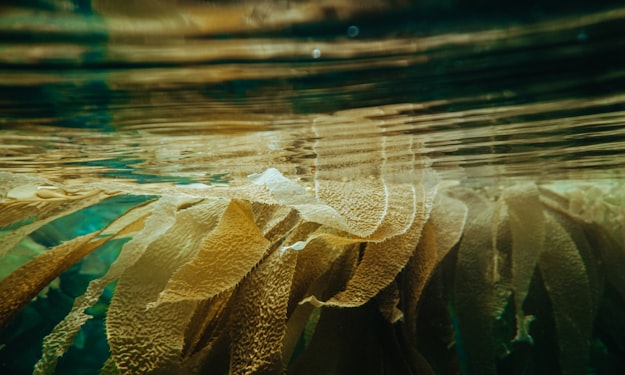
Kelp, or often referred to as sea kelp, is a type of algae or seaweed. Though it looks like an underwater tree, kelp is a type of brown algae and belongs to several species of the order Laminariales. Many species play a significant role in the marine ecosystem, from sheltering marine organisms from storms to supporting marine biodiversity.
By Bradley Knight 6 years ago in Futurism
The world of aquaponics
The futuristic world of agriculture - cultivation of fish and vegetables in a closed system. The system is based on fish waste providing the required nutrients for plants to grow. In this way fish (trout, tilapi etc) and vegetales can be harvested together, with a small amount of water loss. It is an ideal system for countries where available water supply is scarce. To make systems energy efficient in aquaponics or as it is known in spanish acuaponia solar panels can be used.
By Mundo Acuaponia6 years ago in Futurism