space
Space: The Final Frontier. Exploring space developments and theorizing about how humans fit into the universe.
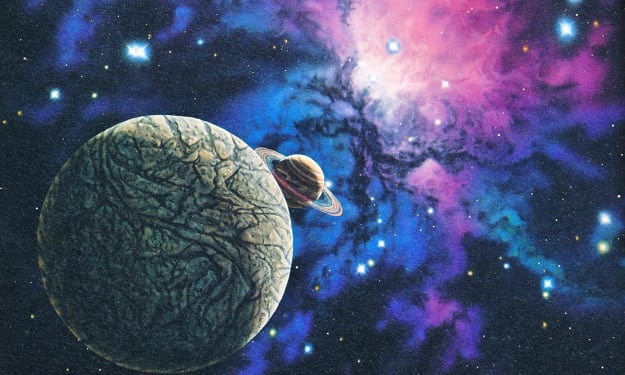
Transient Lunar Phenomena
In our present phase of post-Apollo enlightenment, it would be wrong to suggest that all the mysteries of the moon have been solved. Curious things, seen now and then—faint glows, flashing lights, patches of "mist"—still provoke argument and continue to enlist scientific inquiry and speculation.
By Stephanie Gladwell9 years ago in Futurism
Interview with Investigative Filmmaker Jeremy Corbell
Jeremy Kenyon Lockyer Corbell makes his living seeking out the ExtraOrdinary; that seemingly gratuitous capitalization perfectly encapsulating his mission to–as he puts it–“force us to reconsider the fabric of our own beliefs” and consider an atypical alternative. His approach is to undermine attempts to discredit unorthodox opinions by way of discrediting the opinion holders themselves.
By Rachel G. David9 years ago in Futurism
Reviewing 'The Guccione Collection' OMNI Magazine Auction
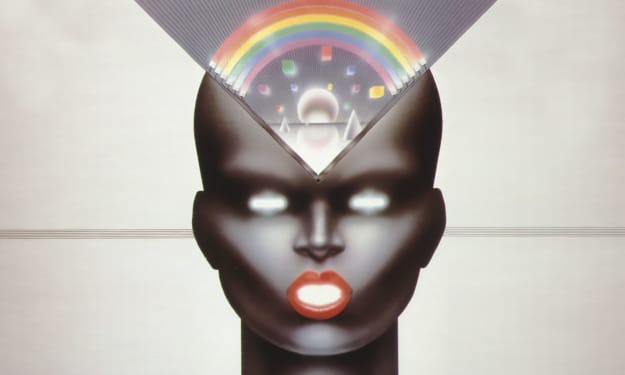
Bob Guccione was more than just the founder of OMNI magazine, beyond this, he was an artist and lover of all things science fiction and art. He collected a variety of pieces from some of the world's most renowned artists; names like H.R. Giger, Stanislaw Fernandes, and Jim Burns. Thanks to his love of sci-fi art and his celebrity status, Guccione was able to commission some of the most recognized science fiction artists to create pieces that were later featured in various OMNI magazine issues. Thanks to a partnership with EBTH, you can now own a piece of the Bob Guccione OMNI magazine collection.
By George Gott9 years ago in Futurism
Time Traveling Views from Stars
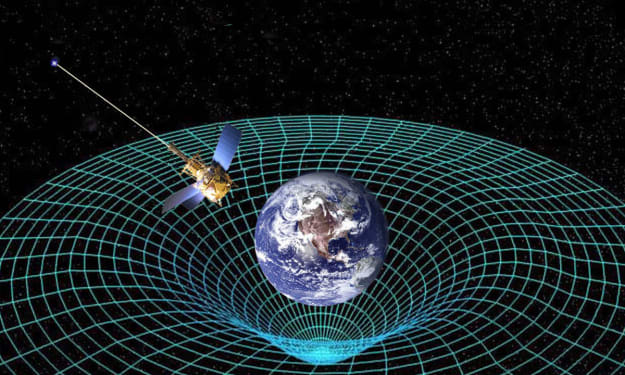
The White Queen in Through the Looking Glass made a regular morning habit of believing at least six impossible things before breakfast. There is one thing that simply cannot be done. It is impossible to travel backward in time. I have absolutely no faith that we might be able to transport ourselves back to the Crusades, the Ice Age, or even earlier I do not doubt that Einstein's relativistic time-dilation effect is valid; but that is a different thing.
By Conrad Morningstar9 years ago in Futurism
Interview with 'Floaters' Creator Jeremy Solterbeck
Space: the Final Frontier. Or... is it? While space travel has consistently been depicted in science fiction and popular culture as an exclusivity attainable by elite scientists, engineers, and air force pilots, Floaters poses an interesting predicament: what if ordinary people went to space?
By Natasha Sydor9 years ago in Futurism
Franz von Paula Gruithuisen's Venus Science Fiction
The fascinating story of Franz von Paula Gruithuisen, a German astronomer who became prominent early in the nineteenth century, has inspired sci-fi writers to ponder exploring distant worlds like Mars and Venus. His attempts at explaining the wonders of space were filled with promise of mystery and awe. He was a fairly good observer who concentrated on the moon and the planets, but his imagination was, somewhat vivid. For instance, he discovered what he believed to be an artificial structure on the moon and described it as a collection of dark, gigantic artistic ramparts.
By Izzy Erlich9 years ago in Futurism
Science Journalist Lee Billings On Life Beyond the Solar System
The history of science can be read as a series of brusque reality checks. Once, we imagined ourselves the center of a small and harmonious universe, gifted with a sun content to revolve placidly around the Earth. In time, however, our real estate was relegated from the center of everything to a hum-drum corner of an unimportant galaxy in a much bigger and more tumultuous universe. Upon closer inspection, our sun was revealed to be just another star, born from a nebula, fated for eventual collapse. At the same time, we came to understand the spark of life, transforming in the process from the mini-gods of a pedantic little empire into nothing more than a consequence of biological randomness.
By Claire Evans9 years ago in Futurism