space
Space: The Final Frontier. Exploring space developments and theorizing about how humans fit into the universe.
299,000 Kilometers a Second
Bill had 24 hours before his flight. He had spent the last month jettisoning his possessions to his friends and family in a process that felt a lot like a living funeral. All his books, most of his clothes, and many of the objects he had collected for years began to feel heavy on him.
By Brett Ryan Bonowicz10 years ago in Futurism
Astronaut Humor
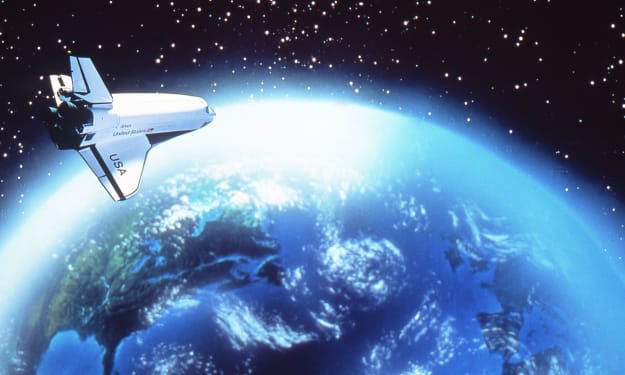
Space, the final frontier. Mankind has explored, colonized, and dominated just about every corner of the earth. But it is not our destiny keep our feet planted merely on the dirt. In our bones we know our destiny is to float amongst the stars. While nations might bicker and squabble the best of the best struggle to make their own headway towards conquering the final frontier. Astronauts, the best and brightest men and women, are the ones who have taken it upon themselves to shoulder this cosmic burden. But just because the future of the human race and our destiny in the stars lays upon them doesn’t mean they can’t have a little fun. After some extensive research, we have found some of the funniest anecdotes from some of our favorite space missions. So as you go out gazing out at the stars and wondering in awe at the infinite possibility of the cosmos take a second and chuckle at these funny little mishaps on the road towards cosmic enlightenment.
By Isaac Shapiro10 years ago in Futurism
Space Exploration Developments by 2050, A Fictional Vision
By 2050, the concept of exploring Mars will have been the impetus that drove the world to tackle space exploration. Here, society is filled with goals of establishing permanent habitats on the Moon and Mars, and developing the resources of these and other planetary bodies. The concerted efforts to meet the challenges of space exploration might well bring about a multitude of exploratory developments. By 2050, how will our outer-world function?
By S.H. Jucha10 years ago in Futurism
Examining the Fermi Paradox
The Fermi Paradox is the apparent contradiction between the high probability of other lifeforms in the universe and humanity's lack of contact with extraterrestrial civilizations. For every grain of sand on Earth there are 10,000 stars, a vastness so immense it escapes comprehension. Humanity should not be the only intelligent life in the universe, but so far no evidence indicates otherwise. Robin Hanson is amongst pragmatic intellects who answer the paradox by amplifying the differentiation between finding life, and finding intelligent life.
By John Foley10 years ago in Futurism
Can We Live on Venus?
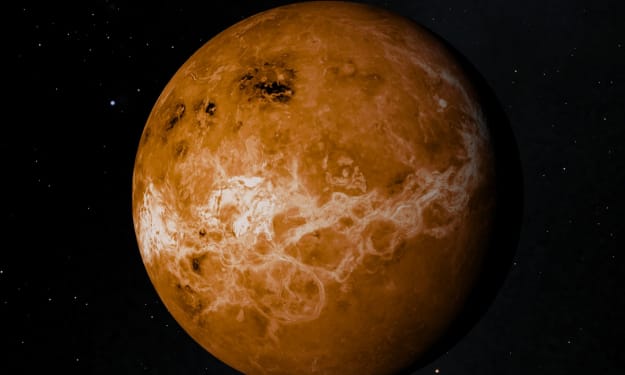
Floating cities on Venus; it sounds like something Hugo Gernsback would have published in the pulp era of science fiction, but colonizing the second planet from the sun may not be as impossible as is widely believed. Despite Dantean-like surface conditions with temperatures that can melt lead, and atmospheric pressure equal to being under 3,000 feet of water, there remains a plausible place humanity might be able to exist—not on the surface but in the atmosphere above.
By Chris Lites10 years ago in Futurism
Meteorites and Asteroids Facts
With all the unknown objects and happenings beyond our control going on in outer space, as human beings we can’t help but wonder what the chances are of extraterrestrial disasters having a significant impact on Earth. Every day, people die from the strangest things, but for some reason we’re inclined to believe that there’s a looming possibility of life ending because of space rocks. So for those curious about astronomical catastrophes affecting our beloved planet, here are a few things to note:
By Futurism Staff10 years ago in Futurism
Darkening Day
Remember when The Curtain went up? The only viable solution, extreme as it was, to save humanity from Earth's rapidly hyper-toxifying, invisibly over-saturating air. A superstructure, ten miles up, of floating chemical filters, each a sort of box-shaped balloon, converting noxious chemicals into safer ones. Billions of them, linked together into an edgeless shell spanning the entire globe.
By Breyen Katz10 years ago in Futurism
Space Disaster Movies
"Astronomy compels the soul to look upward, and leads us from this world to another." Plato's quote from The Republic is certainly becoming a reality. The Martian, a film released on October 2nd, 2015, looked at the possibility of a manned mission to Mars more extensively than moviegoers had ever seen. Based on Andy Weir's The Martian, a novel by the same name, the film is about astronaut Mark Watney who gets left behind on Mars after his team presumes him dead following an intense storm. All alone, he must create his own food and find water in order to survive while constantly trying to contact Earth to tell them he's alive. However, this isn’t the first space disaster movie and it will not be the last. The reason space disaster movies are so popular is that a majority of space is still unexplored territory for humans. With so much that is unknown, there are major fears about what happens if someone gets stranded out there. Some of the best space disaster movies involve the simple idea of getting disconnected from the space station while others involve hostile alien life forms attacking those in deep space.
By Emily McCay10 years ago in Futurism
Neil deGrasse Tyson's StarTalk
“The good thing about science is that it's true whether or not you believe in it.” Neil deGrasse Tyson doesn’t care if what he says upsets you; it’s all based in science and science is fact. The astrophysicist has been very outspoken about science for decades now. In fact, he and fellow scientist Bill Nye celebrated the 35th anniversary of the Planetary Society—an organization dedicated to all things astronomy, planetary science, and exploration—in October of 2015.
By Futurism Staff10 years ago in Futurism
Space Conspiracy Theories
Everything you know about space is a lie. We’ve never been to the moon, Pluto is a hologram, and Obama visited Mars twice. Conspiracy theorists believe all of this and so much more. NASA is one of the top organizations accused of conspiracy theories, and has been since the day it was created. Established in 1958, NASA was founded to compete with the Soviet Union in the space race. After Russia launched Sputnik, people were afraid that they would start building weapons in space. NASA was created to combat this. In the 1960s, John F. Kennedy approved the Apollo program which was aimed at successfully sending a man to the moon. While the Apollo 1 ended in disaster, the Apollo 8 and 10 missions went to the moon to test equipment and take photos but did not land.
By Futurism Staff10 years ago in Futurism
Best Alien Invasion Movies
American fears of the cold war with the USSR in the middle of the 20th century manifested themselves in stories of alien invasions. The movie aliens themselves often took the forms of outright green blobs, which in my opinion was probably a budgetary issue, resolved by some special effects coordinator suggesting that they leave it up to the audience's imagination. From stormtrooper looking soldiers to individual messengers of doom, the aliens kept coming until science fiction films in general became the highest grossing film genre over big movie weekends in the later 20th century. If there is even a shred of predictive truth to these films, we should have no excuse when the time comes for an alien invasion. Watch the best alien invasion movies. Get prepared.
By Futurism Staff11 years ago in Futurism