tech
Curious tech and technology from the realm of science and science fiction.
A Drone Tried to Disrupt A Power Grid. Unfortunately, It Won't Be the Last One
IN JULY OF last year, a DJI Mavic 2 robot moved toward a Pennsylvania power substation. Two 4-foot nylon ropes hung from its rotors, a thick copper wire associated with the finishes with electrical tape. The gadget had been deprived of any recognizable markings, just as its locally available camera and memory card, in an evident exertion by its proprietor to keep away from location. Its possible objective, as per a joint security notice delivered by DHS, the FBI, and the National Counterterrorism Center, was to "upset tasks by making a short out."
By Catskovich4 years ago in Futurism
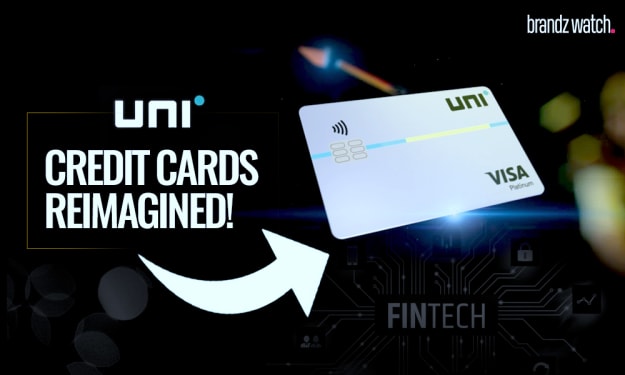
Uni Pay 1/3 Card | Credit cards reimagined! Uni makes its mark in India’s fintech market
Technology is transforming the way we transact as well as the way that lenders offer small loans. Buy now, pay later (BNPL), is poised to disrupt the finance industry. This tech-enabled credit allows lenders to make an immediate credit decision and not have to worry about any associated risks or costs. UniPay 1/3 card allows you to pay your monthly expenses in three parts over 3 months with NO EXTRA fees.
By Brandz Watch4 years ago in Futurism
5 Tech Trends that Kept Businesses Successful During COVID
The recent global pandemic was a do-or-die time for a lot of businesses. Several went under while others managed to scrape by. But it should also be noted that some businesses thrived more than ever during this time. Here are 5 of the most common trends that kept many businesses doing well during the pandemic.
By McKenzie Jones4 years ago in Futurism
Time to go passwordless for logins
Passwords and PINs are the standard methods for gaining access to personal computers, websites, and web applications. However, they are not as safe as we assume, especially in this age of automated hacking. People always prefer simple passwords that are easy to remember, which also makes them easier for others to guess. Hard passwords, on the other hand, are tough to remember, thus we frequently store them someplace in our system itself and make them vulnerable.
By Sivaranjith Sivaraman4 years ago in Futurism
Seizing the Internet Opportunity
Overview What are you doing online right now? If you say you’re working, that may - or may not - be true. Indeed, there is a fine line at present between what is time wasting and money making activities online. And that shows the power - and opportunity - that the Web presents to all of us today.
By David Wyld4 years ago in Futurism
What You Need to Know When Planning an Event
Make sure you have a well-organized structure in place before diving in headfirst and starting planning. Whether you're utilizing event technology, excel sheets, or a pen and paper, be sure you've covered all of your bases. It is essential for staying on top of all of the intricacies that come with event preparation.
By Jen Hensey4 years ago in Futurism
Analogy Does Not Recapitulate Reality
The Possibility of Analogy Does Not Necessarily Correlate with the Probability of Reality I take a hard line against the currently (and formerly) in vogue position of equating human beings, particularly their brains, with computers. To me it is obvious that no such equivalence exists despite decades of suggestions otherwise. The number of analogies between various structures/functions of the human brain and those of a computer/computer system are as large as the number of neurons estimated to comprise said brain. The prevalence of these analogies often makes us forget that they are only that, analogies. They are not based in scientific fact, but instead are based in the imaginative capacities of the organ which is the topic of these comparisons. The possibility of analogy is however often confused with the probability of reality. Those things for which we can analogize more are thought to be more accurate representations of the real relationships of the things being compared. Therefore, because there are so many analogies possible between how (we hypothesize) a human brain works and how a computer works, it must be true that a human brain is very similar to, or exactly like, a computer. The point of analogies is (or should be) to help clarify/deepen our understanding of a thing through a comparison of that thing and/or it’s attributes with another (usually similar but not always) thing. We suggest that the first thing is like the other because of x, y, and z and the comparison allows us to see the thing we are trying to clarify our understanding of in a different way. To ‘see’ it anew. In no way however is the analogy an argument (it is not an argument and should not be viewed as such) as to the actual similarity (in point of fact/reality) of the two things. It is for illustrative purposes only and carries no truth value or “reality bestowing” power. Analogies are powerful, but they are not all powerful. They can clarify but they can also mislead. We must not confuse our ability to create analogies with our ability to clearly see, study, and understand reality.
By Everyday Junglist4 years ago in Futurism
Speech Recognition in HealthCare
While speech recognition technologies are significantly better than they used to be, not all speech recognition solutions are created equal. Solutions that don’t utilize advanced technologies like machine learning and artificial intelligence produce lesser quality recognition results requiring clinicians to spend more time editing and reviewing the recognized text. Choosing lower quality equipment (microphones/foot pedals/headsets) can also negatively affect the standard of recognition.
By Dave Wells4 years ago in Futurism