
What Happens to Fire in Microgravity? A Dance Without Earth’s Rules
Space

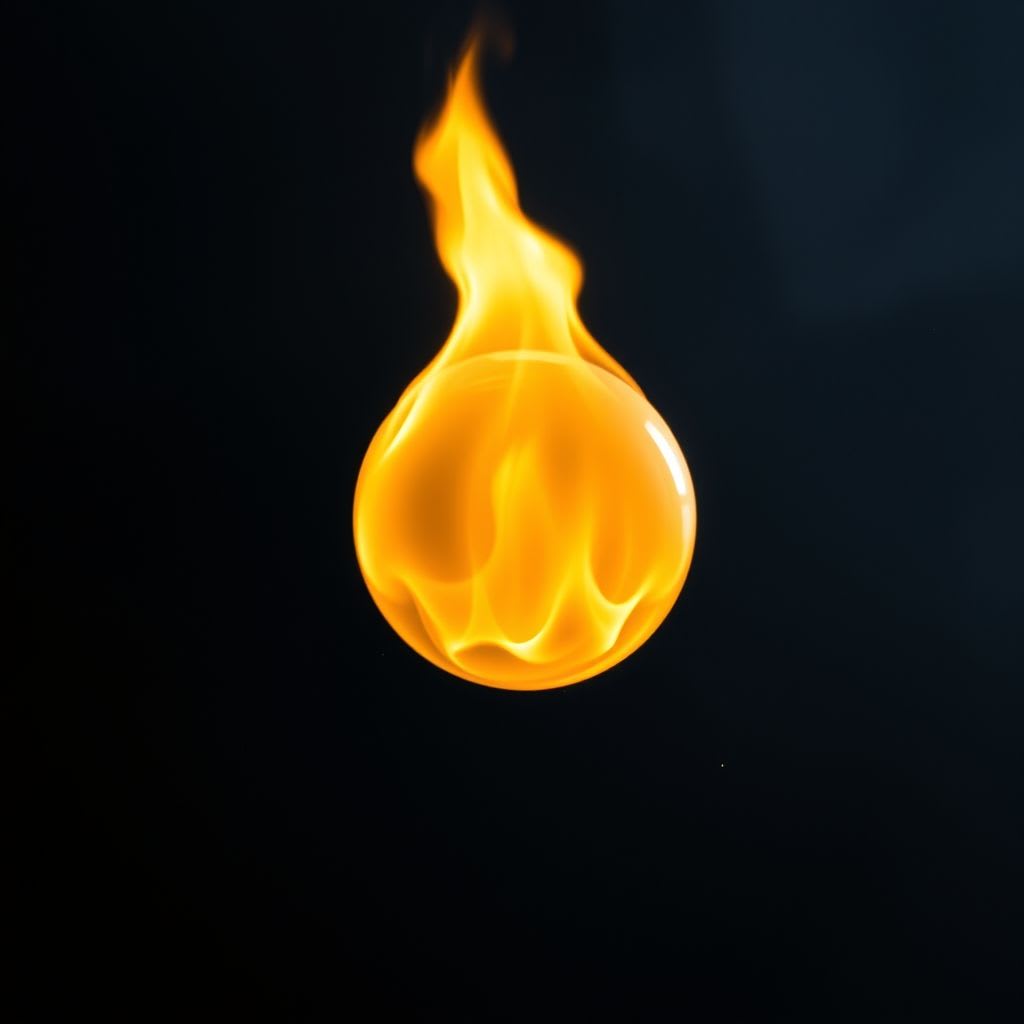
On Earth, lighting a candle is a familiar ritual. The flame stretches upward, flickers in the breeze, and dances in a graceful ballet powered by gravity. But take that same flame into space into the strange, weightless world of microgravity and the rules change. The flame no longer climbs. It doesn’t flicker. It morphs into a gentle, glowing sphere, floating like a small, golden ghost. So what exactly happens to fire when gravity no longer calls the shots?
Flames Without Gravity: A Shift in Shape and Behavior
On Earth, fire behaves the way it does because of convection. Hot air rises while cooler, oxygen rich air rushes in to replace it from below. This cycle creates the teardrop shape we associate with a flame. The movement of air helps sustain combustion, remove waste gases, and maintain a stable burn.
But in microgravity like aboard the International Space Station (ISS) gravity's pull is almost nonexistent. There's no "up" or "down" to drive convection. As a result, hot gases don't rise, and cooler air doesn't replace them from below. The flame loses its upward stretch and instead forms a near perfect sphere, like a glowing bubble. It’s beautiful, yes, but also fundamentally alien compared to what we know on Earth.
How Fire Burns in Space
In this strange zero gravity world, fire relies on diffusion the slow mixing of gas molecules to bring oxygen to the flame and carry away combustion byproducts. Without the quick convection flows, the entire process slows down. The flame becomes cooler, dimmer, and more stable.
In some space experiments, scientists observed a phenomenon called "cool flame" combustion. Here, the flame becomes almost invisible. There's no bright light, yet the fuel continues to oxidize slowly, producing heat without any visible sign. It’s a kind of ghost fire and it could be dangerous. Without the bright glow of flame, a fire might go unnoticed in a spacecraft until it’s too late.
Fire Experiments on the ISS
Fire in space isn't just a curiosity it’s a critical area of research. NASA and other space agencies conduct regular combustion experiments aboard the ISS. One of the most important is the FLAME project (Flexible Combustion Facility), which studies how various materials burn in microgravity.
These experiments provide vital information for the safety of astronauts, but their benefits go far beyond. For example, a 2012 experiment revealed that flames in space can burn with less oxygen and create less soot. That’s a big deal for Earth, where cleaner combustion could help reduce pollution and improve engine efficiency.
Why Fire Research in Space Matters
Fire might be beautiful, but it’s also one of the greatest hazards in space. In the closed environment of a spacecraft, a fire can spread quickly and unpredictably. Understanding how different materials burn in zero gravity helps engineers design better insulation, wiring, and even packaging for food and equipment.
More than that, studying fire in space gives scientists a rare chance to strip away gravity’s interference and observe combustion in its purest form. The insights gained can lead to breakthroughs not only in aerospace technology, but in energy production, material science, and environmental protection back on Earth.
A Glimpse Into the Future: Cold Flames and Space Tech
Could the slow, cold combustion seen in space be used in future spacecraft engines or orbital waste recycling systems? Could we harness it to develop safe, low-temperature heat sources for long-duration missions to Mars or beyond? The possibilities are intriguing.
Controlled, low-intensity combustion might allow astronauts to safely manage energy production or even burn trash in space without dangerous open flames. It’s a futuristic concept but one that begins with understanding a simple flame floating in a gravity free lab.
Conclusion: A Fire Beyond Earth’s Boundaries
Fire in microgravity is more than just a scientific oddity it’s a window into the fundamental forces that govern our world. It reveals how much we take gravity for granted, even in something as basic as lighting a candle. These strange spherical flames challenge our assumptions, raise new questions, and open new paths for discovery.
Whether it’s building safer spacecraft, developing cleaner engines, or designing future space habitats, the study of fire in space is lighting the way forward quietly, steadily, and sometimes invisibly.
As humanity reaches for the stars, even the smallest flame becomes part of the adventure.
About the Creator
Keep reading
More stories from Holianyk Ihor and writers in Futurism and other communities.
How Astronauts Lose Their Bones in Space: The Invisible Cost of Microgravity
When we watch astronauts floating effortlessly in the serenity of space, it looks magical like a dream come true. But behind the smiles and slow motion somersaults lies a silent threat. In space, their bones are literally dissolving. This invisible consequence of living in microgravity is one of the most serious challenges astronauts face, and we still haven’t cracked the code to solve it.
By Holianyk Ihor8 months ago in Futurism
Discrete Semiconductor Market Trends: Power Efficiency, Miniaturization & Demand Outlook to 2033
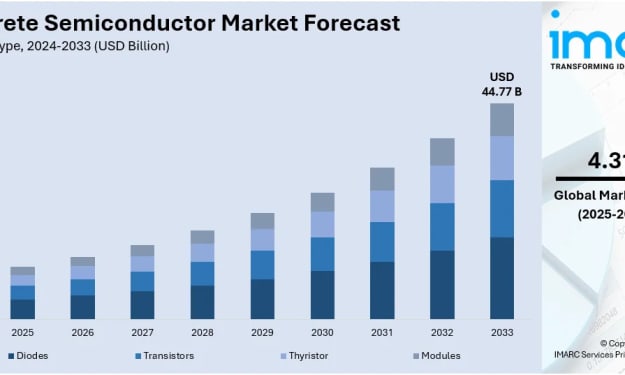
The global discrete semiconductor market is witnessing substantial momentum, driven by energy-efficient electronics demand, electric vehicle proliferation, and accelerating industrial automation adoption. According to IMARC Group's latest market intelligence, the market was valued at USD 30.02 Billion in 2024. The market is projected to reach USD 44.77 Billion by 2033, exhibiting steady growth during 2025-2033.
By Andrew Sullivan3 days ago in Futurism
Mining Drilling Services Market Analysis: Service Types, Demand, and Forecasts
Rising demand for minerals, metals, and energy resources is driving growth in the mining drilling services market. Increased exploration activities, deeper and more complex mining operations, and focus on resource optimization support service demand. According to IMARC Group's latest research publication, The global mining drilling services market size reached USD 2.9 Billion in 2024. Looking forward, IMARC Group expects the market to reach USD 4.6 Billion by 2033, exhibiting a growth rate (CAGR) of 5.2% during 2025-2033.
By Michael Richard7 days ago in Futurism



Comments
There are no comments for this story
Be the first to respond and start the conversation.