
Exercise activates a liver enzyme that fixes brain vascular damage and improves memory.
Thinking is harmed by brain barrier leakage.

In mice, it has recently been demonstrated that a liver enzyme generated during exercise can restore memory and repair aging brain blood vessels. By linking the benefits of physical activity to a repair mechanism at the brain's outer boundary rather than inside neurones themselves, the new discovery reframes how exercise protects cognition.
Age-related leaky vessels
The blood arteries that protect the brain from the bloodstream had become porous in older mice, allowing tiny chemicals to seep into the surrounding tissue. Dr. Saul Villeda of the University of California, San Francisco (UCSF) tracked such leaks in aging mice and showed that tighter vessel walls and better memory function were associated with an increase in the liver enzyme GPLD1.
The enzyme removed a deposit that had formed with age by acting on the artery surface rather than penetrating brain tissue. The process had to be at the barrier because the protective factor never entered the brain itself, allowing us to examine what was being taken away from those ageing vessels in greater detail.
Thinking is harmed by brain barrier leakage.
The blood-brain barrier (BBB), a vascular wall that prevents numerous blood molecules, is made up of cells that line brain vessels. Unwanted substances enter through weakened BBB seals, and surrounding brain cells respond with stress signals that can impair memory.
In one human study, increasing barrier leaks were linked to lower thinking scores in older adults. BBB health is on the short list of targets since similar leak patterns have been documented early in Alzheimer's disease.
Protective enzymes are released during exercise.
The UCSF researchers demonstrated six years ago that blood plasma from exercised mice could transfer cognitive benefits even while the receivers remained motionless.
That study focused on GPLD1, a liver enzyme that may break down over 100 proteins and is released into the bloodstream following physical activity.
However, GPLD1 was unable to penetrate brain tissue, so scientists had a powerful signal but no obvious path of delivery.
Villeda stated, "This discovery demonstrates just how relevant the body is for understanding how the brain declines with age."
Aging damages brain vessels
As mice aged, a sticky enzyme accumulated on the cells lining the blood vessels in the brain, causing the tight seal that typically shields sensitive tissue to weaken.
The exercise-linked enzyme GPLD1 reliably removed this age-related accumulation while ignoring the majority of surface proteins in laboratory testing.
Young mice that were genetically modified to have higher levels of that accumulation in their brain vasculature started to perform poorly on memory tests and behaved more like older animals.
By concentrating on this one alteration, researchers were able to directly test whether removing the accumulation could restore the protective border of the brain in later life.
The brain barrier is repaired by liver enzymes.
GPLD1 entered the bloodstream and made its way to the arteries encircling the brain after being released from the liver during exercise.
It removed the accumulated enzyme at the vascular surface, reducing the pressure on the blood-brain barrier.
During testing, older mice given more GPLD1 retained significantly more dye inside their blood arteries, indicating that the barrier had become more rigid.
Many age-related gene alterations inside the same vascular cells returned to a more youthful pattern, indicating broader healing.
Repairing memory and vessels
In mice that were about 70 years old, the barrier became less leaky when the accumulation on vessel cells was reduced. Following that decrease, the animals' strength on memory tests that had previously decreased returned, and brain inflammation decreased.
Much of the advantage from GPLD1 was eliminated by adding the accumulation back into ageing arteries, demonstrating how important this target has become. Nevertheless, the trials demonstrated that vessel repair accounted for a large portion, but not all, of the memory-enhancing effects of exercise.
A novel therapeutic target
Additionally, a substance that was added to food and reduced the accumulation on vessel surfaces without going into the brain was evaluated by the researchers.
In line with the improvements observed with more GPLD1, treated older mice demonstrated tighter vessel walls and improved performance on object and spatial memory tasks.
The chemical emphasised blood vessel surfaces as a viable therapeutic target because it acted outside of the brain. Future therapies would need to be cautious because the same enzyme is involved in other organs and prolonged inhibition may be harmful.
Alzheimer's plaque is decreased by an enzyme.
Increasing GPLD1 decreased Alzheimer-like plaque deposits in the hippocampus, a part of the brain crucial for memory, in mice bred to produce such deposits.
Similar reductions were obtained by blocking the vessel buildup, which decreased the brain's total plaque load. Exercise, liver chemistry, and brain blood vessels are all linked in the work as a series of causes and effects that alter memory.
While acknowledging regular exercise as the safest and most effective approach available today, that chain now guides studies toward maintaining the blood-brain barrier later in life.
About the Creator
Keep reading
More stories from Francis Dami and writers in FYI and other communities.
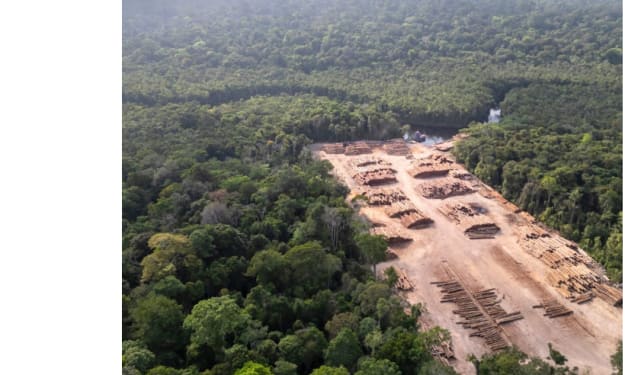
Deforestation in the Amazon reduces the rain forest's capacity to produce its own precipitation.
A recent research demonstrates what many scientists have long assumed but can now detect with precision from space: the local climate changes when big swaths of the Amazon are cleared.
By Francis Dami5 days ago in FYI



Comments
There are no comments for this story
Be the first to respond and start the conversation.