Historical
First dead heart transplant
The Duke University Hospital Cardiac Surgery team has become the first American group to transplant the heart of an adult to a recipient using a procedure known as donation after death circulation (DCD). The method used in Duke is known as DCD because it relies on the heart to stop beating and regenerate to beat again. Duke doctors had been rehabilitating hearts in the United States for months.
By Sita Dahal5 years ago in FYI
About Taj Mahal
The Taj Mahal was built by Mughal Emperor, Shah Jahan, in the memory of his wife Mumtaz Mahal who died in 1631 while giving birth to their 14th child. Mumtaz, Shah Jahan’s third wife, was known for her exceptional beauty, and the emperor was known to be mad about her. Crestfallen by her sudden death, the emperor, it is believed, turned grey-haired in just one night. Work on the Taj began in 1632, but it wasn’t until 1653 that the whole monument came together in its current form. But as fate would have it, soon after the Taj was built Shah Jahan was overthrown by his son Aurangazeb who held him prisoner in the Agra Fort, where he spent the rest of his years yearning for the Taj. Shah Jahan after his death in 1666 was buried beside his beloved Mumtaz in the Taj Mahal.
By kuldeep mehta5 years ago in FYI
How the Red Fort Became the Site for India's Independence Day Celebrations
Known by different names at different points of time, such as Qila-i-Mubarak (the Fortunate Citadel), Qila-i-Shahjahanabad (Fort of Shahjahanabad) or Qila-i-Mualla (the Exalted Fort), the Red Fort remains one of the most iconic representations of anti-colonial resistance and India’s Independence Day celebrations. Since 1947, on every Independence Day, successive prime ministers have hoisted the national flag here and addressed the nation from the rampart adjacent to the Lahori Gate, which now forms the public entrance to the fort.
By kuldeep mehta5 years ago in FYI
The History of the Olympics: What You Didn't Know
Introduction In ancient Greece, and then in Roman times, a competition of the sports known as the decennial games, or the ten-day games, was held every ten years, at the height of the Olympics, to celebrate the completion of a decade, and bring glory to the cities involved. These games were held at Olympia in Olympia, Greece, on the famous Parthenon and its arena, with the chariot racing as a main part of the 10-day celebration. When the city of Rome got the Olympic Games in the 4th century BC, the games continued in the context of the Roman Empire. The one major exception was in 896, when the city was conquered by the Muslims. After this period, no such games were held until the revival of the modern Olympic Games by Baron Pierre de Coubertin in 1894.
By Manish Kumar shaw5 years ago in FYI
Grace Fryer | Women of History
Grace Fryer’s life and death were instrumental in shaping occupational labor laws. As one of the Radium Girls, she changed the way companies treated their employees in a precedent-setting case. This is the incredible story of Grace Fryer, the subject of this edition of Women of History.
By Shea Keating5 years ago in FYI
The US Was Terrified of Tomatoes
People might love a pasta sauce, but they may hate the actual tomato. Historically, this is an echo of, at least in the US, our huge, weird relationship with tomatoes. It’s crazy that people don’t talk about it more often. I mean, I don’t know if anybody else had this misconception, but when I was quite young, I just kind of assumed tomatoes were Italian because I associated them with pasta sauce, but they’re not. They’re Mesoamerican. We have proof that the tomato was eaten in the Aztec culture as early as 700 AD.
By Blessing Akpan5 years ago in FYI
Maximinus Thrax, Emperor of Rome
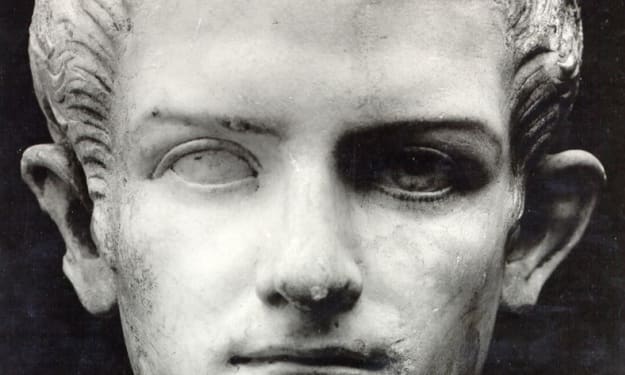
It would be difficult to imagine a greater contrast between successive emperors than when Maximinus Thrax (meaning Thracian) seized the imperial throne from Alexander Severus. The “mummy’s boy”, killed along with his mother on the orders of Maximinus, was succeeded by a former shepherd from Thrace (modern northern Greece and southern Bulgaria) who was a giant of a man reputed to have been eight feet tall and extremely sweaty.
By John Welford5 years ago in FYI
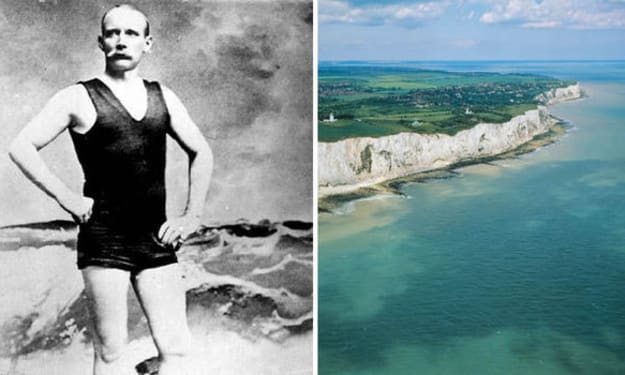
Matthew Webb: the first man to swim from England to France
Swimming the 21 miles of the English Channel is now quite a regular event, with a large number of successful crossings made every year, whether as solo, team or relay attempts. However, this feat was believed by many people to be impossible before Matthew Webb achieved it in 1875.
By John Welford5 years ago in FYI
Galileo Galilei life biography
The New New Sciences (1638) is a summary of Galileo's life and work in motion science, energy, and materials. In addition to the telescope and its many mathematical and scientific discoveries, Galileo built a hydrostatic equilibrium in 1604 to measure small objects.
By Sita Dahal5 years ago in FYI