Science
Science
What Happened in Every Second of 2025
I think we can all agree that 2025 was an eventful year. Every day brought us closer to 2026, and despite being constantly bombarded with information, it is impossible to be aware of absolutely everything. In many ways, every second counted.
By Dave's Your Uncle!about a month ago in FYI
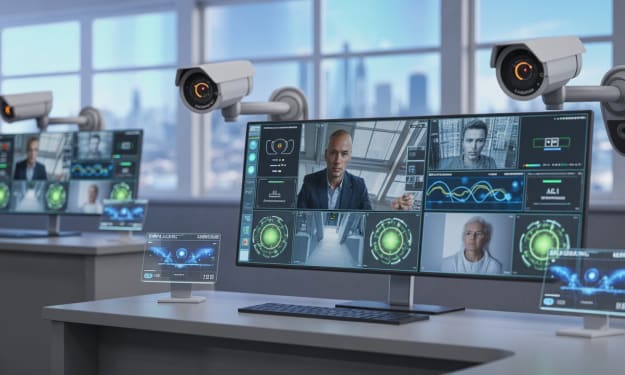
How Computer Vision is Redefining Security Surveillance Systems?
Surveillance has become omnipresent. From smarter cities to offices and parking lots, intelligent security systems have changed how spaces are kept and monitored. Moreover, with AI and computer vision, these systems not only monitor us but also analyze the environment in real time, detecting (even predicting) potential threats faster than any human could. Consequently, organizations are chasing AI security cameras and intelligent security systems.
By Nathan Smithabout a month ago in FYI
Why Hawker Beechcraft Planes Still Matter Today . AI-Generated.
There’s a certain charm in watching a Hawker Beechcraft aircraft take off. It’s not just the sound or the silhouette—it’s the feeling that you’re witnessing a piece of aviation history that refused to fade away. In a world obsessed with the new, the futuristic, and the fully digital, these aircraft have stayed relevant, reliable, and surprisingly essential.
By Beckett Dowhanabout a month ago in FYI
Trade Wars and the Hidden Costs We Don’t Talk About. AI-Generated.
Global trade disputes often look like battles between governments, filled with headlines about tariffs, retaliation, and political strategy. But the real impact of trade wars goes much deeper than policy announcements or diplomatic tensions. When tariffs are introduced, they don’t just affect lawmakers or large corporations — they ripple through global supply chains that millions of people depend on every day. Modern supply chains are deeply interconnected. A single product, such as a smartphone or a car, may rely on components sourced from dozens of countries. When tariffs disrupt even one link in that chain, the effects can spread quickly. Delays, shortages, and rising costs become unavoidable, and these pressures eventually reach consumers in the form of higher prices or reduced availability. The semiconductor industry is a clear example of this interdependence. Chip production is spread across multiple regions, with design, manufacturing, and assembly often happening in different countries. When trade restrictions or tariffs are imposed on key materials or technologies, production slows down. What begins as a political decision can quickly turn into an economic burden for businesses worldwide, affecting industries as diverse as automotive manufacturing, healthcare equipment, and consumer electronics. Beyond technology, trade wars also impact everyday essentials. Tariffs on food, energy, or raw materials increase costs for producers, who often have no choice but to pass those costs on to consumers. This can lead to higher grocery prices, more expensive transportation, and rising utility bills. For households already struggling with inflation or stagnant wages, these increases can significantly affect quality of life. Supporters of tariffs often argue that they protect national industries and local jobs. In theory, making foreign goods more expensive should encourage domestic production. In practice, however, the results are mixed. Many industries rely on imported components that cannot be easily or cheaply replaced. Tariffs can therefore raise production costs for domestic companies, making them less competitive rather than stronger. Small and medium-sized businesses are often hit the hardest, as they lack the financial flexibility to absorb sudden cost increases. Trade uncertainty also discourages long-term investment. Businesses thrive on predictability, especially when planning large infrastructure projects or expanding operations. Escalating trade conflicts create an unstable environment where companies hesitate to invest, hire, or innovate. This slowdown can have lasting effects on economic growth, even after tariffs are reduced or removed. Another hidden cost of trade wars is their impact on global cooperation. International trade has long been a tool for building economic ties and fostering stability between nations. When cooperation is replaced by confrontation, trust erodes. Countries may become more inward-looking, prioritizing short-term political gains over long-term collaboration. This fragmentation makes it harder to address global challenges such as climate change, supply chain resilience, and technological standards. Despite these consequences, tariffs continue to be politically attractive. They are easy to communicate to voters and can be framed as decisive action. The costs, however, are often indirect, delayed, and spread across society, making them less visible. Consumers may not immediately connect higher prices or job losses to trade policy decisions made months or years earlier. The real risk of trade wars is not short-term trade losses, but long-term instability. As global economies become more interconnected, unilateral actions can trigger widespread disruptions. Dialogue, negotiation, and cooperation may be slower and politically difficult, but they offer more sustainable outcomes. In a globalized economy, cooperation is no longer optional — it is essential.
By Djama Ahmed Daherabout a month ago in FYI
Why Temporary Employment Is Becoming a Smart Choice for Modern Businesses
Businesses face fluctuating demand, competitive labor markets, and rising costs associated with bad hires. In response, many employers are rethinking traditional hiring models and turning toward more flexible workforce solutions.
By Anna H Parkerabout a month ago in FYI
How Surveying Companies Can Profit from Point Cloud to BIM. AI-Generated.
The surveying industry is undergoing a significant transformation, shifting from traditional 2D drawings to intelligent 3D models. As the demand for digital twins and reality capture grows, the integration of point cloud to BIM for surveying companies has become a critical service offering. This process involves converting high-precision laser scan data into information-rich Building Information Models (BIM), enabling surveyors to deliver greater value to clients in the Architecture, Engineering, and Construction (AEC) sectors.
By ViBIM - Scan to BIM service providerabout a month ago in FYI
Life, Leadership, and the Mysteries Behind Closed Doors
North Korea A young person quickly moves away when a government officer walks past. He was secretly listening to a small radio that plays news from other countries, which is not allowed. His heart starts beating fast when the government officer notices him. If anyone finds out, he could get into serious trouble, and his whole life could change.”
By Bilal khan 2 months ago in FYI
Managing Teams Effectively: Why Workforce Management Software Matters in Australia. AI-Generated.
Managing people is rarely simple. Whether it’s a volunteer group, a small organization, or a growing business, coordinating schedules, tracking time, handling leave, and maintaining clear communication can quickly become overwhelming. In Australia’s fast-paced and highly regulated work environment, effective workforce management has become more important than ever.
By Merry Smith2 months ago in FYI
Understanding the Latest Trends
E-commerce is no longer just about having an online store—it’s about creating a fast, personalized, and seamless digital shopping experience. As consumer behavior evolves and technology advances, e-commerce web development trends are reshaping how brands attract, convert, and retain customers.
By Katina Banks2 months ago in FYI
How the Dark Web Affects
The internet most of us use every day—Google, Instagram, Amazon—is only a small slice of what actually exists online. Beneath the surface lies the deep web, and further still, the dark web: a hidden network that has become a major threat to data privacy and online security worldwide.
By Katina Banks2 months ago in FYI