literature
Geek literature from the New York Times or the recesses of online. Our favorite stories showcase geeks.
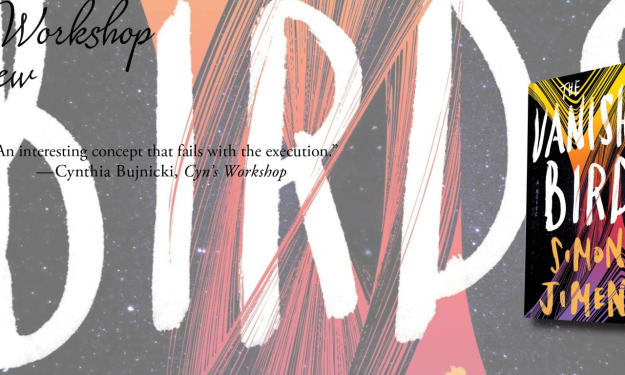
Review of ‘The Vanished Birds’
Synopsis Nia Imani is a woman out of place and outside of time. Decades of travel through the stars are condensed into mere months for her, though the years continue to march steadily onward for everyone she has ever known. Her friends and lovers have aged past her; all she has left is work. Alone and adrift, she lives only for the next paycheck, until the day she meets a mysterious boy, fallen from the sky. A boy, broken by his past. The scarred child does not speak, his only form of communication the beautiful and haunting music he plays on an old wooden flute. Captured by his songs and their strange, immediate connection, Nia decides to take the boy in. And over years of starlit travel, these two outsiders discover in each other the things they lack. For him, a home, a place of love and safety. For her, an anchor to the world outside of herself. For both of them, a family. But Nia is not the only one who wants the boy. The past hungers for him, and when it catches up, it threatens to tear this makeshift family apart.
By Cyn's Workshop6 years ago in Geeks
Review of ‘Diamond & Dawn’ (Amber & Dusk #2)
Synopsis Lyra Selene returns to the incandescent magic of Amber & Dusk in a second installment about the corrosions of even the most dazzling dreams, and the strength of hope amidst darkness. Mirage, triumphant in her coup of the Amber Empire, returns to the palais prepared to take her place as Empress. With the support of her friends, Luca and Lullaby, and a tentative, blossoming romance with Sunder, Mirage is on the cusp of taking hold of everything she has wanted. However, her place in the sun is not as sure as she expected; nor is it quite as bright as she imagined. When the Empress Severine's body is recovered from the battle, she is not dead after all -- in a coma, she still represents a threat to Mirage's newfound power. Worse, a distant cousin, Gavin d'Ars, Duc de Douane, appears in court to challenge both women with his blood claim, and to propose a series of trials to determine the most deserving heir. In Mirage's fight to defend her vision for the empire, she begins to splinter all of her networks. Will the battle for control leave anyone untainted?
By Cyn's Workshop6 years ago in Geeks
6 Books to Devour During Droughtlander
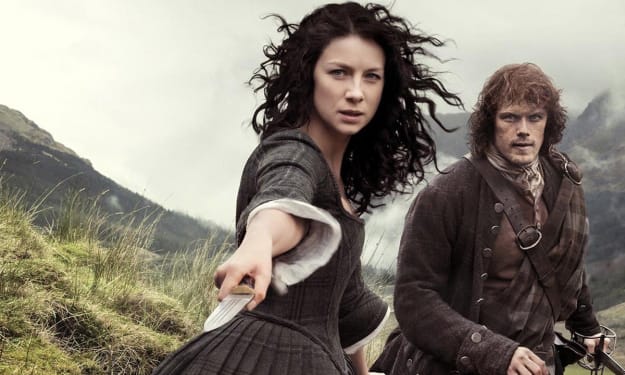
Time Traveler's Wife by Audrey Niffenegger Time travel? Check. A main female character called Clare? Check. A sweeping romance strong enough to withstand the oddities of a life of time travel? Check. Ok, so Niffenegger's debut novel may be set in modern-day Chicago rather than the romantic landscapes of the Scottish Highlands, but we're this beautiful novel will pull you in from page one.
By Emma Styles6 years ago in Geeks
Reading and Re-reading Vonnegut
First thing first: I think that Vonnegut is one of the best American authors, and there is nothing that can convince me otherwise. However, in my experience, not everyone gets him. There was a point in my life when I also did not get his writing style. Luckily, over the years, I grew curious about the high school readings I never completed (sorry, Mr. Bevins). One of the first books I decide to reread from high school was Slaughterhouse 5.
By Jay Cordero6 years ago in Geeks
Top 5 Latin American Authors
As a bookworm, I love reading, it is one of my favorite things to do. However, it has been hard for me to share my love for Latin American literature while growing up in the U.S. The literature curriculums are not diverse enough for students here to learn about the vast richness of Latin American culture, especially now with the wide divestment of education (this is the case in NYC at least). That being said, today I’m going to share my favorite Latin American authors and some of their best work.
By Jay Cordero6 years ago in Geeks
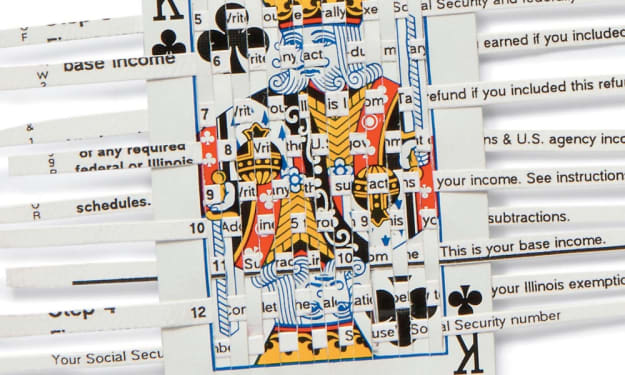
"The Pale King" by David Foster Wallace
This book is based on the mundane atmosphere of the everyday lifestyle of the common worker. It ranges from summaries from the IRS, snippets of the life of a man who profusely sweats, conversations between various people who work for the IRS, a man who is taking an examination and feels very anxious about it and so much more. Within the book, we get various interruptions from the author himself in which he tries to explain the difference between this book and a piece of nonfiction creative writing. He calls it “substantially true and accurate” (p.71) and explains it as a “nonfiction account (with) some slight changes and rearrangements” (p.72). Whereas, previously he had not actually referred to the changes and said that “all of this is true. This book is really true.” (p.69) and thus, we do not make note of the problems encountering fiction and nonfiction definition until later on in Chapter 9. But between characters like Lane Dean Jr, David Cusk, Leonard Stecyk and the unforgettable anxieties of Claude Sylvanshine - I honestly believe that this book is a piece of creative semi-autobiography where the only thing everyone has in common is their ability to work their way into the IRS from very different walks of life. The book admittedly, does not have a plot since David Foster Wallace left it unfinished and unedited. It is therefore raw and emotional in its nature of talking about the human psyche and our reaction towards the fact that life is really quite meaningless. The nihilism and the constant fear that is portrayed by nearly every character in the book is a great way of getting across the message that there are other things far better than being alive in the modern age.
By Annie Kapur6 years ago in Geeks
What I Read When I Was Growing Up in Belgium
Sometimes, when people are talking about classic books from their childhoods — Anne of Green Gables, say, or Charlotte’s Web — I stay very quiet. I haven’t read a lot of those, and I wish I had. I shouldn’t feel ashamed, though, because there’s a good reason I haven’t. I grew up in French-speaking Brussels in the ’80s and we had a whole different set of children’s classics.
By Claire Amy Handscombe6 years ago in Geeks
"The Brothers Karamazov" by Fyodor Dostoevsky
I first read “The Brothers Karamazov” by Fyodor Dostoevsky when I was about fourteen years’ old and I’m not going to lie to you, it confused me. It confused me because it was unlike any other Russian novel I had read up to that point and I realised then that things were about to get ever more interesting on my journey in literature. The way in which I discovered this book wasn’t actually at all that interesting. I had heard of it because I had seen the classic movie poster and thought it was a book cover. I looked it up and I got turned towards the book rather than the film (I would only realise some years later that it was actually a film poster I was looking at and not a book cover). I did not yet know, looking at that picture, that this book would come to change everything about my perception of Russian Literature and my perception on the possibilities of human connections in literature. It was almost overwhelming.
By Annie Kapur6 years ago in Geeks